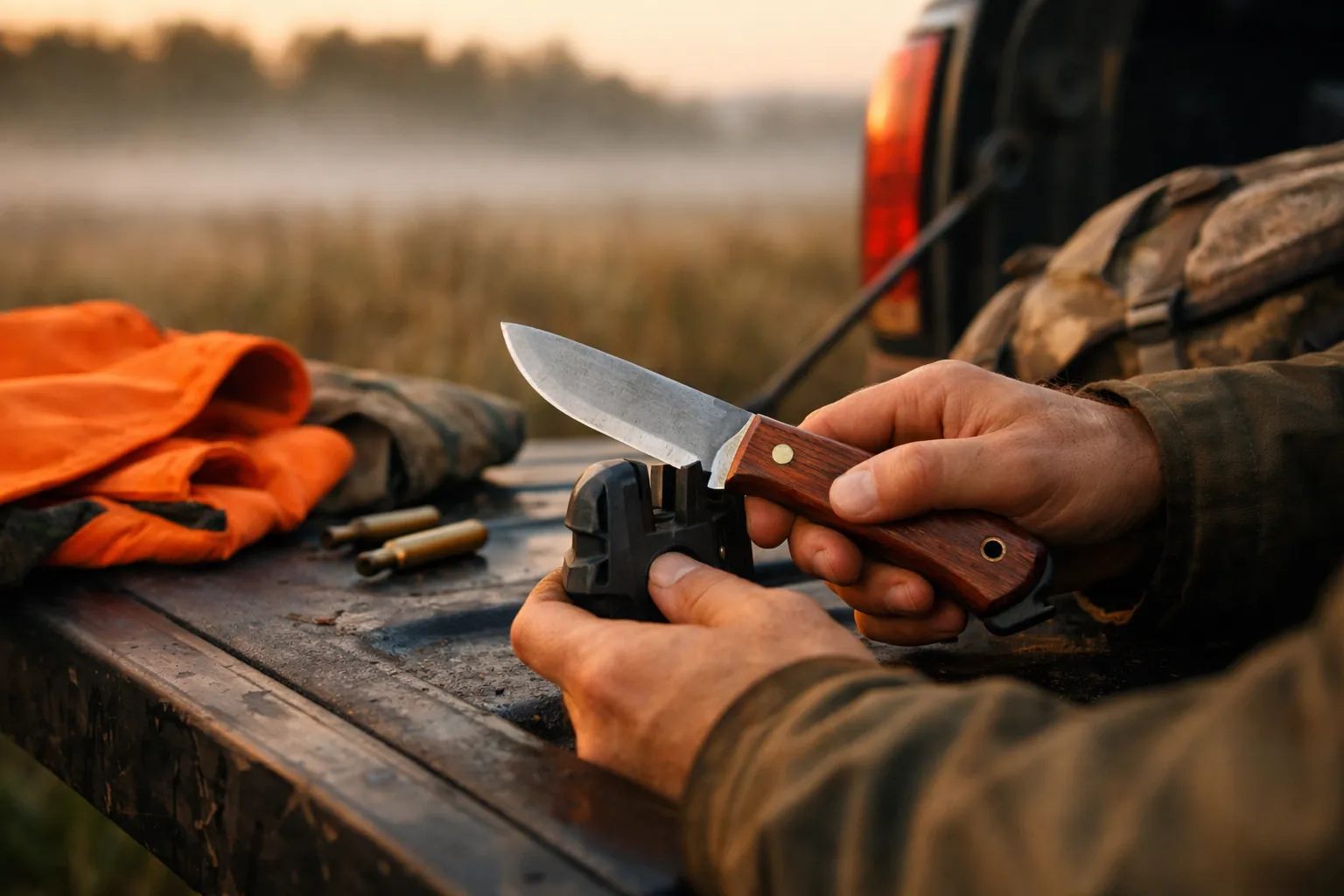
For the field, get the Work Sharp Guided Field Sharpener: guided 20° and 25° angles, coarse-to-fine abrasives and a strop in a tool that fits a pack pocket. For the bench at home, where the real sharpening should happen, the Work Sharp Precision Adjust clamps the knife and sets any angle from 15 to 30. Hunting knives need two kinds of sharpening, and most hunters do better with one tool for each than with one tool trying to do both. If you're new to it, our best sharpening system guide covers the bench side in more depth.
Quick picks
| Best field sharpener | Work Sharp Guided Field Sharpener | Amazon |
|---|---|---|
| Cheapest backup | Smith's CCKS 2-Step Sharpener | Amazon |
| Best for gut hooks | SHARPAL 101N 6-in-1 Pocket Sharpener | Amazon |
| Best freehand field stone | Smith's DCS4 Diamond Combination Sharpener | Amazon |
| Best home system | Work Sharp Precision Adjust | Amazon |
| Best value bench kit | Lansky Deluxe 5-Stone System | Amazon |
| Best freehand-friendly bench | Work Sharp Benchstone | Amazon |
How we picked
We started with Amazon's sales data for hunting and field sharpeners, pulled on October 3, 2026. The Work Sharp Guided Field Sharpener, the Smith's CCKS and the SHARPAL 101N each showed about 2,000 purchases in the past month. Then we read every listing and kept only tools whose angle and abrasives were stated by the maker. We split the list by where the sharpener gets used, because a hunter needs a tool that weighs nothing in a pack and a tool that does careful work at home, and those are rarely the same thing. Ray Mercer, our sharpening contributor, picked from specs and listings; we didn't put a knife through every one.
This is a spec review: picks come from maker listings and sales data, not hands-on testing. How we research.
Angle by hunting knife style
There's no single "hunting knife angle". Lansky, whose clamp systems have fixed angle holes, describes 25° as "the recommended angle for most knives that need a durable, sharp edge. Ideal for hunting and outdoor knives." Benchmade says most of its knives leave the factory at about 15 to 18 degrees per side. Between those, here's where we'd start:
| Knife | Starting angle per side | Why |
|---|---|---|
| Drop point (general field dressing) | 20–25° | Hits bone and joints; Lansky's 25° for hunting knives |
| Skinner (wide, curved belly) | about 20° | Slices hide and membrane; a bit thinner glides better |
| Caping or small detail knife | 17–20° | Fine work around eyes and ears |
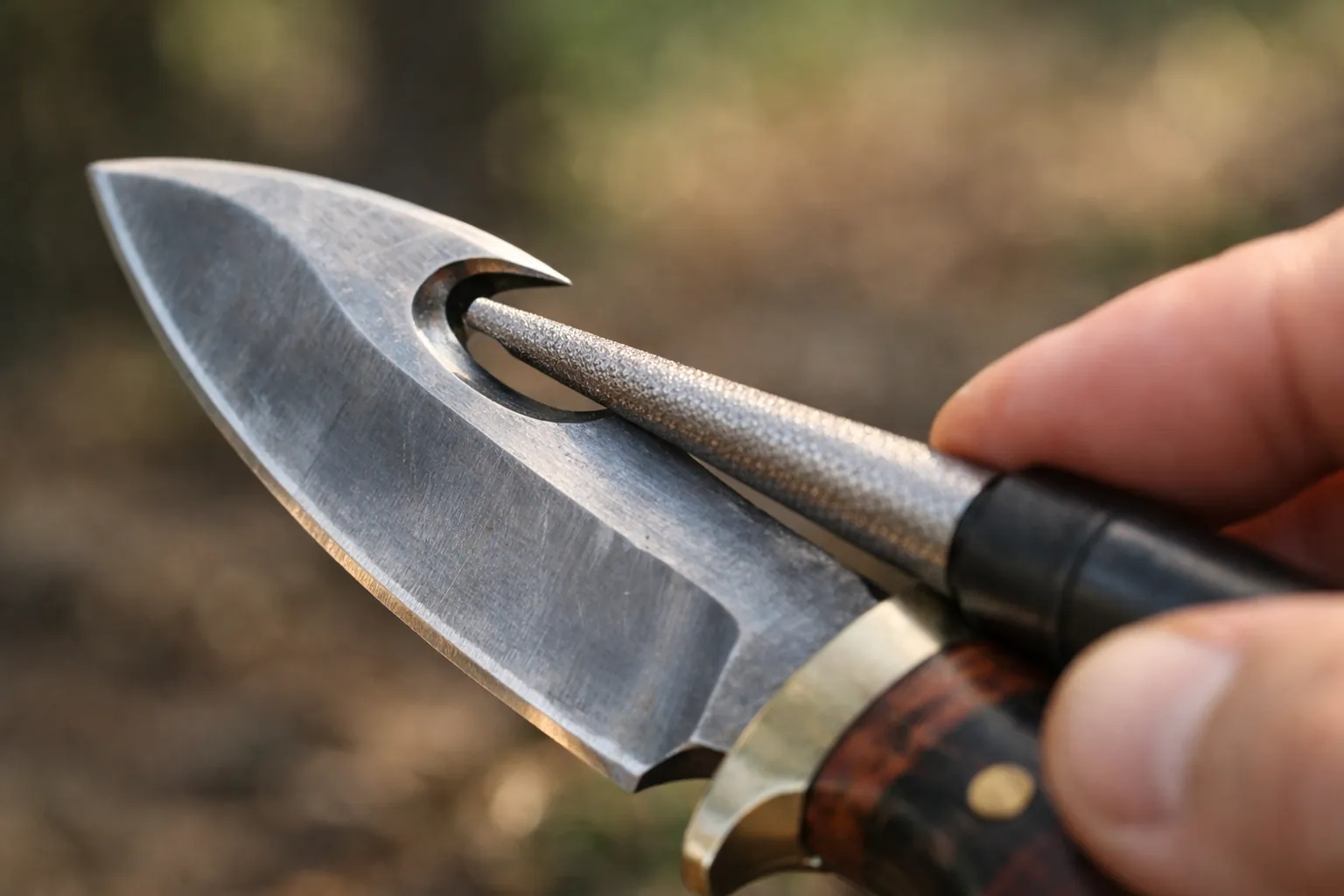
| Gut hook | follow the existing bevel | Sharpen inside the hook with a tapered rod |
| Folding hunter in super steel | 15–18° (maker's range, e.g. Benchmade) | Hard steel holds a thinner edge |
Starting points from Lansky's and Benchmade's published guidance and common practice. Check your own knife with the marker trick.
The angle calculator converts any of these into a spine height for freehand work, and the Benchmade sharpening angle page covers that brand's figures in detail.
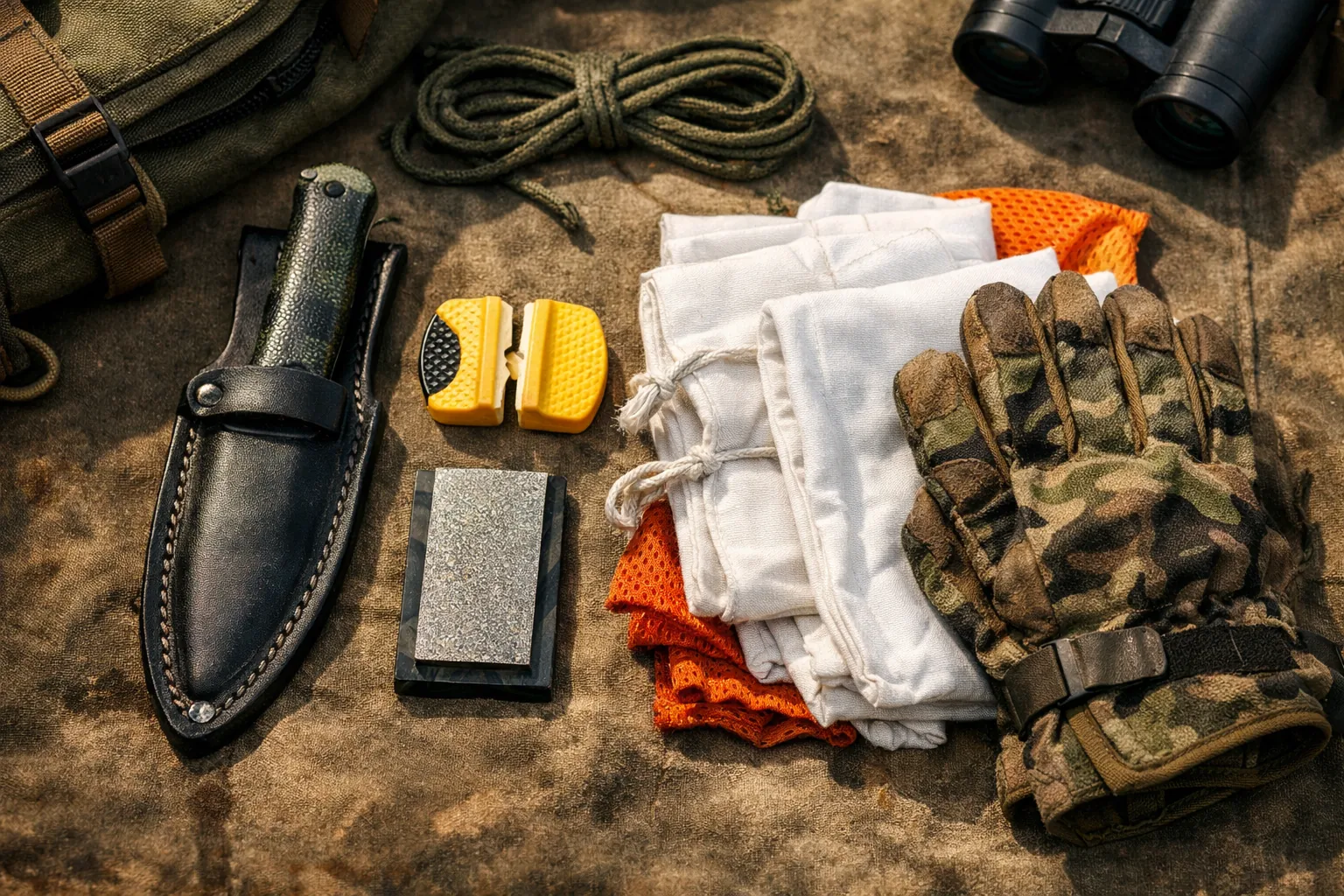
For the field: light enough to carry
Work Sharp Guided Field Sharpener
This is the one we'd put in every hunting pack. Work Sharp lists 20 and 25 degree guides, which bracket the hunting-knife range, and five abrasives: coarse and fine diamond plates to fix a damaged edge, a ceramic rod that rotates for coarse, fine and grooved surfaces, and a leather strop for the final pass. The plates lift off to reveal a broadhead wrench, and the grooved rod sharpens fish hooks, so it earns its weight on more than knives.
It's also among the best-selling field sharpeners on Amazon, with about 2,000 bought last month and close to 13,000 ratings at 4.8 stars, the highest average on this list.
- Angle guides20° and 25°
- Abrasives5 (diamond plates, ceramic rod, leather strop)
- Extrasfish hook groove, broadhead wrench under the diamond plates
- Warranty3-year (listing)
Why it stands out
- Guided 20° and 25° angles: no guessing on a tailgate
- Repair-to-strop in one tool
- Huge owner base
Think twice if
- You want a thinner edge than 20° on a super-steel folder
Smith's CCKS 2-Step Sharpener
A tiny yellow pull-through that floats, which tells you who it's designed for. Smith's says the tungsten carbide slot restores a very dull edge in three or four strokes and the crossed ceramic rods smooth an already sharp one. It weighs under two ounces and has a lanyard hole, so it goes in a jacket pocket and stays there.
Pull-throughs take more steel off than a stone, so treat this as the emergency fix when a blade dies halfway through an elk, not as your only sharpener. At this price, nobody minds if it gets left in a truck.
- Stagescarbide (coarse) + ceramic (fine)
- Anglespreset
- Size2.33 x 2.71 in, under 2 oz
- Extrasfloats, lanyard hole
Why it stands out
- 17,000+ Amazon ratings, about 2,000 sold last month
- Weighs almost nothing; floats if dropped in water
Think twice if
- You want to choose your angle (it's preset and the listing doesn't state it)
- It's going to be your main sharpener
SHARPAL 101N 6-in-1 Pocket Sharpener
The tapered diamond rod is why it's here. SHARPAL's listing names it for serrations and gut hooks, which most pocket sharpeners can't reach. Add two pull-through slots and a fire starter and whistle, and it's a survival tool that also sharpens. Almost 40,000 Amazon ratings make it one of the most-reviewed sharpeners we found in any category.
- Slotscarbide (coarse) + ceramic (fine)
- Rodstapered 400-grit diamond (serrations, gut hooks), diamond rod with hook groove
- Extrasferro rod fire starter, whistle
- Size3.54 x 1.46 in
Why it stands out
- Reaches inside a gut hook
- Very large owner base
Think twice if
- You don't own a gut hook or serrated blade: the Work Sharp is the better sharpener
Smith's DCS4 Diamond Combination Sharpener
If you'd rather sharpen freehand, this is a 4-inch two-sided diamond stone whose rubber handle doubles as a case. Diamond cuts hard steels quickly, which matters with the hard steels in many modern hunting knives. There's no angle guide, so it rewards hunters who already hold an angle well.
- Gritscoarse + fine diamond (two-sided)
- Length4 in stone
- Extrasfish-hook groove, handle stores the stone, lanyard loop
Why it stands out
- Diamond works on hard steels
- Packs flat; the handle protects the stone
Think twice if
- You need a guide to hold an angle
For home: reset the edge properly
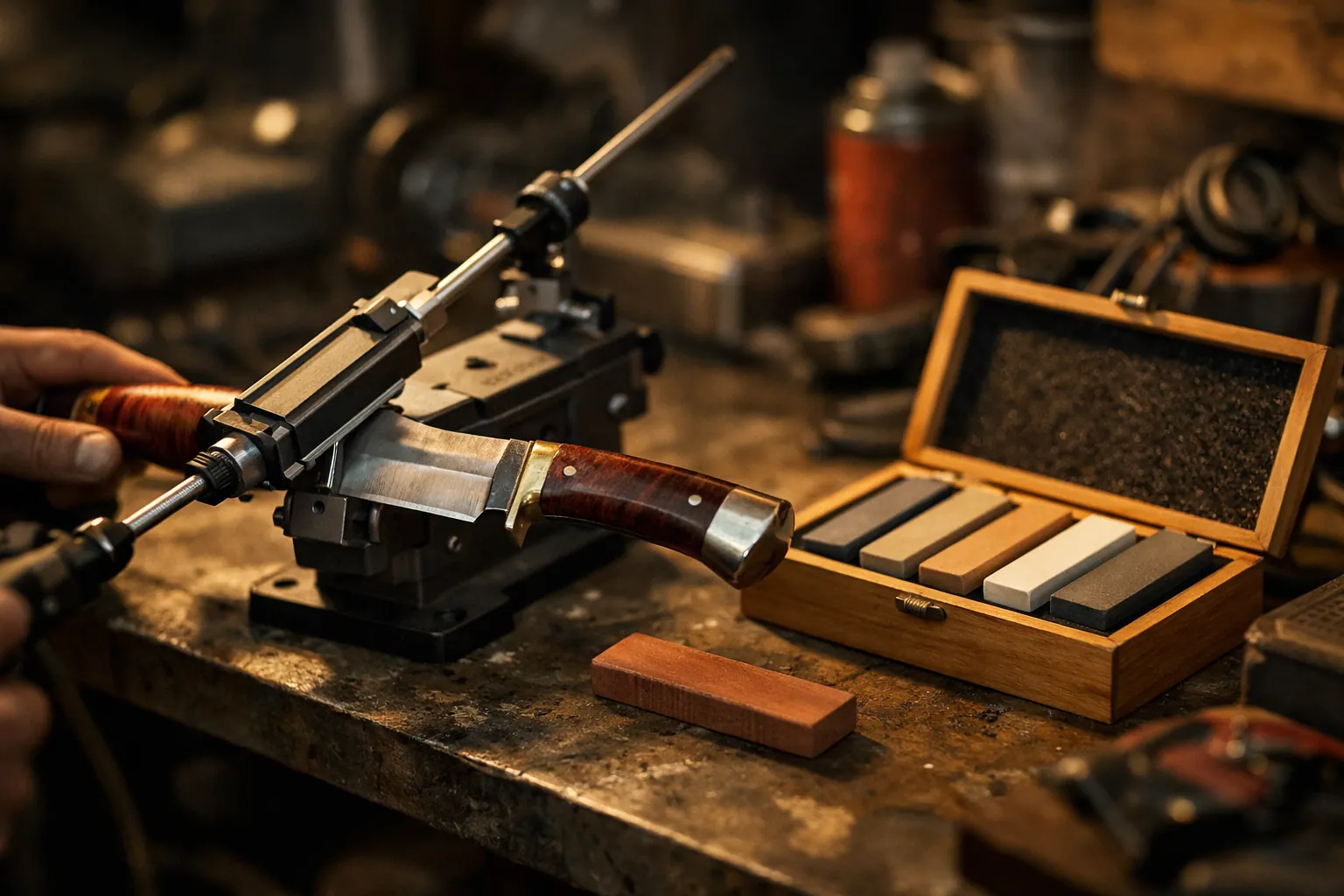
After a season, field touch-ups leave a rounded, steepened edge. A guided bench system rebuilds a clean bevel at the angle you choose.
Work Sharp Precision Adjust
The Precision Adjust clamps the knife and lets you dial in any angle from 15 to 30 degrees, so each knife in the kit gets its own number. The Tri-Brasive bar rotates between 320 and 600 grit diamond and a fine ceramic, enough to reprofile a chipped blade and then refine it. It folds down for storage and needs no power, so it also works at deer camp.
About 1,000 sold on Amazon last month, with more than 11,000 ratings. Our full Work Sharp Precision Adjust review covers the Elite and Professional versions.
- Angle15–30° per side, adjustable
- AbrasivesTri-Brasive 320 and 600 diamond + fine ceramic
- Clampyes
- Powernone
Why it stands out
- Any angle 15–30°, one degree at a time
- Clamped: the angle doesn't depend on your hand
Think twice if
- You want to stay below 15° (not a hunting-knife concern)
Lansky Deluxe 5-Stone System
The Lansky is the long-running alternative: a clamp with four angle holes and a rod-guided hone for each of five grits, from extra-coarse alumina oxide to extra-fine ceramic. Lansky's own description of its 25° hole is "ideal for hunting and outdoor knives", and 20° is there for skinners. More than 14,000 Amazon ratings. Our Lansky kit guide compares Standard, Deluxe and Diamond versions, and Work Sharp vs Lansky puts it against the Precision Adjust.
- Angles17°, 20°, 25°, 30° (clamp holes)
- Honesextra-coarse to extra-fine (5)
- Includesclamp, honing oil, case
Why it stands out
- Fixed 20° and 25° holes match hunting knives
- Five grits including extra-coarse for repairs
Think twice if
- You'd rather not deal with honing oil (the diamond version runs dry)
Work Sharp Benchstone
A three-sided bench stone with angle guides set at 20 or 25 degrees, which you can remove to sharpen freehand. Its pivot lets the abrasive follow a curved belly, useful on skinners. Work Sharp says 15 and 17 degree guides are sold separately.
- Guides20° or 25°, removable
- Abrasives400 and 800 diamond + fine ceramic (3-sided)
- Pivotfollows the blade's curve, can be locked
Why it stands out
- Pivot follows curved hunting blades
- Guides on or off
Think twice if
- You want a clamp holding the knife for you
Side-by-side comparison
| Sharpener | Where | Angle | Abrasives | Gut hook |
|---|---|---|---|---|
| Work Sharp Guided Field | Field | 20° / 25° guides | Diamond, ceramic, strop | Check listing |
| Smith's CCKS | Field backup | Preset | Carbide, ceramic | No |
| SHARPAL 101N | Field | Preset slots + freehand rods | Carbide, ceramic, diamond rods | Yes, tapered rod |
| Smith's DCS4 | Field | Freehand | Coarse and fine diamond | No |
| Work Sharp Precision Adjust | Home | 15–30° | 320/600 diamond, ceramic | No |
| Lansky Deluxe 5-stone | Home | 17/20/25/30° | 5 hones, XC to XF | No |
| Work Sharp Benchstone | Home | 20° / 25° guides | 400/800 diamond, ceramic | No |
What matters in a hunting knife sharpener
Where it'll be used
A field tool has to be light, need no water or oil, and survive being dropped in mud. A bench tool can be bigger and slower, because its job is precision. If you can only buy one, buy the field tool and take your knife to someone with a bench system once a year.
Diamond for modern steels
Many current hunting knives use hard, wear-resistant stainless steels. Diamond abrasives cut them quickly; plain ceramic and aluminum-oxide stones work but take longer. Every field pick above includes diamond except the Smith's CCKS.
Touch up, don't resharpen, mid-hunt
Between animals, a few light strokes on a fine ceramic or strop restores a dulled edge. Grinding on the coarse side in camp removes steel you'll want later. The routine is in our how to sharpen a hunting knife guide.
Also worth packing
A small strop keeps an edge going longer than any sharpener: our best leather strop guide has pocket sizes. And if an axe or hatchet rides along to camp, the axe sharpening angle page covers that edge.
If you only buy one
Buy the Work Sharp Guided Field Sharpener. It carries the right angles for hunting knives and fixes a damaged edge as well as a dull one. Add the Precision Adjust at home when you want every knife reset to its own angle after the season.
Product details come from each maker's Amazon listing, checked October 3, 2026, with sales signals from Amazon search the same day. Angle guidance from Lansky's and Benchmade's published pages. Prices change often, so the buttons show the current price on Amazon. How we research · Affiliate disclosure