Whetstones guides
Water stones, diamond plates and grit progressions: how to choose stones and use them well.
 The best whetstone holder, matched to your stone and your sinkA holder's only job is to stop the stone moving. Which one does that depends on how long your stone is, where you sharpen, and how much water you want on the counter.
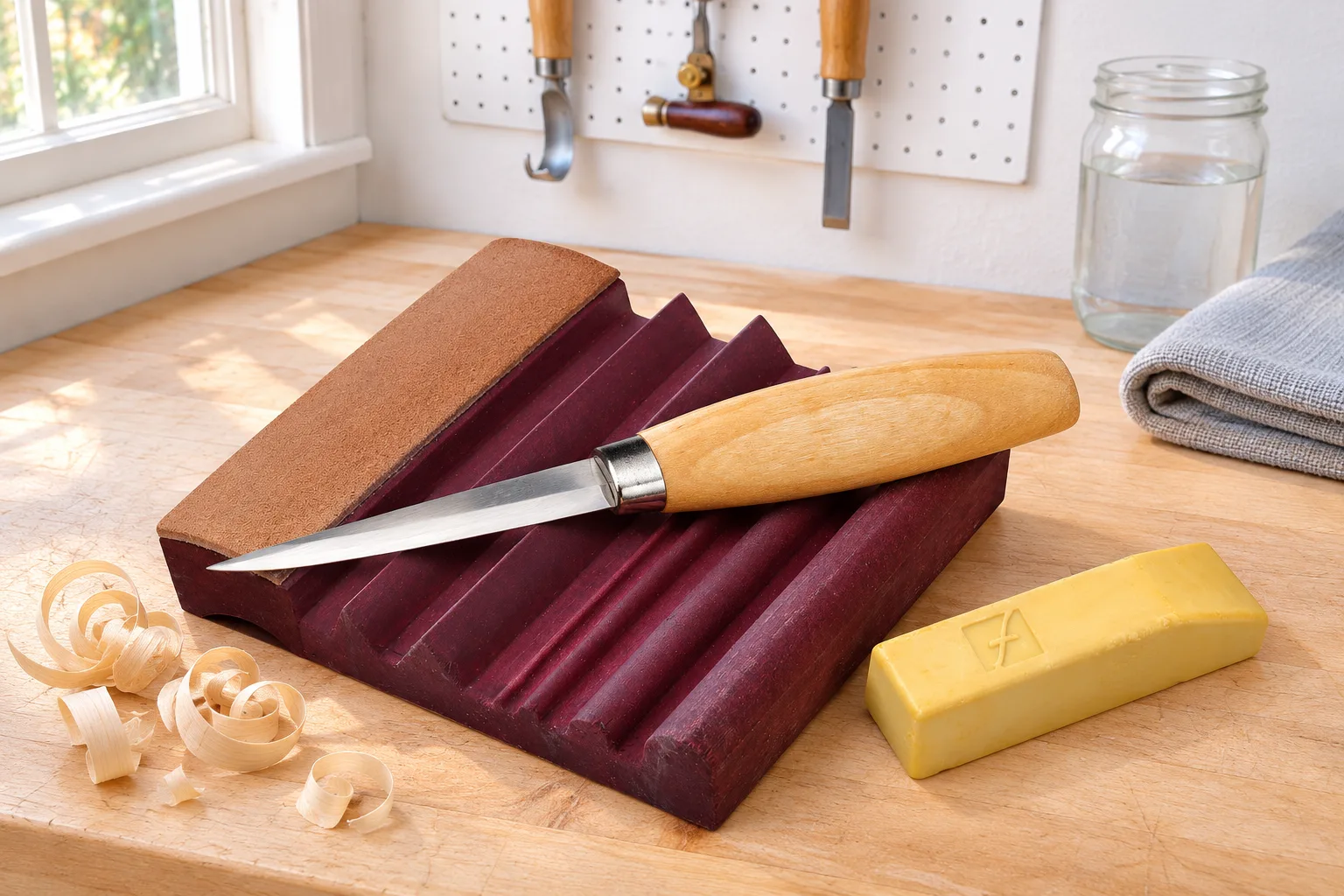 How to sharpen a carving knifeEach kind of carving knife (sloyd, whittling, hook, crooked, chip carving) wants something a little different from the stone and the strop. Here is the whole method for each one, with the makers' angles and grit ladders, then stropping rules and a printable cheat sheet.
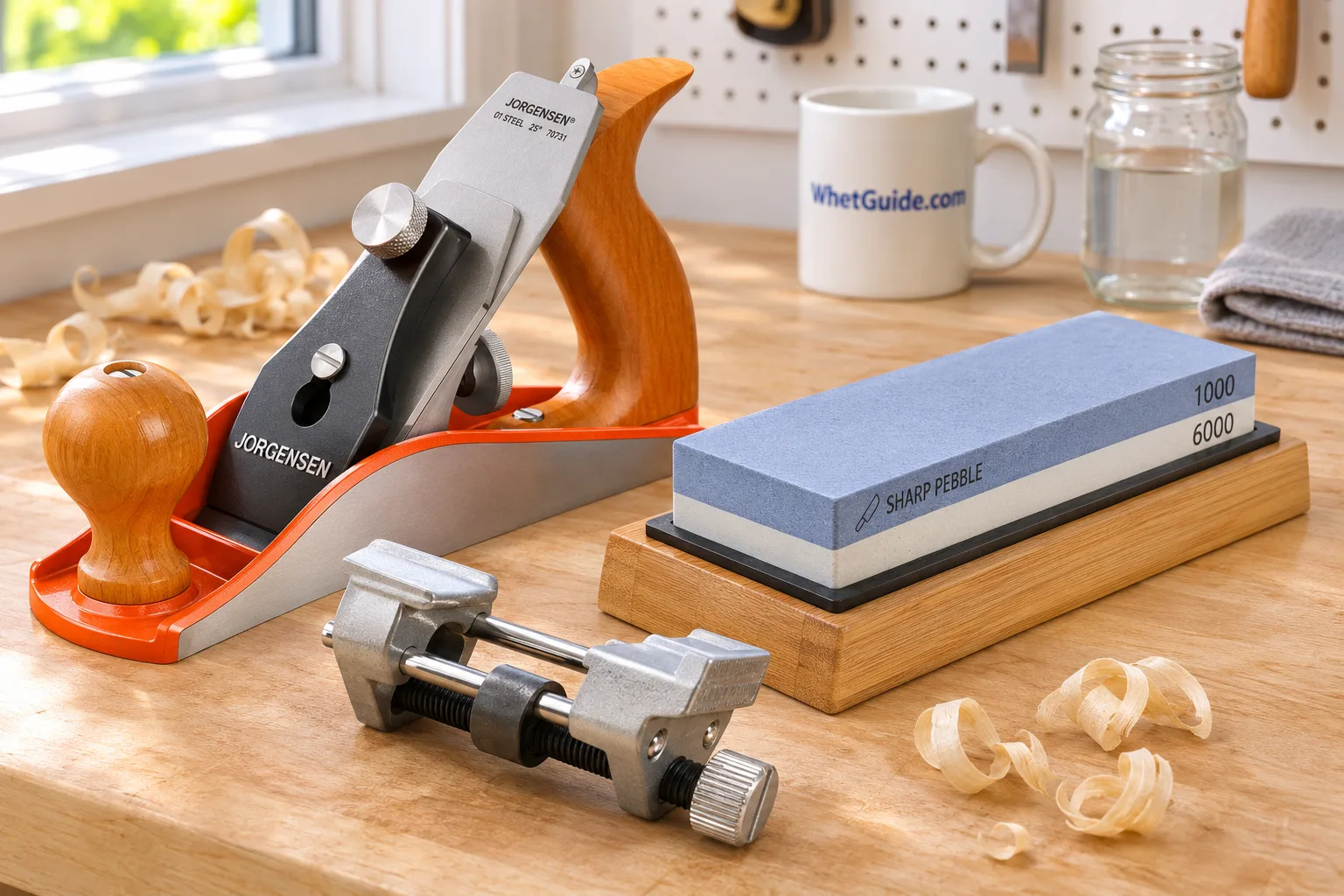 How to sharpen woodworking toolsPlane irons and spokeshaves, carving gouges, scrapers, auger bits, turning tools, garden tools: which angle, which stone, how many strokes, and what the edge should look like at each step. Every number is sourced, with links to the makers and publishers.
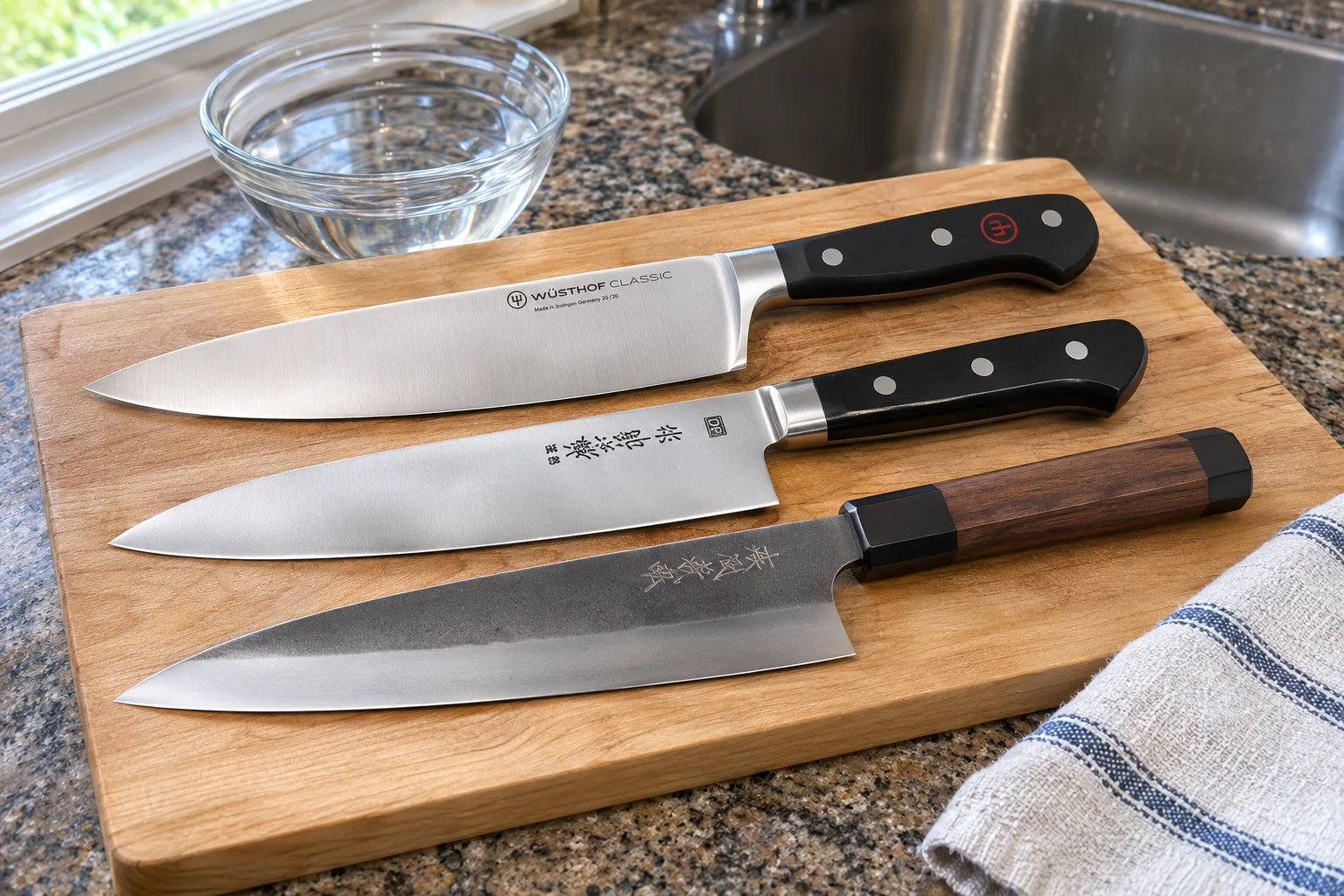 The best steel for kitchen knives, explainedStainless or carbon, soft German or hard Japanese, VG-10 or SG2: what each steel does on a cutting board and on a stone, with hardness figures from the makers.
 Does Ace Hardware sharpen knives? What Ace, Home Depot, Lowe's and Harbor Freight offerMany Ace stores do, for about $7 a knife on an automated machine, but each store is independent. The other three big chains did not list a knife service on any page we could read.
 The best knife sharpening kit, matched to how patient you areA stone kit, a guided clamp kit, a rolling kit and a field kit all say 'sharpening kit.' They ask different things of you. Six kits, with what's in each box and what you'll still need to buy.
 How to sharpen a ceramic knife with a diamond sharpenerZirconia is harder than every abrasive in a normal sharpening kit except diamond. Here's what works at home, what doesn't, and when to mail the knife off instead.
 The best whetstone flattening stone for the stones you ownA flattener has one job: be flatter and coarser than your whetstone. Here's which kind does that for a cheap 1000/6000, a hard splash-and-go stone or a whole shelf of them.
 DMT diamond sharpener review: which DMT to buy for the jobDMT sells hundreds of diamond stones under half a dozen line names, and its grit labels don't mean what a Japanese stone's do. Here's the lineup sorted by job, with DMT's micron sizes translated.
 The best whetstone for sharpening knivesMost people need one 1000-grit stone, and maybe a finer one later. Which 1000 depends on your knives and your steel. Here's one pick per job, how to choose by knife, steel and budget, and where to go for sets, Japanese stones and diamond plates.
 How to sharpen an X-Acto knife (and when not to bother)A hobby blade is thin, cheap and sold by the hundred, so the right answer is usually a strop, sometimes a fine stone, and a fresh blade the moment the tip breaks.
 The best whetstone angle guides, and the angle each one really holdsA clip-on guide sets a height, not an angle, so it gives a different angle on every knife. Here are seven guides worth buying, sorted by type, with the knives each one suits.
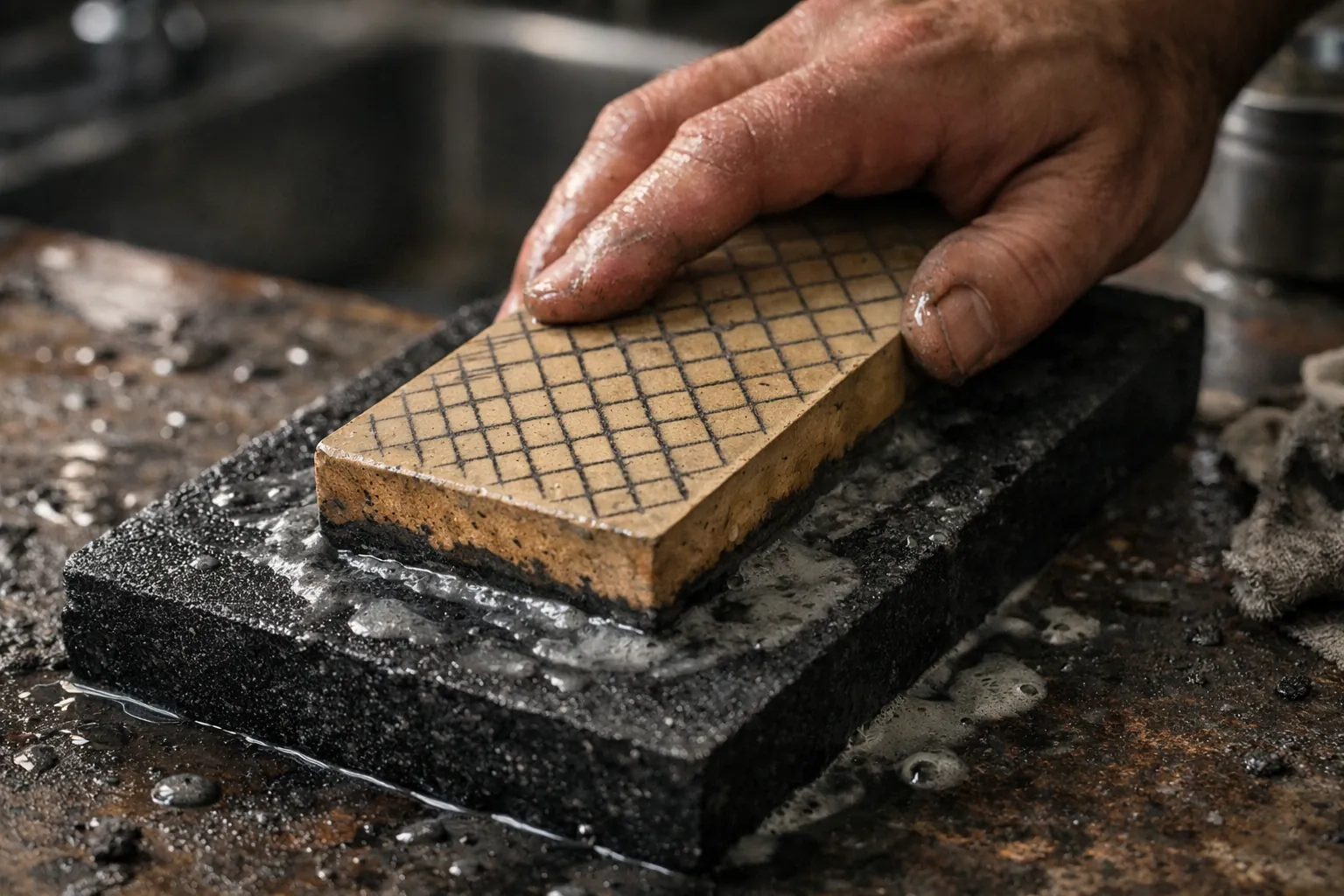 How to flatten a whetstoneDraw a pencil grid, rub until it's gone, chamfer the edges. Here's that method with three different flatteners, how often each grit needs it, and what a dished stone does to your angle.
 What a knife sharpening service costs, from the services' own price listsMost kitchen knives cost $8 to $15 to sharpen professionally. Where your knife lands in that range depends on per-knife or per-inch pricing, mail-in or local, and what the shop refuses to touch.
 King sharpening stone review: the KW65 1000/6000 and the rest of the lineupThe King KW65 is the stone most people learn on. It's soft, forgiving and cheap, and those same qualities explain its one real drawback.
 Sharpening garden tools: how to sharpen pruning shears, loppers and hedge shearsEvery garden blade has one face that gets sharpened and at least one part you should never touch. Get those right and a diamond file and ten minutes do the rest.
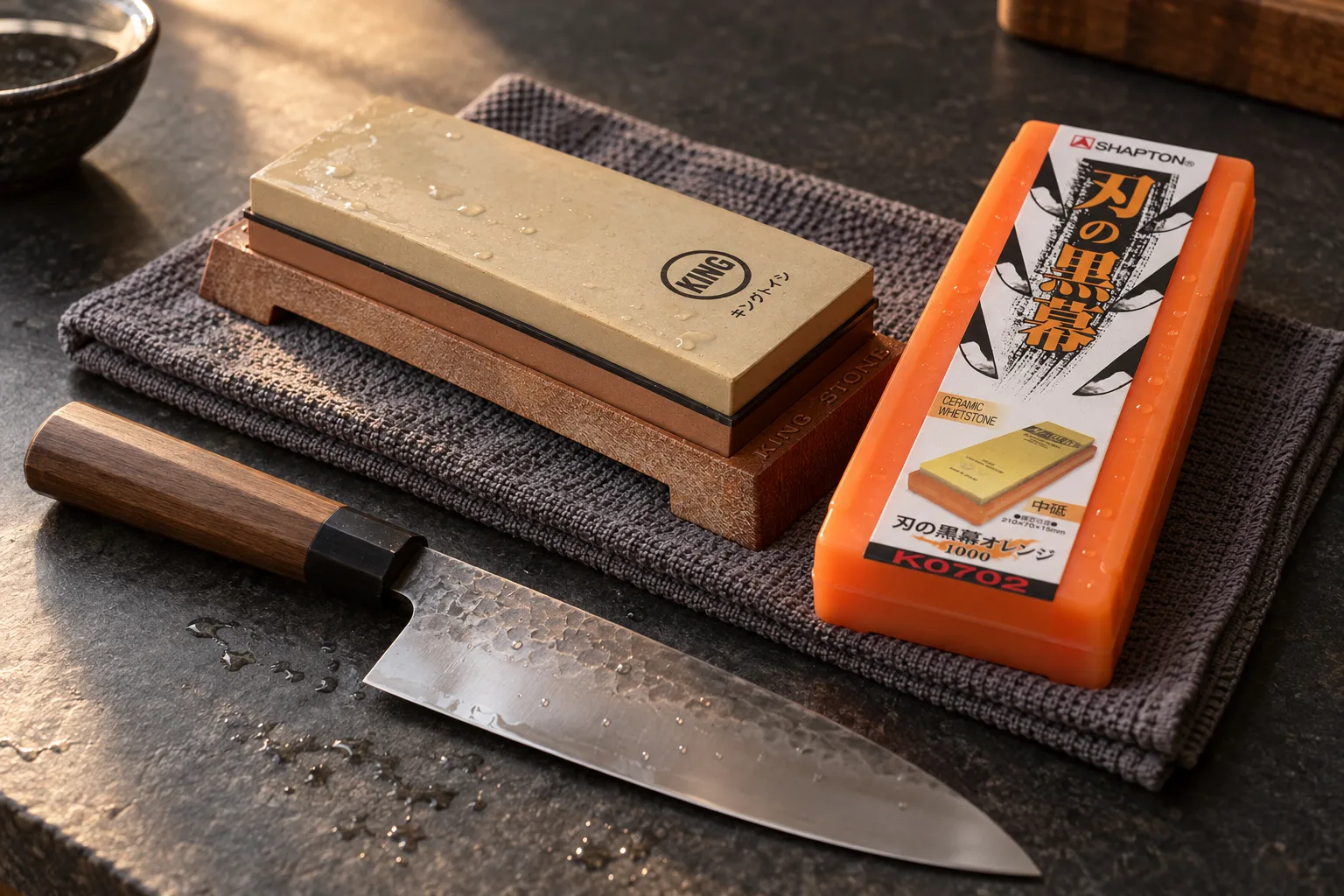 The best Japanese whetstone, from makers that are actually JapaneseHalf the 'Japanese whetstones' on Amazon come from generic brands. These seven come from King, Shapton, Suehiro and Naniwa, matched to the knives and the sharpening habits they suit.
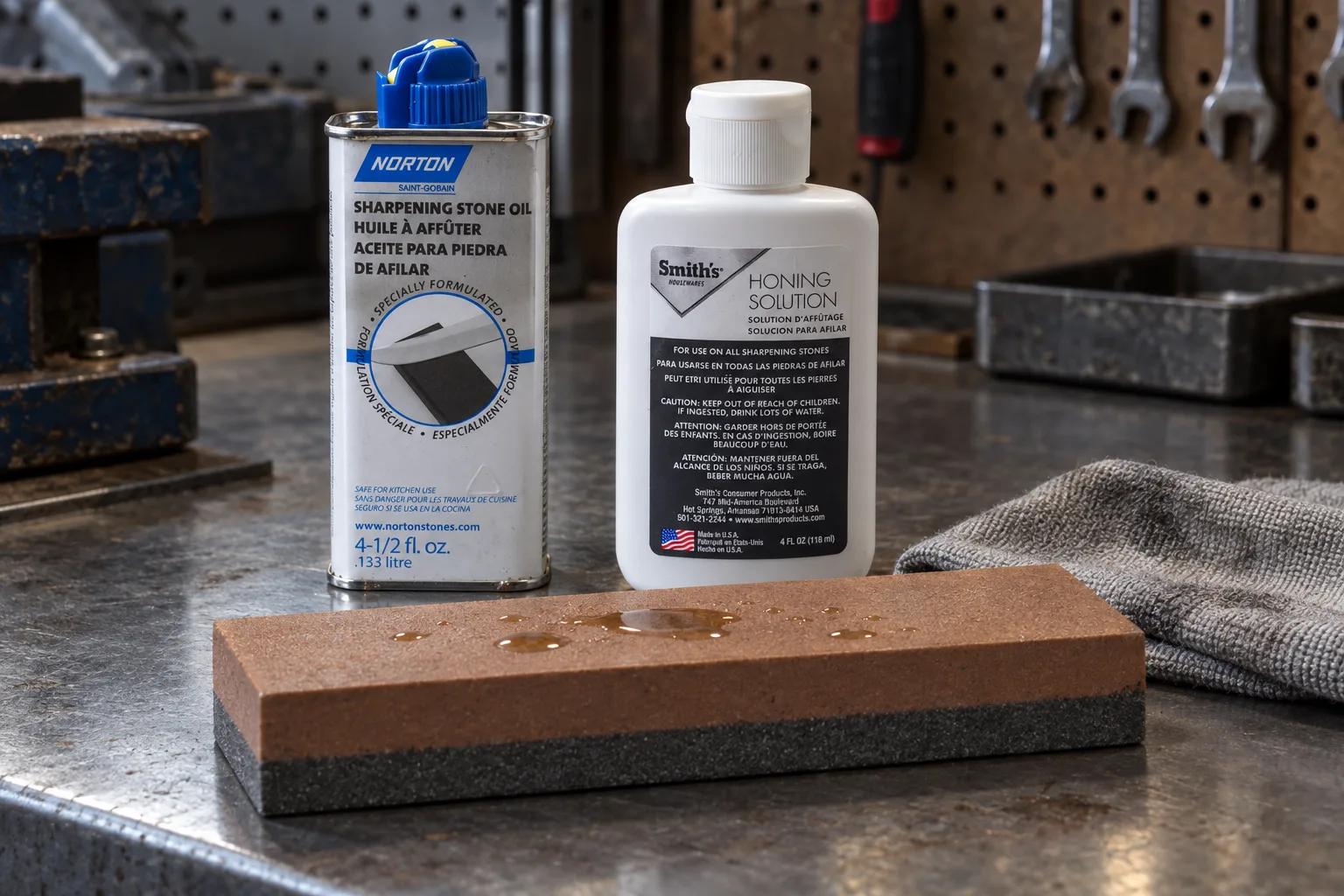 Sharpening stone oil: which to use, and when you don't need anyOil stones (Arkansas, India, Crystolon) want a light mineral oil. Water stones want water and never oil. Diamond plates want water or nothing. Here's the full chart, the substitutes that work, and how much to use.
 How to sharpen kitchen knives at homeFind your knife's angle, grind until a burr forms along the whole edge, switch sides, then refine and strop. That's the same on a whetstone, a pull-through or an electric sharpener. Here's how to pick the method and do it right.
 How to sharpen a knife without a sharpenerSandpaper on a flat surface is the closest thing to a real stone, and the rough ring under a coffee mug comes second. Here are the household methods that work, how far each one can take a dull knife, and the ones to skip.
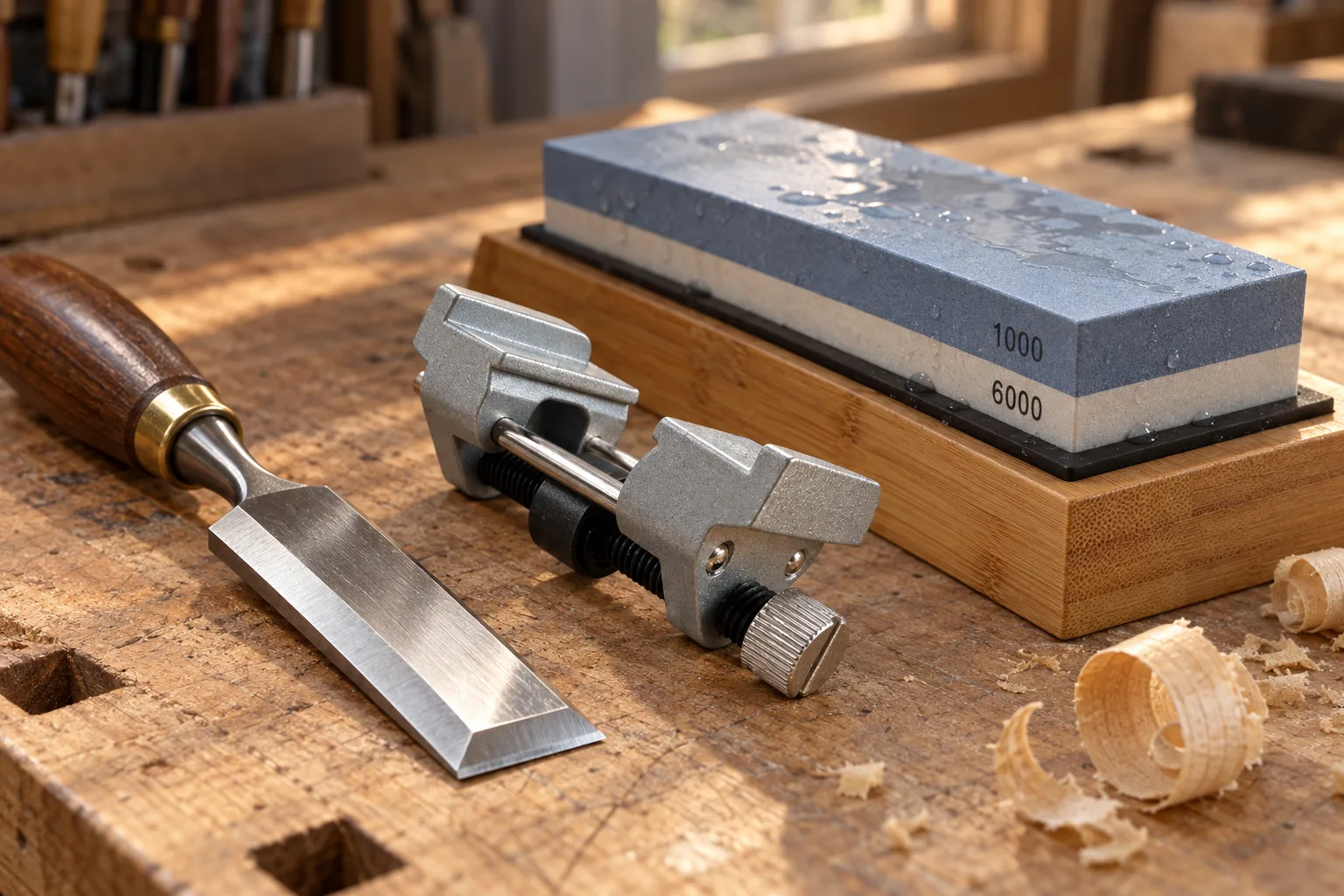 How to sharpen a chiselA sharp chisel is two flat surfaces meeting at a clean line: the back and the bevel. Flatten the back once, hone a 30-degree microbevel on a 25-degree bevel, and every resharpening after that takes a couple of minutes.
 The best diamond sharpening stones for knivesDiamond plates cut anything, stay flat and need no soaking. They also feel scratchy and leave a toothy edge. Here are seven worth buying, a grit chart that makes sense of their numbers, and who should stick with a water stone.
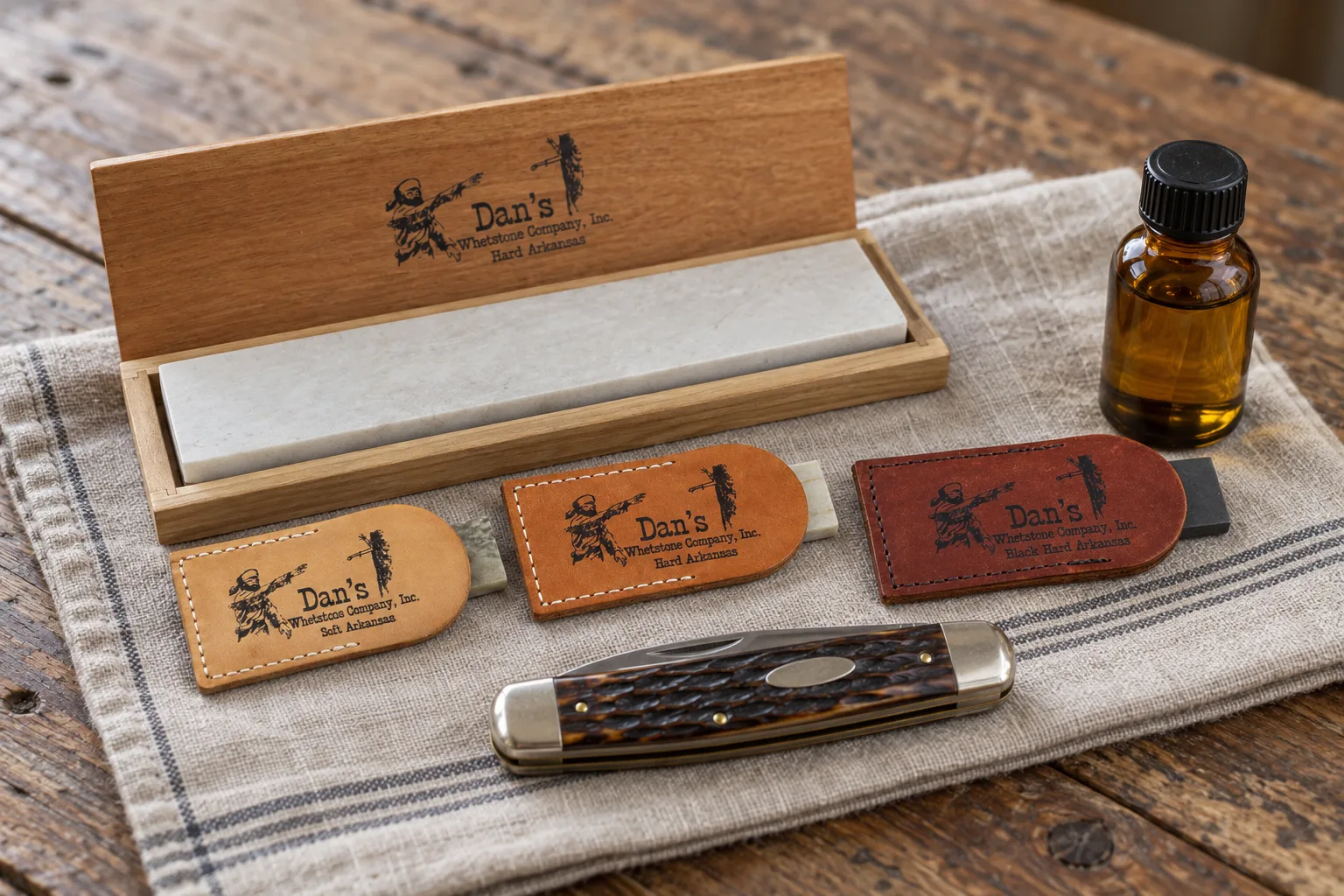 Arkansas sharpening stones: grades, grit and how to use themArkansas stones are natural novaculite from the Ouachita Mountains, graded by density from Soft (coarsest) to Black and Translucent (finest). They're slow, flat for decades and lovely on carbon steel. Here's how the grades compare and which ones you need.
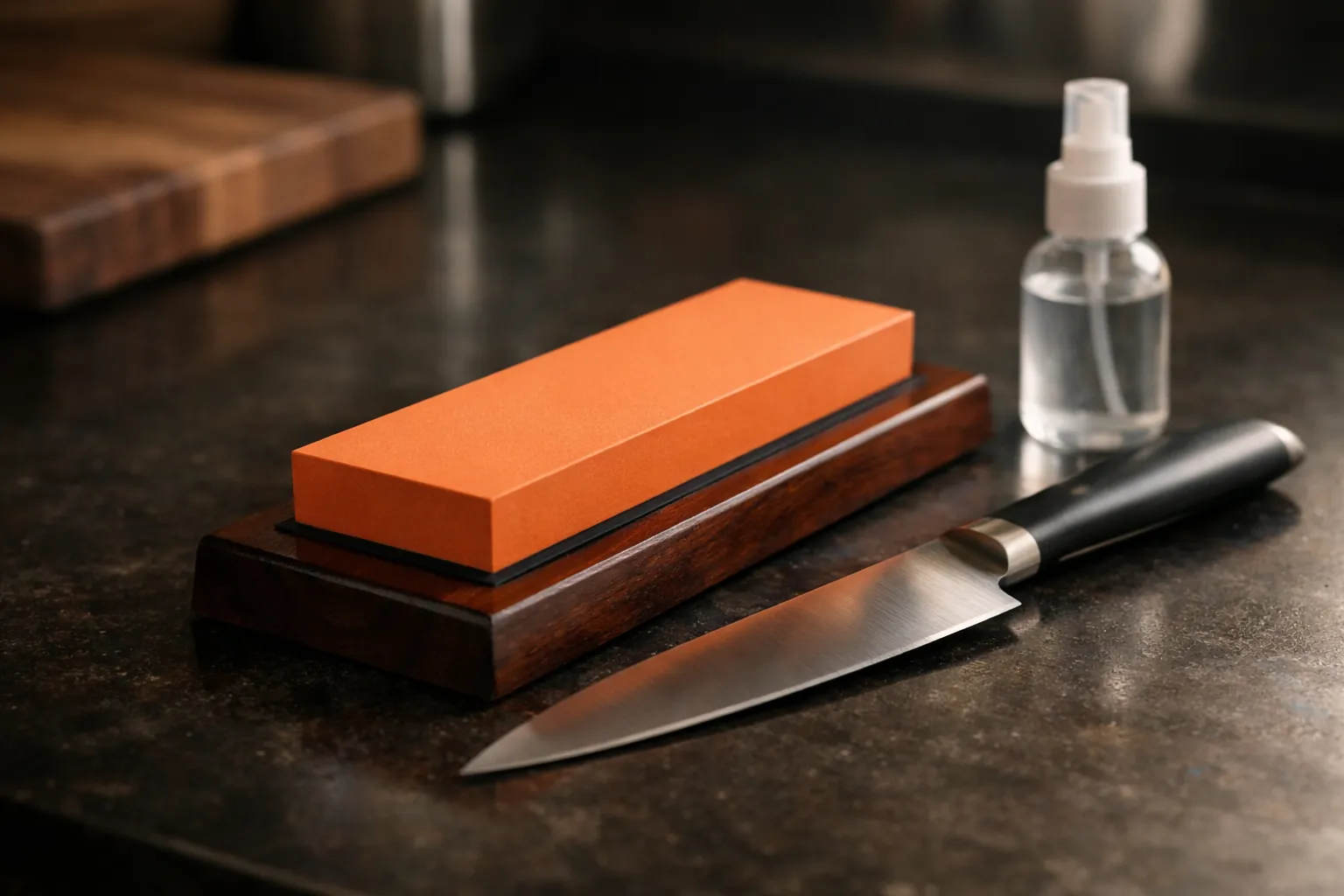 Is a 1000 grit whetstone enough?For most knives, one 1000 grit stone gets you a sharp, useful edge. Here's where it falls short, and when a combination stone is the smarter first buy.
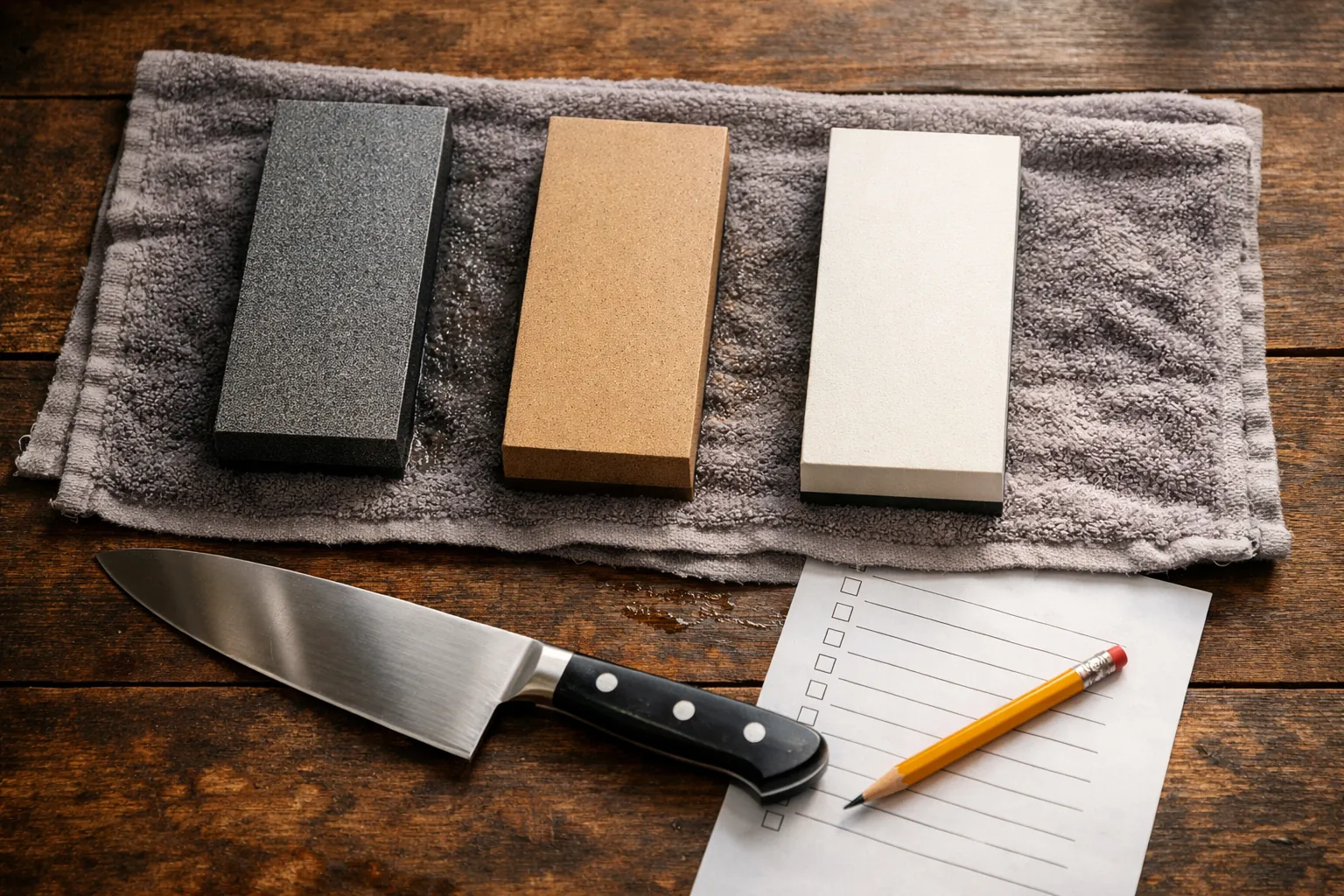 Whetstone grit progression chart (printable)Which grit first, which grit next, and when to stop, on one Letter page with a tick-box session routine and a log for your knives.
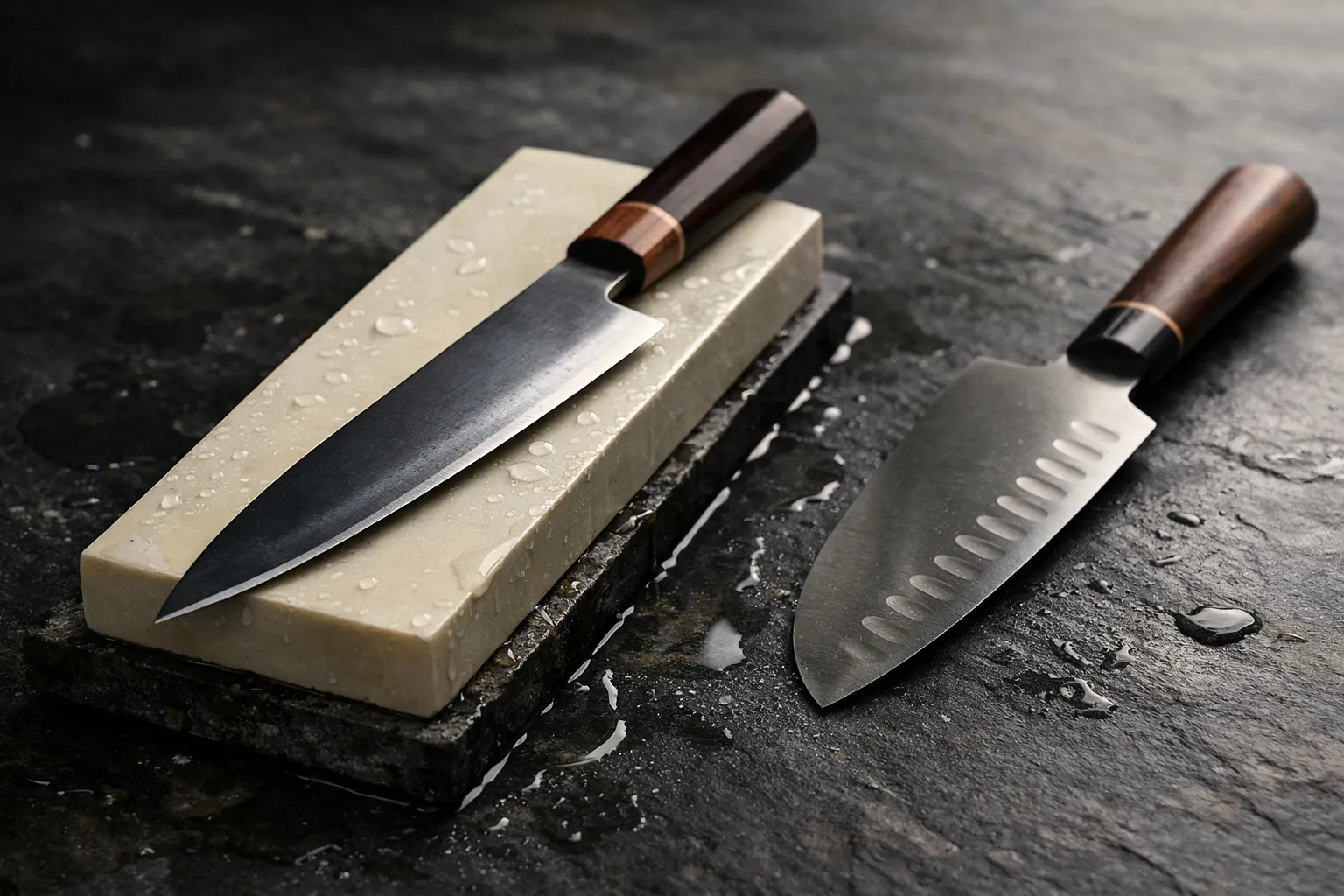 The best knife sharpener for Japanese knivesJapanese knives are thinner and harder than most Western knives, and many are sharpened around 15° per side. That rules out coarse carbide pull-throughs and makes the right sharpener matter more. These seven respect the steel.
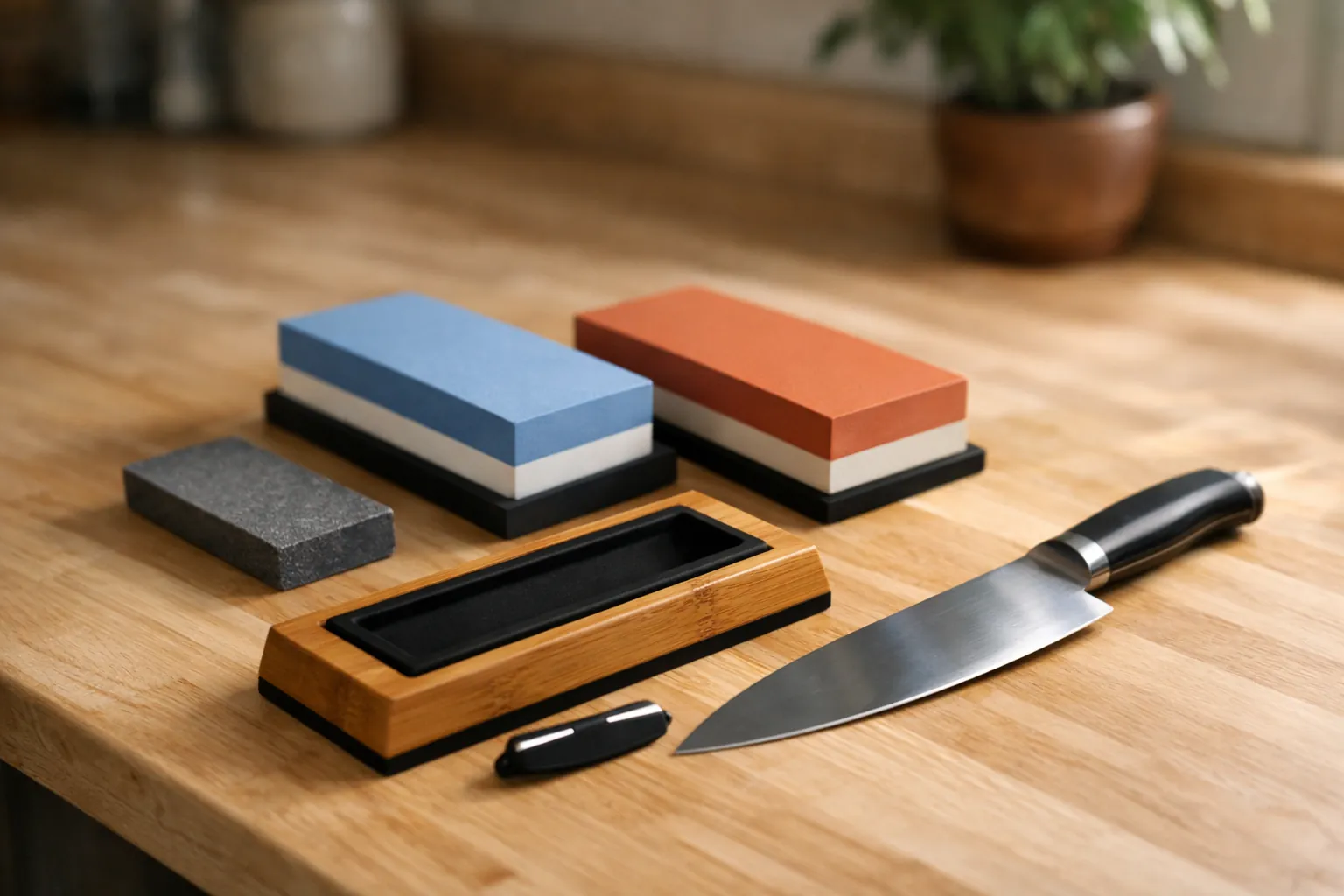 The best whetstone set for beginnersA beginner needs two grits, a non-slip base and something to keep the stone flat. Everything else is a bonus. These six kits cover every budget, from a single coarse stone to a Japanese step-up set.
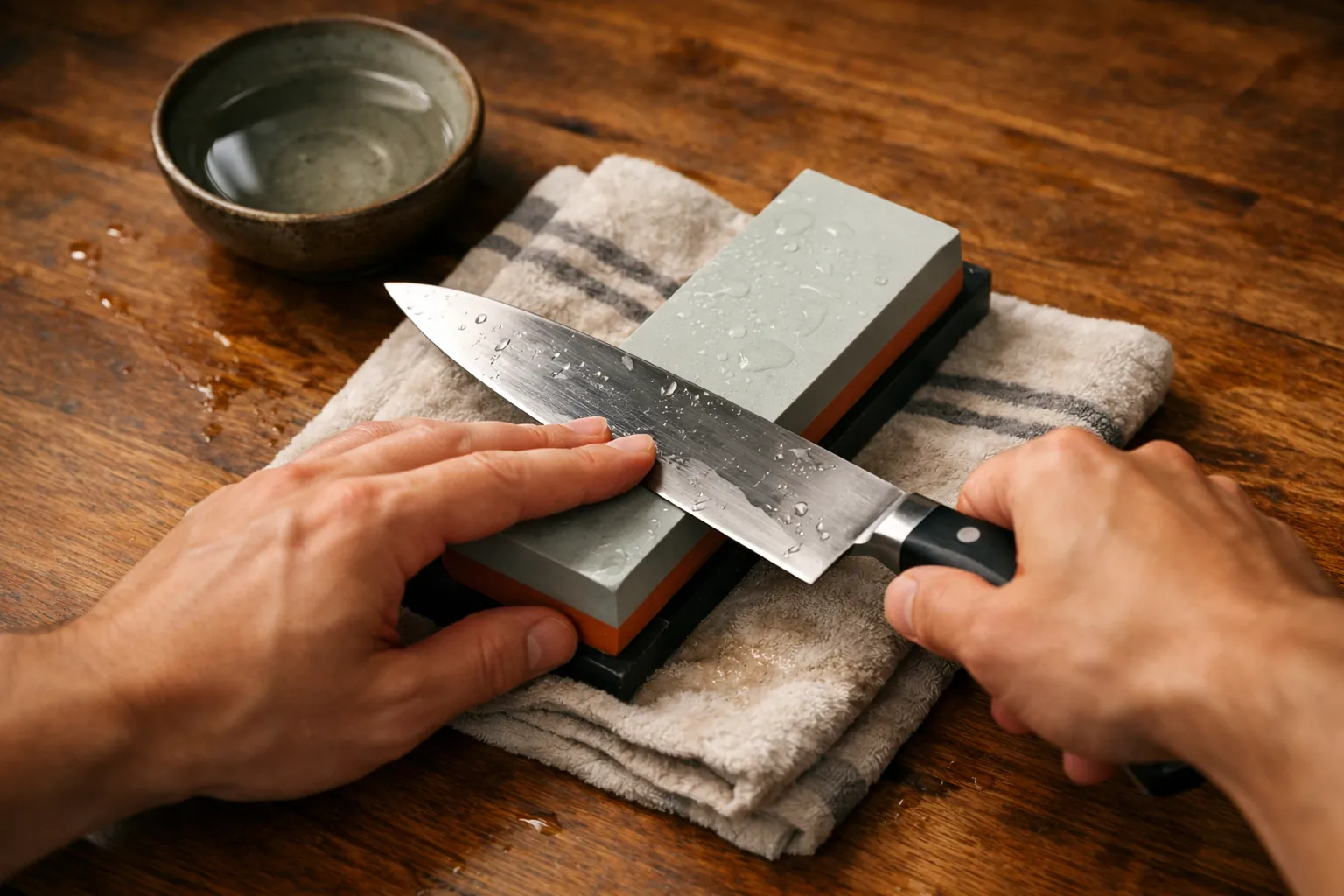 How to use a whetstone, step by stepSoak, set the angle, raise a burr, switch grits, remove the burr. That's the whole method. Here's each step in plain terms, plus how to tell when you're done and what to do when the knife still won't cut.
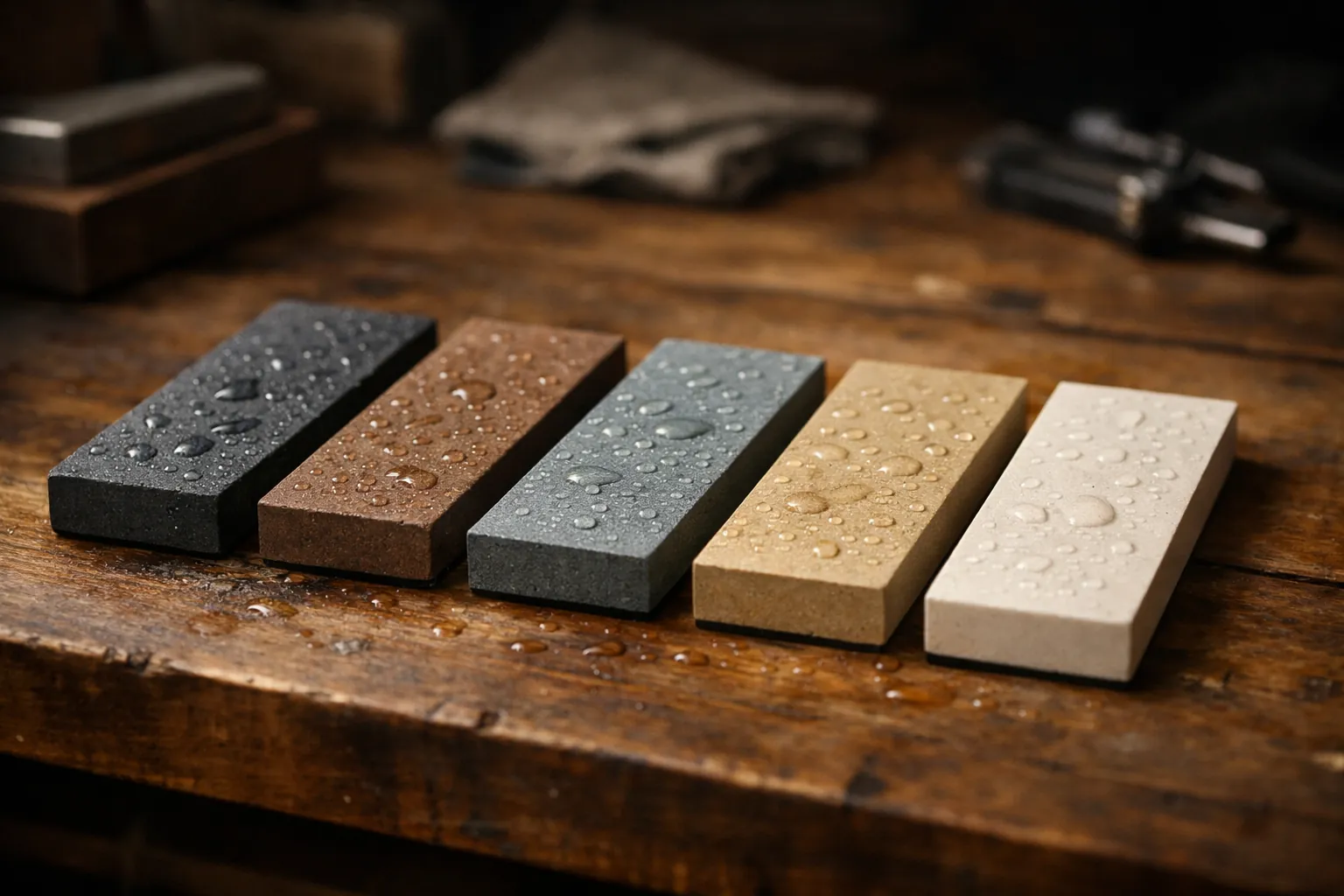 Sharpening stone grit chart, explainedLower numbers remove metal fast; higher numbers polish. Here's what each grit range does, which stones most kitchen knives actually need, and why a 1000 on one stone isn't always a 1000 on another.
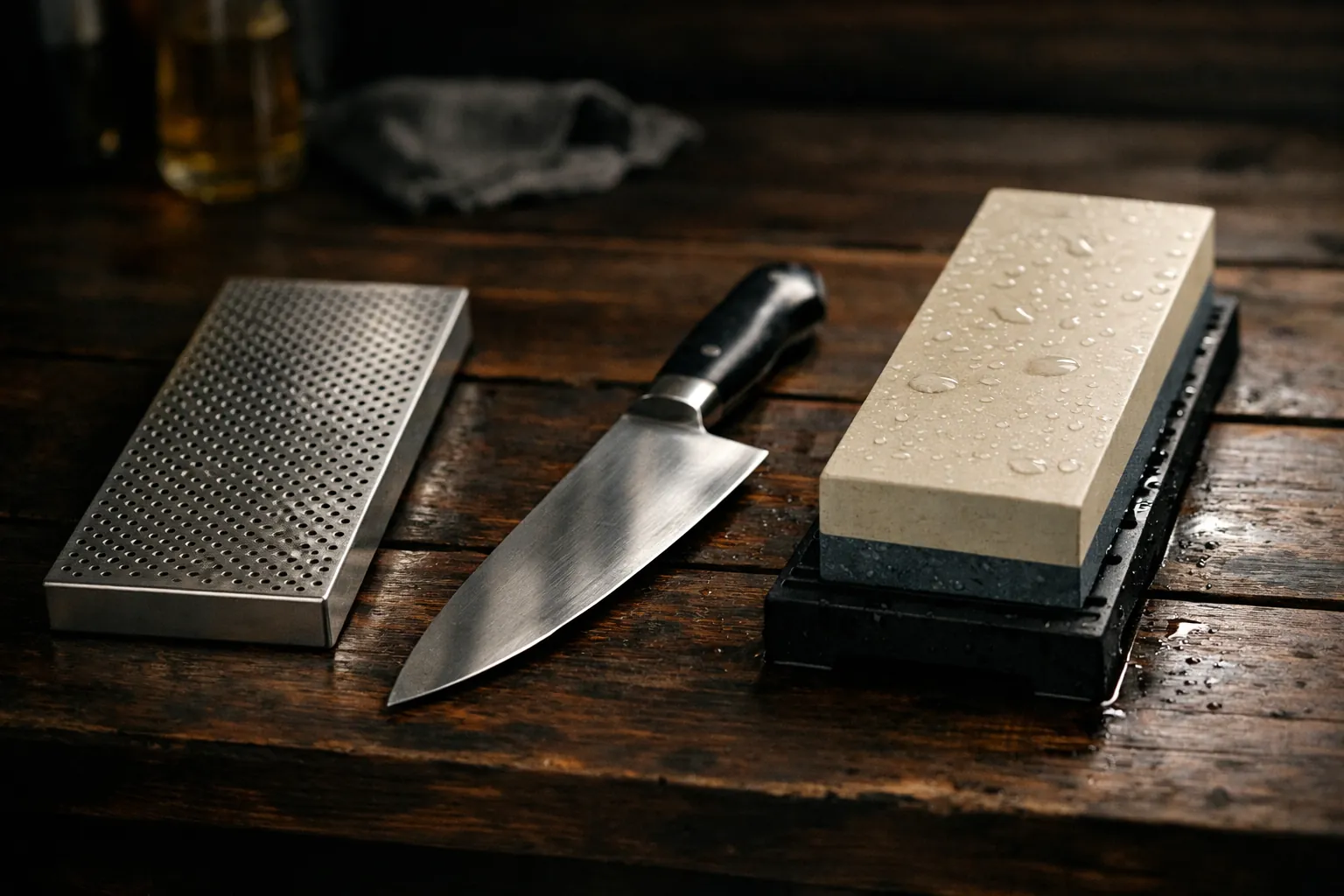 Whetstone vs diamond stone: which should you sharpen on?Diamond plates cut fast, stay flat and handle the hardest steels. Water stones give a finer, more refined edge and better feedback for less money. Many sharpeners end up using a diamond plate for the coarse work and water stones for the finish.
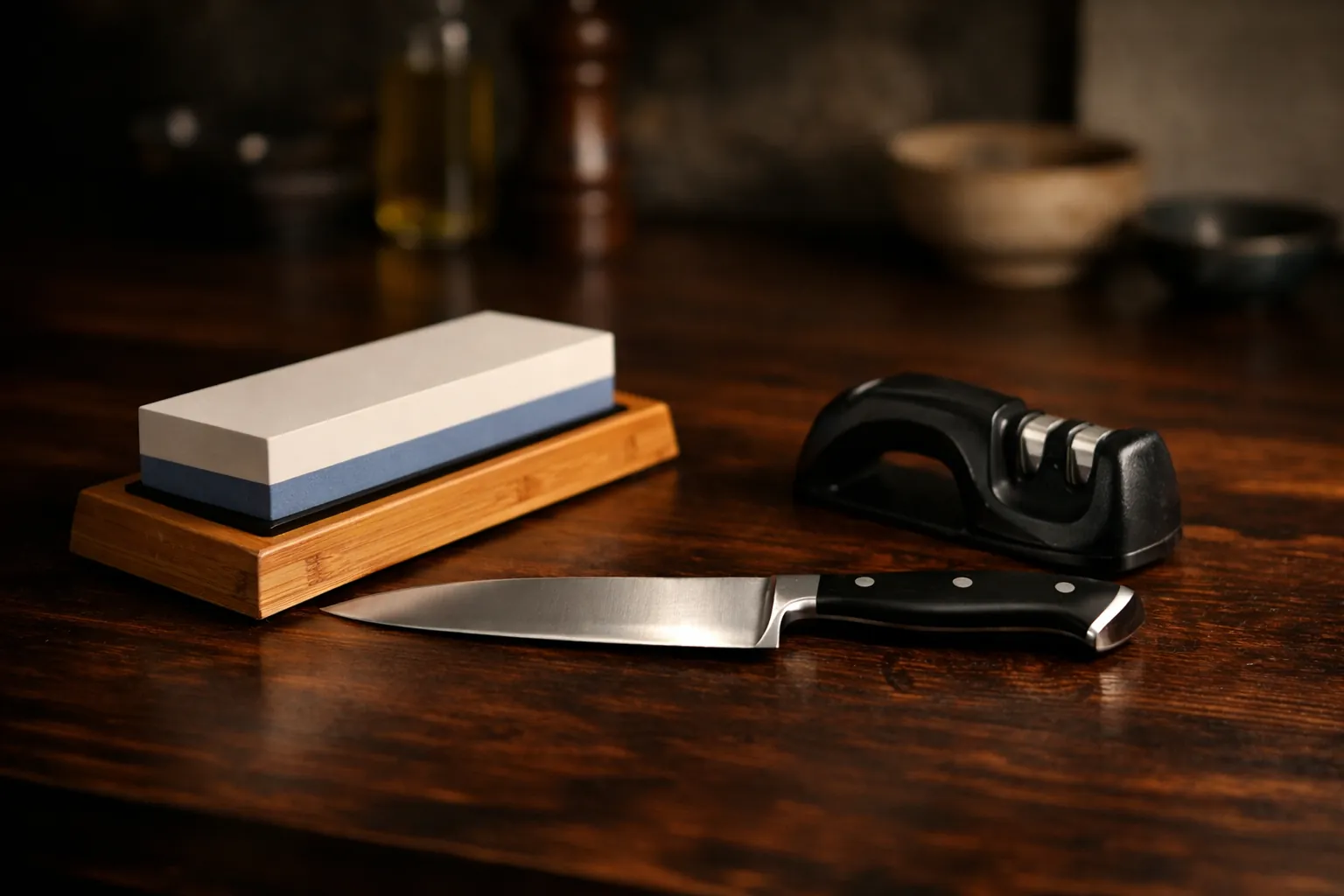 Whetstone vs knife sharpener: which should you actually buy?A whetstone gives you the best edge and the most control, if you're willing to learn. A pull-through, electric or rolling sharpener gives you a good-enough edge in seconds. Here's how to tell which camp you're in.