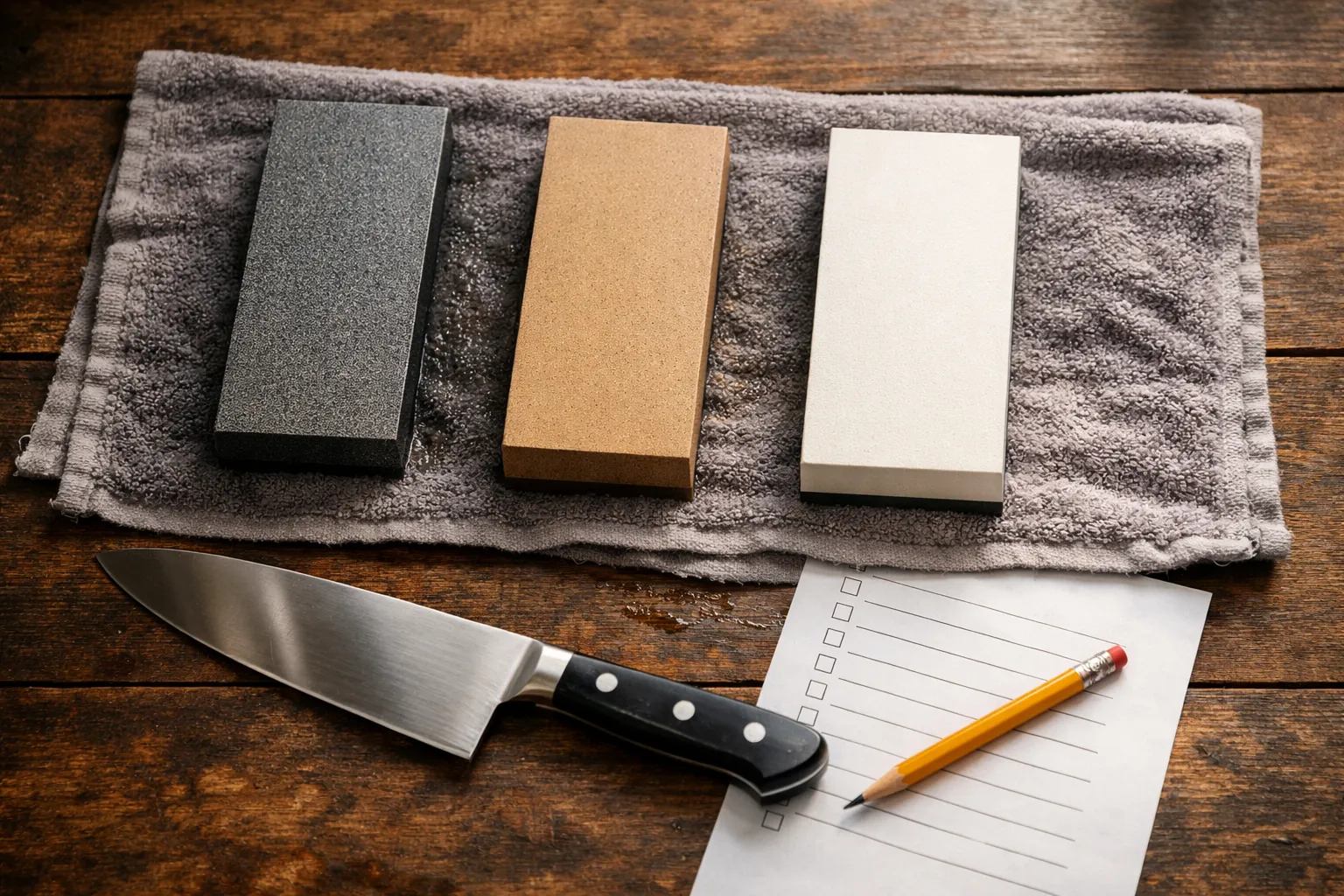
Start on the grit that fixes your knife's problem, not the coarsest stone you own. Chipped or very dull: 220 to 400. Dull with no chips: 1000. Just lost its bite: 3000 or finer, or a strop. Then step up until you reach the finish you want. The sheet below puts that on one page, along with a tick-box routine for each session and a log so you know when each knife was last done. The full explanation of grit numbers is on the sharpening stone grit chart.
Whetstone grit progression
1. Start here: what's wrong with the knife?
Start 220–400
Start 1000
3000+ or strop
Hone or strop only
2. Progression by knife
| Knife / goal | Stones in order | Finish with |
|---|---|---|
| German / Western kitchen knife | 1000 → 3000 or 4000 | a few light strokes, or hone |
| Japanese kitchen knife (hard steel) | 1000 → 3000 → 6000 or 8000 | light alternating strokes |
| Pocket / EDC knife | coarse diamond or 400 → 1000 | strop with compound |
| Hunting knife | 400 → 1000 | strop; leave some bite for meat and hide |
| Repair: chips, broken tip, new bevel | 220 → 1000 → 3000 | whatever the knife normally gets |
Rule of thumb (common practice, not a standard): roughly double the grit each step. Don't jump from 400 to 8000. Grit numbers aren't universal: JIS (Japanese stones), FEPA and diamond micron ratings use different scales.
3. Session routine
- Soak or splash the stone (per its instructions)
- Check it's flat (pencil grid, a few strokes)
- Marker on the bevel
- Set the angle: my angle ____°
- Side 1: raise a burr along the full edge
- Side 2: raise a burr along the full edge
- Alternate lighter strokes, both sides
- Next grit: repeat, lighter
- Deburr: strop or a few very light passes
- Test: paper or tomato
- Rinse, dry, flatten if needed
- Fill in the log below
4. Sharpening log
| Knife | Angle | Grits used | Date | Notes |
|---|---|---|---|---|
Grit ranges are common sharpening practice; check your stone maker's instructions for soaking. Angles by brand: whetguide.com/printable-knife-sharpening-angle-chart/ · WhetGuide · whetguide.com/whetstones/
How to use the sheet
Strip 1 decides your first stone. Be honest about the knife's condition: most kitchen knives that "won't cut anymore" are dull, not damaged, and a 1000 stone is the right start. Table 2 then gives the order of stones for the kind of knife you're holding. The routine in section 3 is the same every session, so after a few rounds you'll stop needing it, except the angle line, which is worth writing down for each knife. The log is what keeps people coming back to the sheet: a row per knife per session tells you when the Japanese petty was last touched and at what angle.
Why go coarse to fine at all
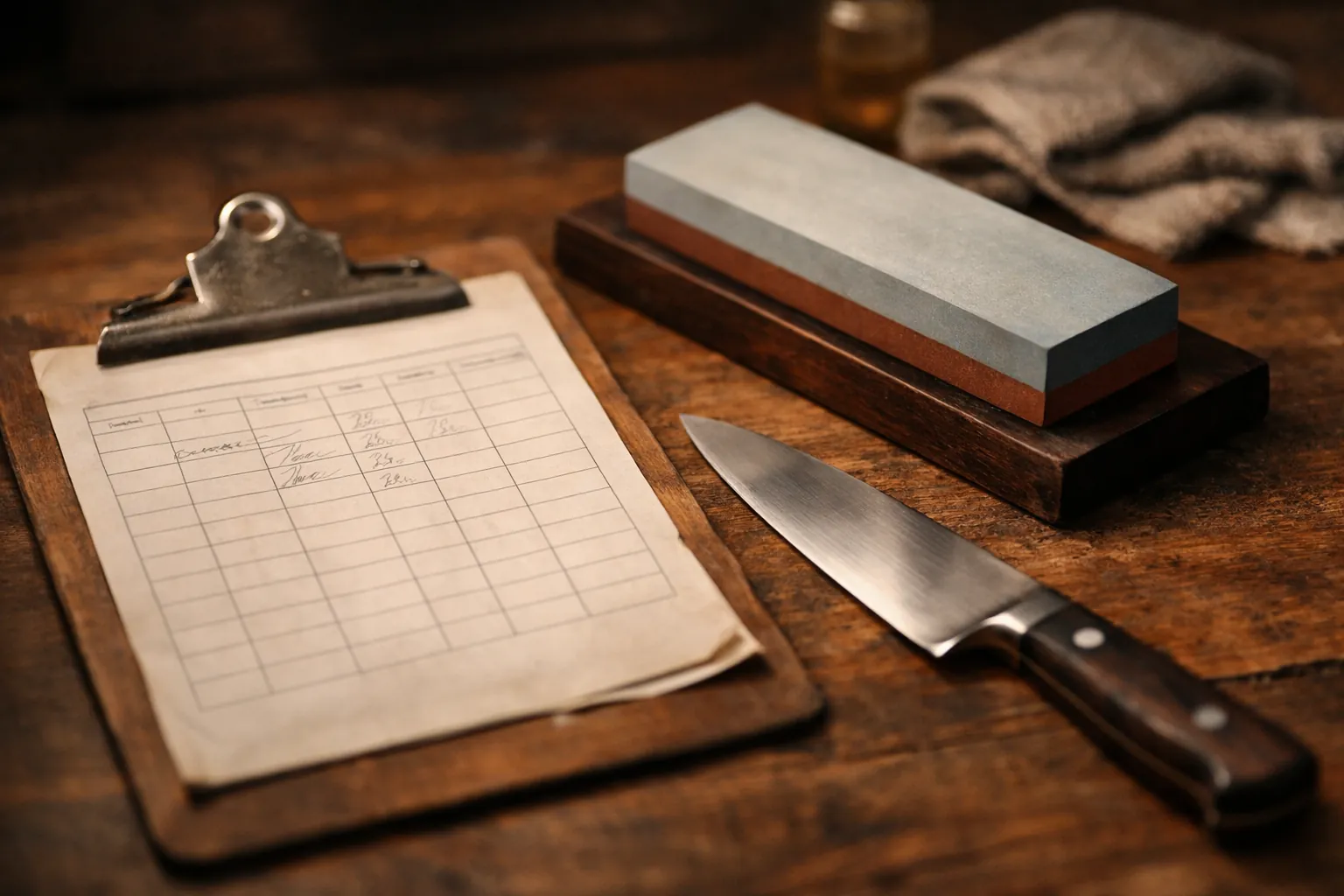
Each stone leaves scratches. A coarse stone cuts fast and leaves deep ones; a fine stone cuts slowly and leaves shallow ones. The job of each step is to replace the previous stone's scratches with smaller ones. Skip too far and the fine stone has to grind away deep grooves on its own, which takes ages. Stop too early and the edge is sharp but toothy. Toothy isn't wrong: hunting and pocket knives often cut better with a slightly coarse finish, which is why their rows on the sheet stop around 1000.
The burr tells you when to move on
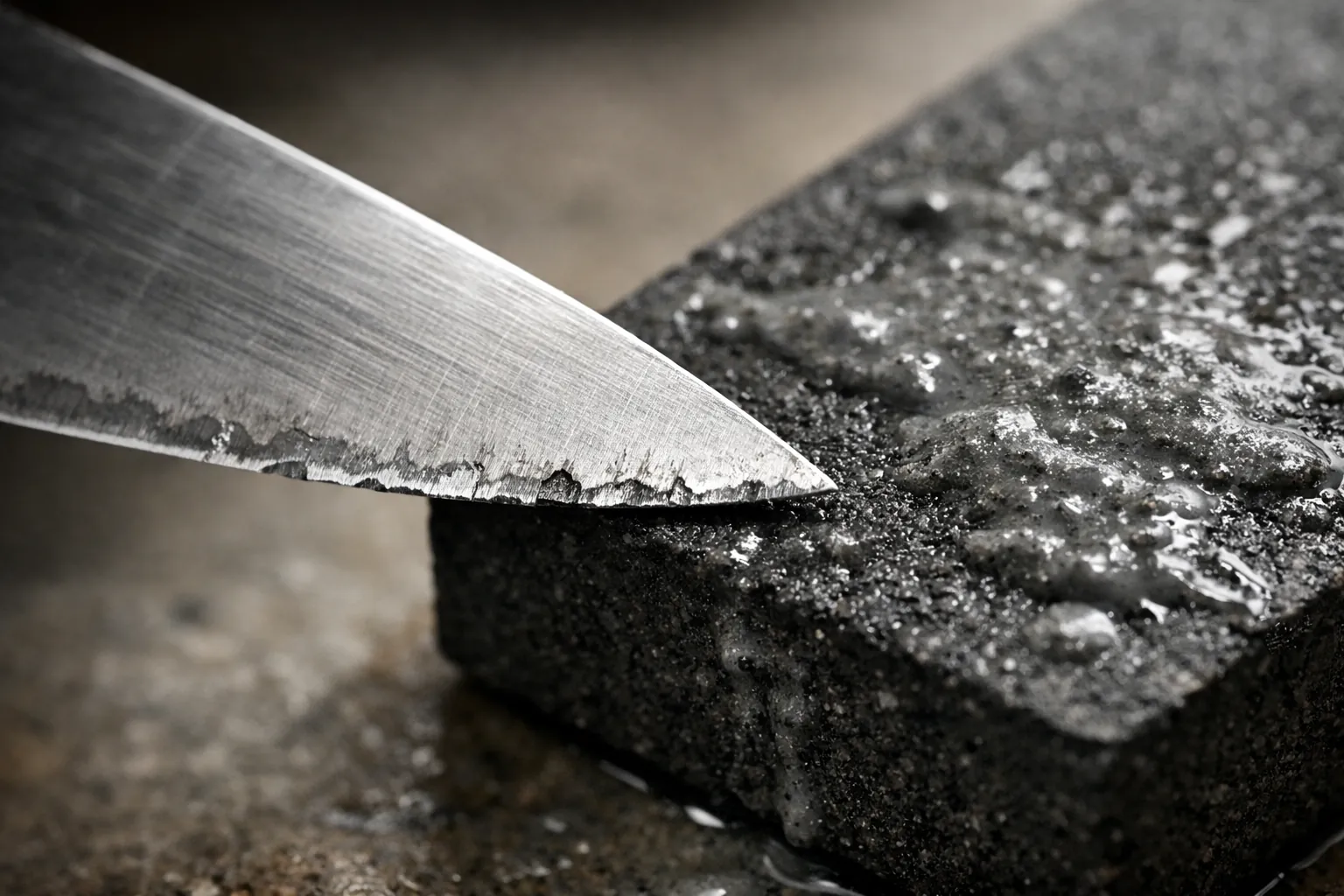
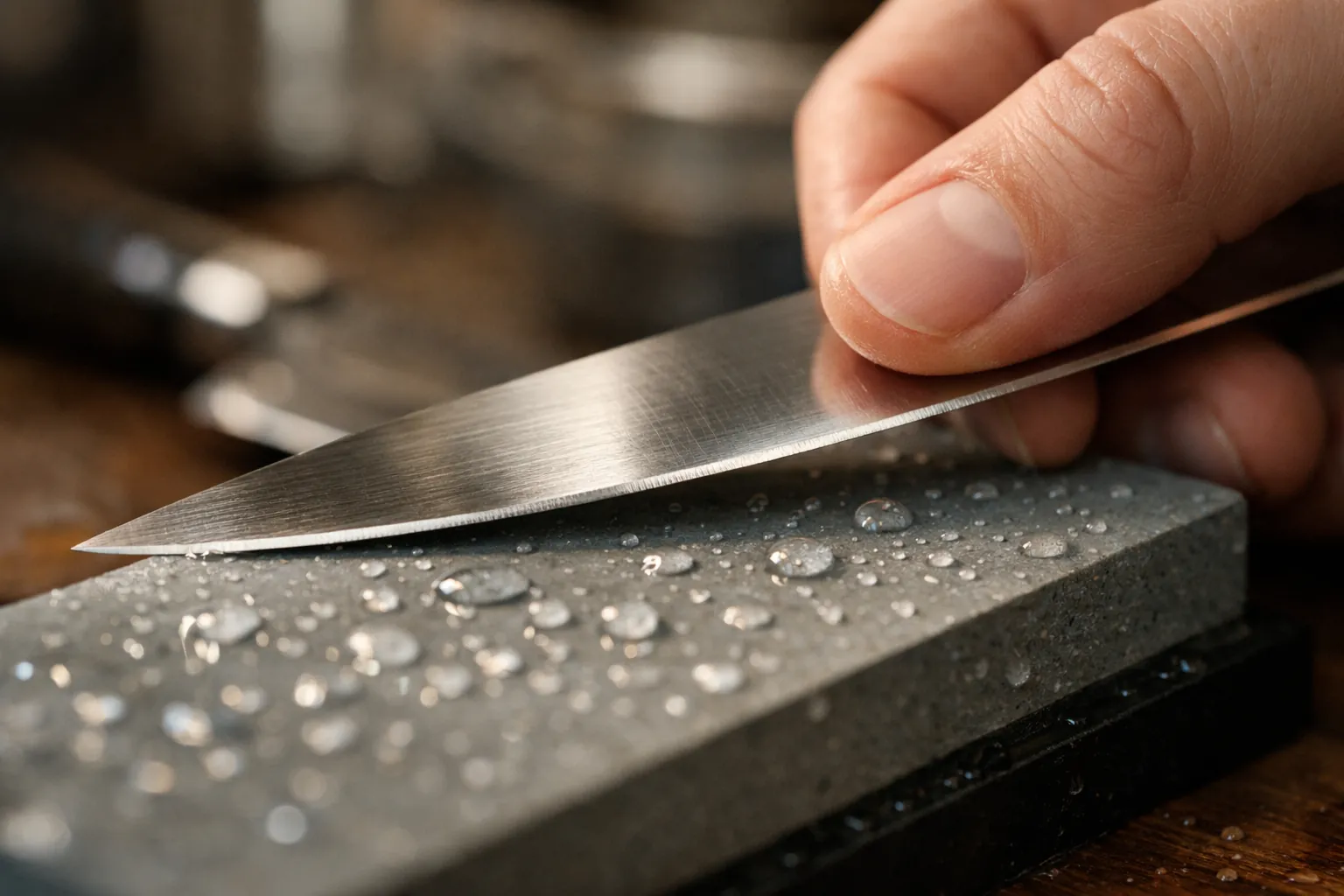
Don't move to the next grit after a set number of strokes. Move when you can feel a burr, a tiny lip of metal, along the whole length of the opposite side. Draw a fingertip gently across the edge, from spine toward edge, never along it. If the burr is only at the heel, keep going on that stone. The how to use a whetstone guide has photos of each step.
Stones that cover each row
| Row on the sheet | A stone that covers it | From the listing |
|---|---|---|
| German kitchen, hunting, pocket | KEENBEST 400/1000 | Two 7 × 2.2 × 1.1 inch stones; soak 10–15 minutes |
| German or Japanese kitchen | Sharp Pebble 1000/6000 | Dual grit, bamboo base, angle guide; 25,000+ ratings |
| Japanese kitchen | King KW65 1000/6000 | 8 × 2.5 × 1 inch with a plastic base |
| The whole sheet, repair to polish | Intelitopia 400/1000 + 3000/8000 set | Two dual-grit stones covering 400 to 8000 |
Which one is enough for you? Our is a 1000 grit whetstone enough guide answers that by knife, and the best whetstone sets for beginners compares complete kits. Every stone dishes with use, which throws off the angle; check it every few sessions with the method in how to flatten a whetstone.
Printing
The button prints only the sheet, on US Letter with narrow margins. For A4, choose "fit to page". Print a few copies of the log, or save as PDF and print it again when the rows fill up. The companion sheet is the printable angle chart by brand, which has the angle to write in the routine's blank.
Grit ranges and the doubling rule reflect common sharpening practice, not a published standard. Product details from Amazon listings checked October 3, 2026. How we research · Affiliate disclosure