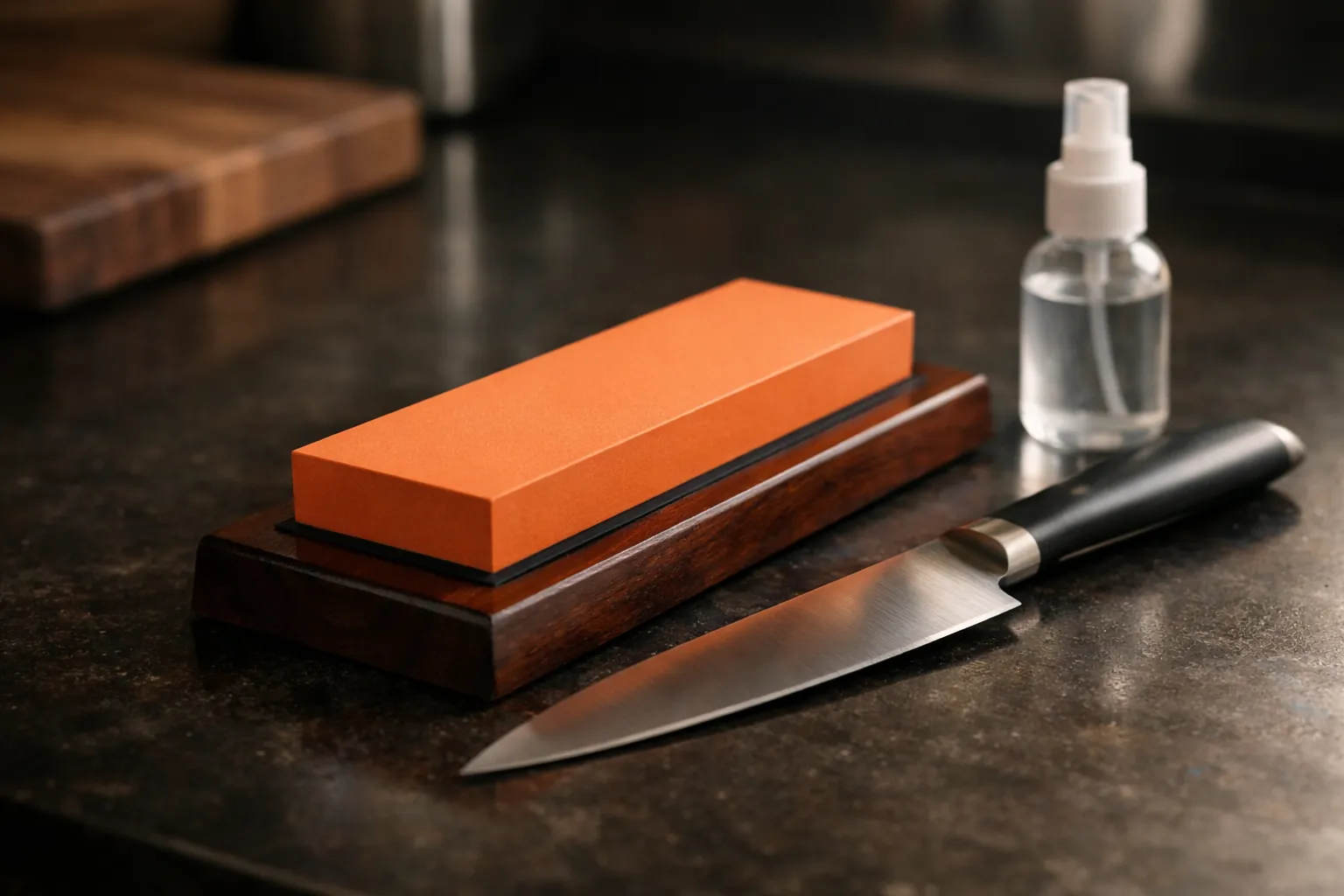
Yes, for most knives. A 1000 grit whetstone sharpens German kitchen knives, pocket knives and hunting knives to an edge that's sharp and has some bite, and many people never need anything else. It falls short in two cases: chipped or badly neglected knives, where it's too slow, and hard Japanese knives, where a finer stone after it gives a noticeably better edge. If you're buying your first stone, a combination stone with 1000 on one side covers both cases for not much more. The sharpening stone grit chart explains the numbers.
Is 1000 enough for your knife?
| Knife and goal | Is 1000 enough? | Add |
|---|---|---|
| German or Western kitchen knife, everyday cooking | Yes | Nothing; hone between sharpenings |
| Japanese kitchen knife (hard steel) | Sharp, but not its best | A 3000 to 6000 finishing stone |
| Pocket or EDC knife | Yes | A strop for a cleaner edge |
| Hunting knife | Yes; the toothy edge suits meat and hide | Nothing |
| Chipped, broken tip or very dull | Too slow | A 220 to 400 stone first |
| Straight razor or woodworking tools | No | Much finer stones |
The full order of stones by knife and condition is on our printable whetstone grit progression chart.
What a 1000 grit edge is like
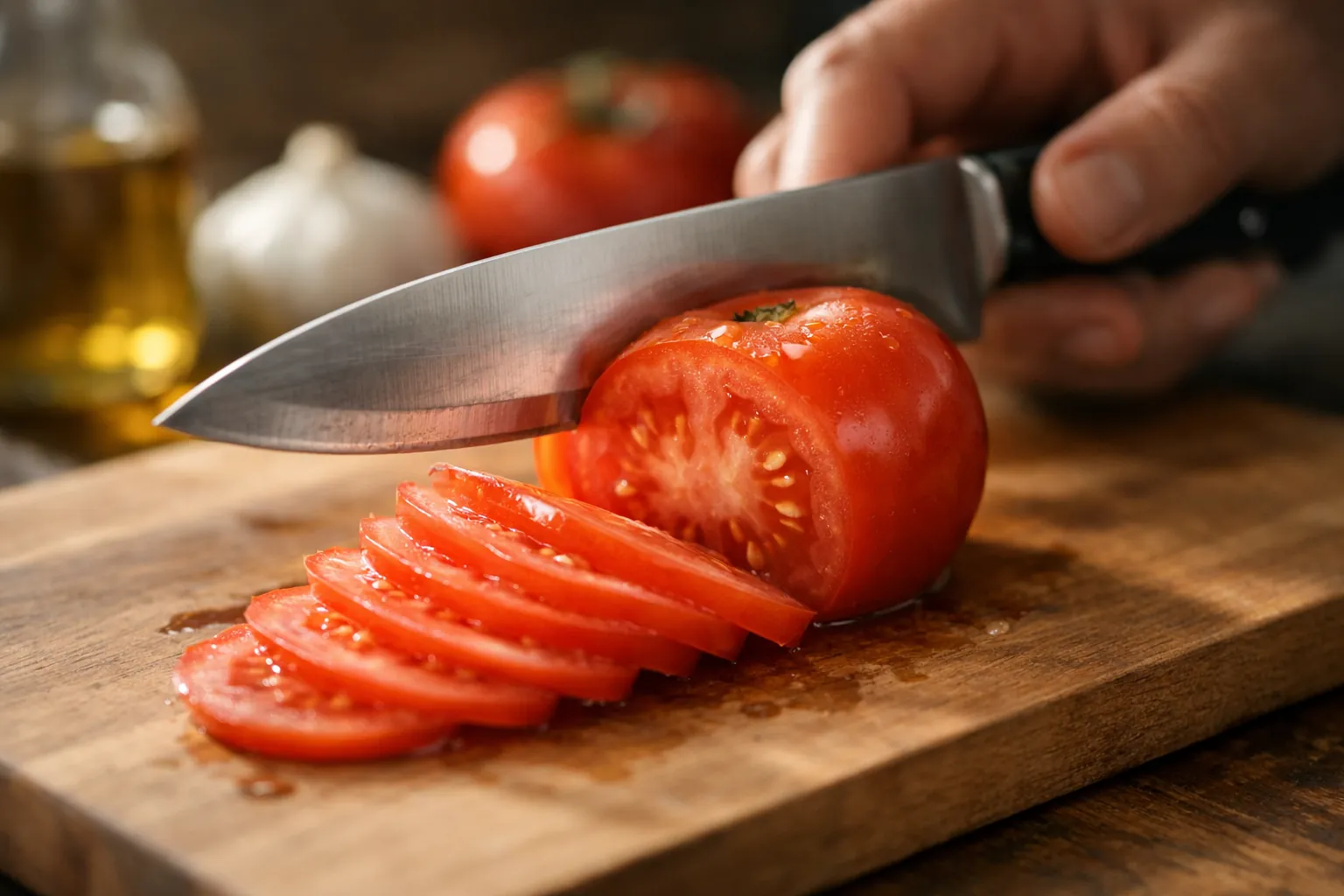
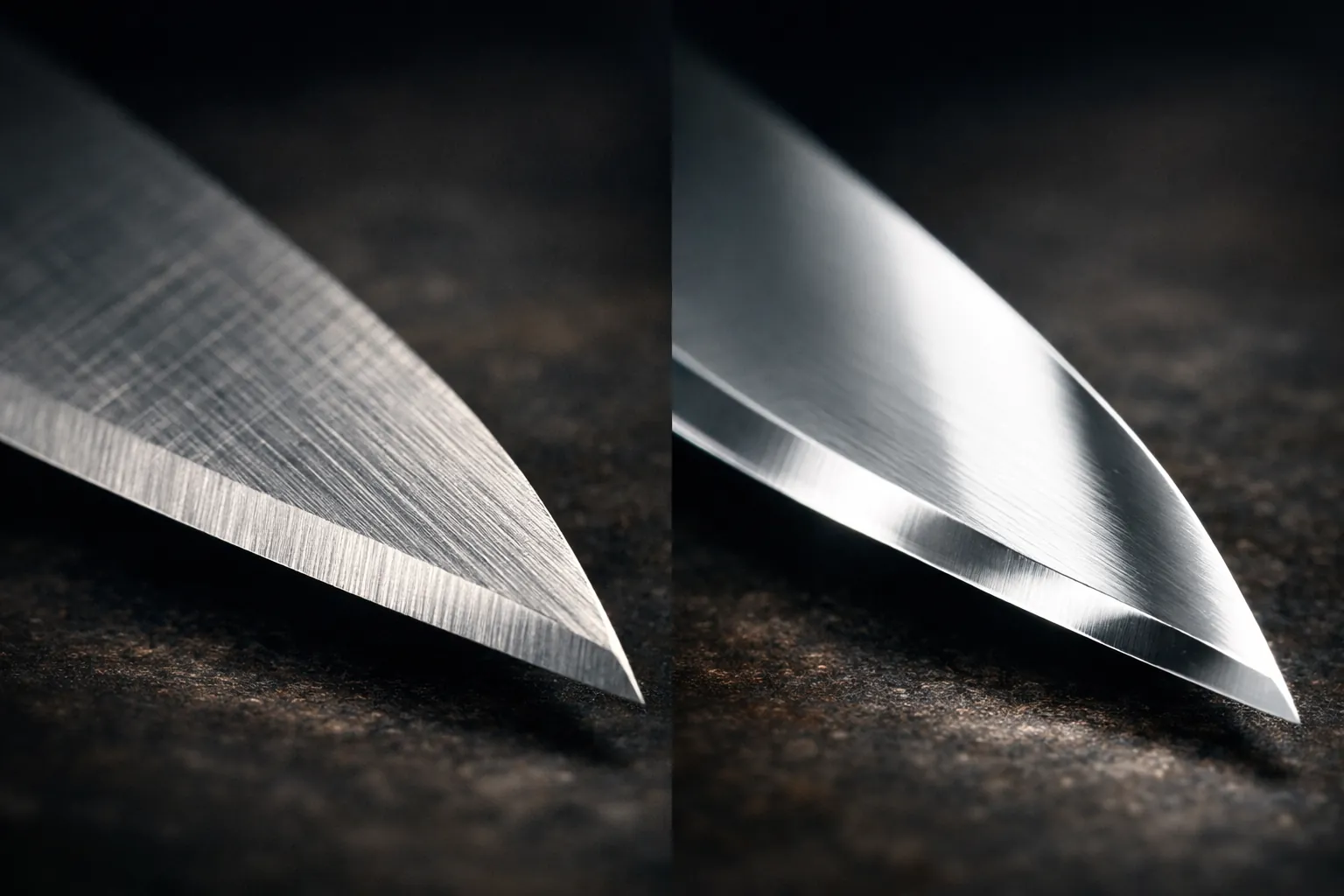
A 1000 grit stone leaves fine, visible scratches along the bevel. At the edge, those scratches form a slightly toothy line that grabs food. That's why a 1000 grit edge often feels sharper on a tomato than a polished one, and why hunters and outdoor knife owners like to stop there. What you give up is refinement: a polished edge from a 6000 stone glides through push cuts more smoothly and, on hard steel, holds its sharpness longer before it feels dull.
Where 1000 falls short
Chips and neglected edges
A 1000 stone removes steel slowly, which is good for sharpening and bad for repairs. Grinding out a visible chip or reshaping a broken tip on a 1000 can take an hour. A 220 to 400 stone does it in a fraction of the time, then the 1000 cleans up its deep scratches. If your knives live in a drawer loose with other utensils, you'll hit this often.
Hard Japanese steel
Japanese knives at 60 HRC and up (Miyabi lists 60 to 64 on its pages) can hold a much finer edge than 1000 grit leaves. Finishing on 3000 to 6000 is where they come alive. A 1000 alone gives you a sharp Japanese knife, just not the one you paid for.
Single 1000 or a combination stone?
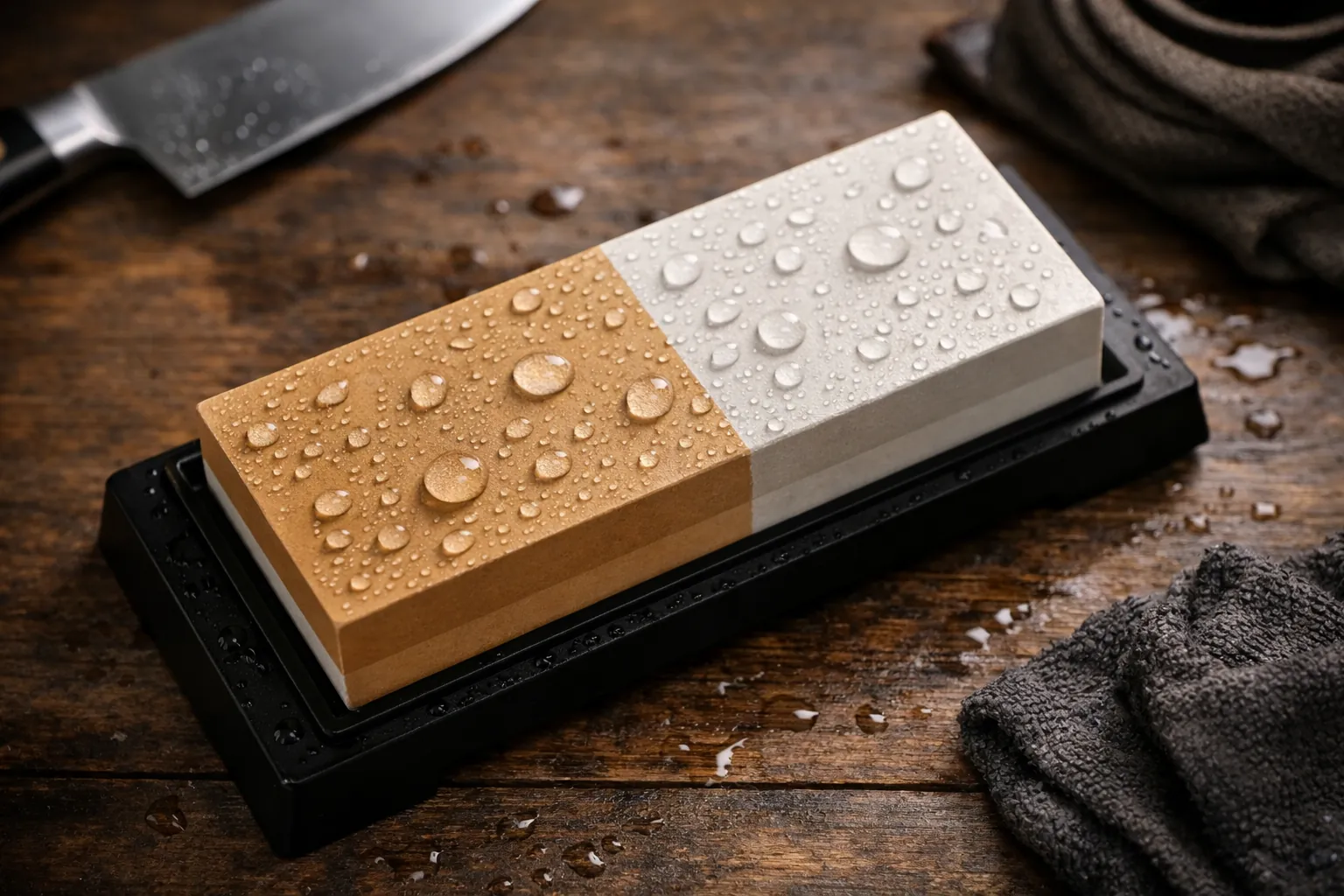
Combination stones cost little more than single stones and add a second grit. Which pair depends on your knives:
| Stone | Best for | From the listing |
|---|---|---|
| Shapton #1000 (K0702) | One excellent 1000, nothing else | 210 × 70 mm; 4.8 stars from 4,500+ ratings |
| KEENBEST 400 + 1000 | German, pocket and hunting knives; occasional repairs | Two 7-inch stones; soak 10–15 minutes |
| MIDO 400/1000 combination | The same pair in one stone | Green silicon carbide; soak 5–10 minutes; acacia base |
| Sharp Pebble 1000/6000 | Japanese knives and anyone who wants a polish | Bamboo base and angle guide; 25,000+ ratings |
| Sharp Pebble Complete 1000/6000 | Beginners who want angle help | Adjustable guides at 15°, 17°, 20° and 22° |
| King KW65 1000/6000 | A classic Japanese combination | 8 × 2.5 × 1 inch, plastic base |
Our default advice: 400/1000 if your knives are German, outdoor or getting chipped; 1000/6000 if they're Japanese or already in good shape. The best whetstone sets for beginners guide compares complete kits, and the King KW65 review covers the classic 1000/6000 combination on its own.
A note on grit numbers
"1000" isn't a universal unit. Japanese stones follow the JIS scale, many European abrasives use FEPA, and diamond plates are often rated in microns, so a 1000 from one maker can cut a bit coarser or finer than a 1000 from another. Within one brand's range, the numbers line up. Across brands, treat them as approximate. The grit chart covers the systems.
Signs you're ready for a second stone
Start with the 1000 and let your knives tell you what's missing. These are the signals we'd watch for:
| What happens | What it means | Next stone |
|---|---|---|
| Sessions take more than 20 minutes to raise a burr | The edges are too far gone for a medium stone | 220–400 |
| You can see nicks against the light after sharpening | 1000 isn't removing enough steel to clear damage | 220–400 |
| The edge is sharp but feels scratchy on push cuts | You've reached the limit of the 1000 finish | 3000–6000 |
| A Japanese knife dulls in days instead of weeks | The coarse edge is wearing fast on hard steel | 3000–6000, then strop |
| None of the above | The 1000 is doing its job | Nothing: keep honing |
If you already know your knives are Japanese, skip the wait and buy the 1000/6000 combination now. If you already know they're chipped, get the 400/1000. The angle calculator helps with the other half of a good first session: holding the right angle on whichever stone you choose.
Getting the most from one 1000 stone
- Keep it flat. A 1000 is the stone you'll use most, so it dishes first. Check it with a pencil grid; see how to flatten a whetstone.
- Finish with lighter pressure. The last few strokes with almost no pressure leave a cleaner edge than the stone's grit suggests.
- Strop afterward. Leather and compound remove the burr and give a 1000 edge a lot of the refinement of a finer stone.
- Hone between sharpenings so the stone only comes out every few months.
New to stones? How to use a whetstone covers the technique from first stroke to burr. Our pick of 1000 grit and combination stones is in the best whetstone guide.
Grit guidance reflects common sharpening practice. Steel hardness from Zwilling's Miyabi pages. Product details from Amazon listings checked October 3, 2026. How we research · Affiliate disclosure