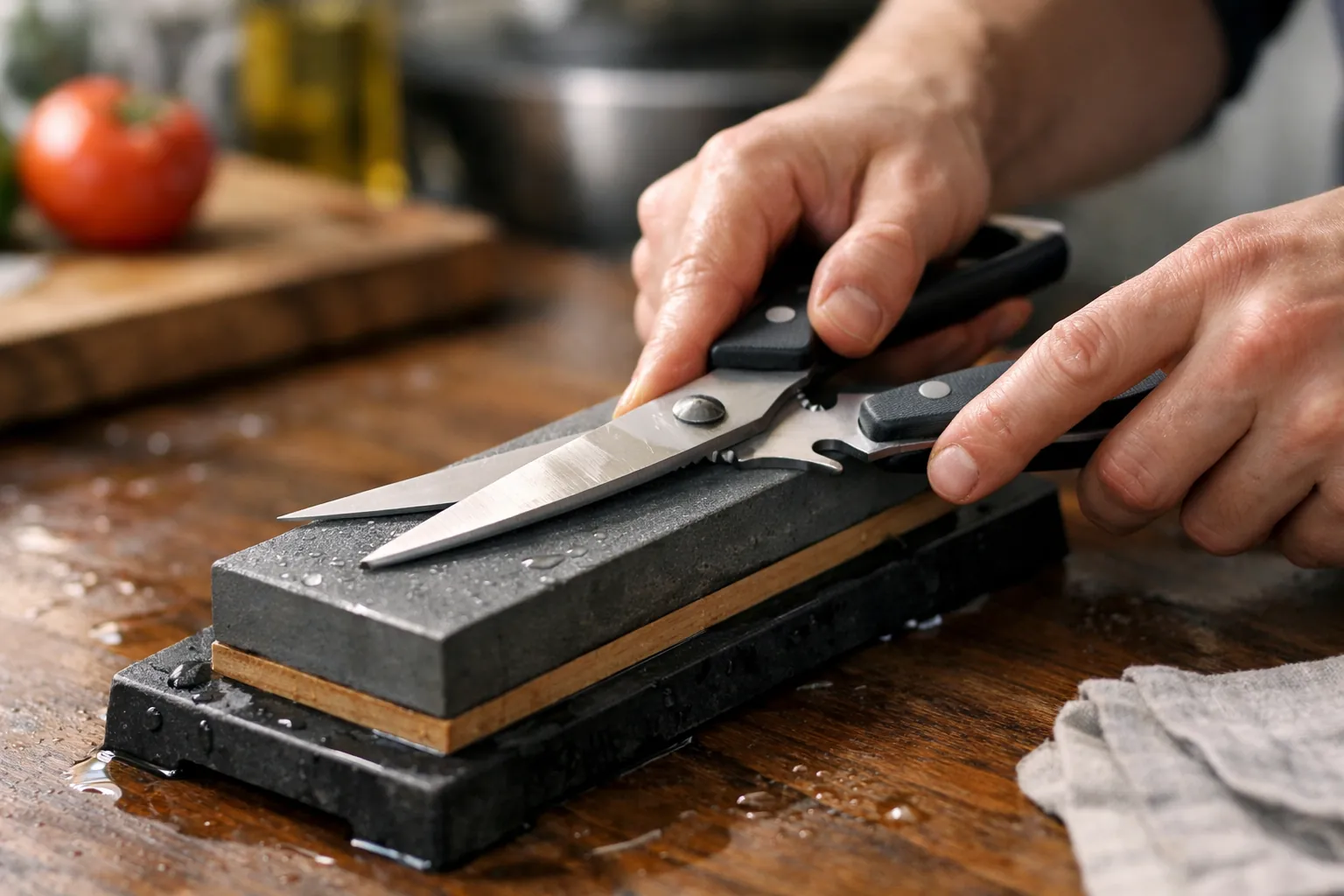
Open the scissors and sharpen each blade separately: lay the beveled outer edge flat on the stone at the angle it already has, stroke from the pivot toward the tip until the bevel is clean and bright, then take the burr off the inside with one light, flat pass. Never grind the flat inner faces. Scissors cut by two blades shearing past each other, so the fit of those inner faces matters more than how keen either edge is. A 400 to 1000 grit stone is all you need. If you don't own one yet, see the best whetstone sets for beginners.
How scissors cut, and what you're sharpening
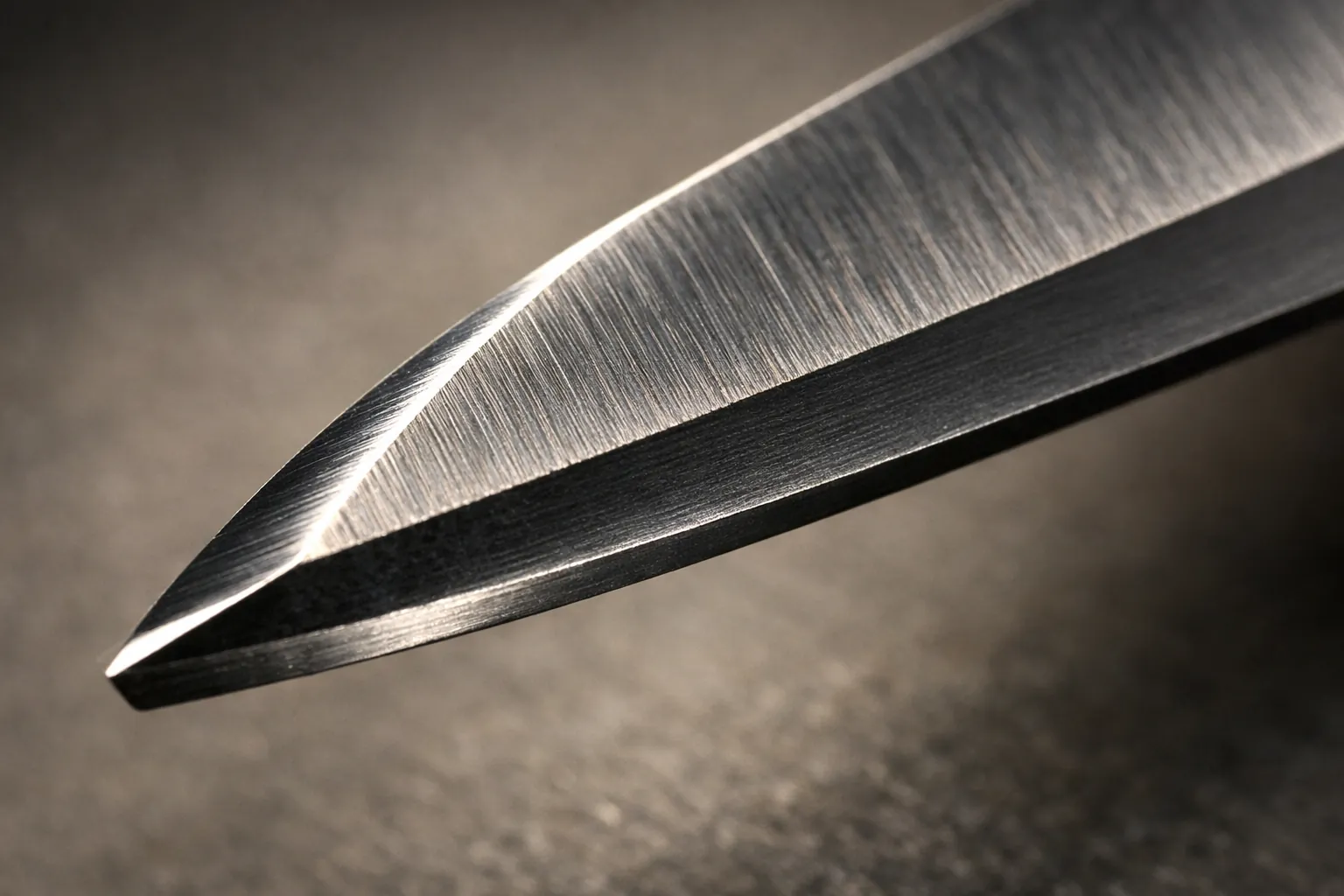
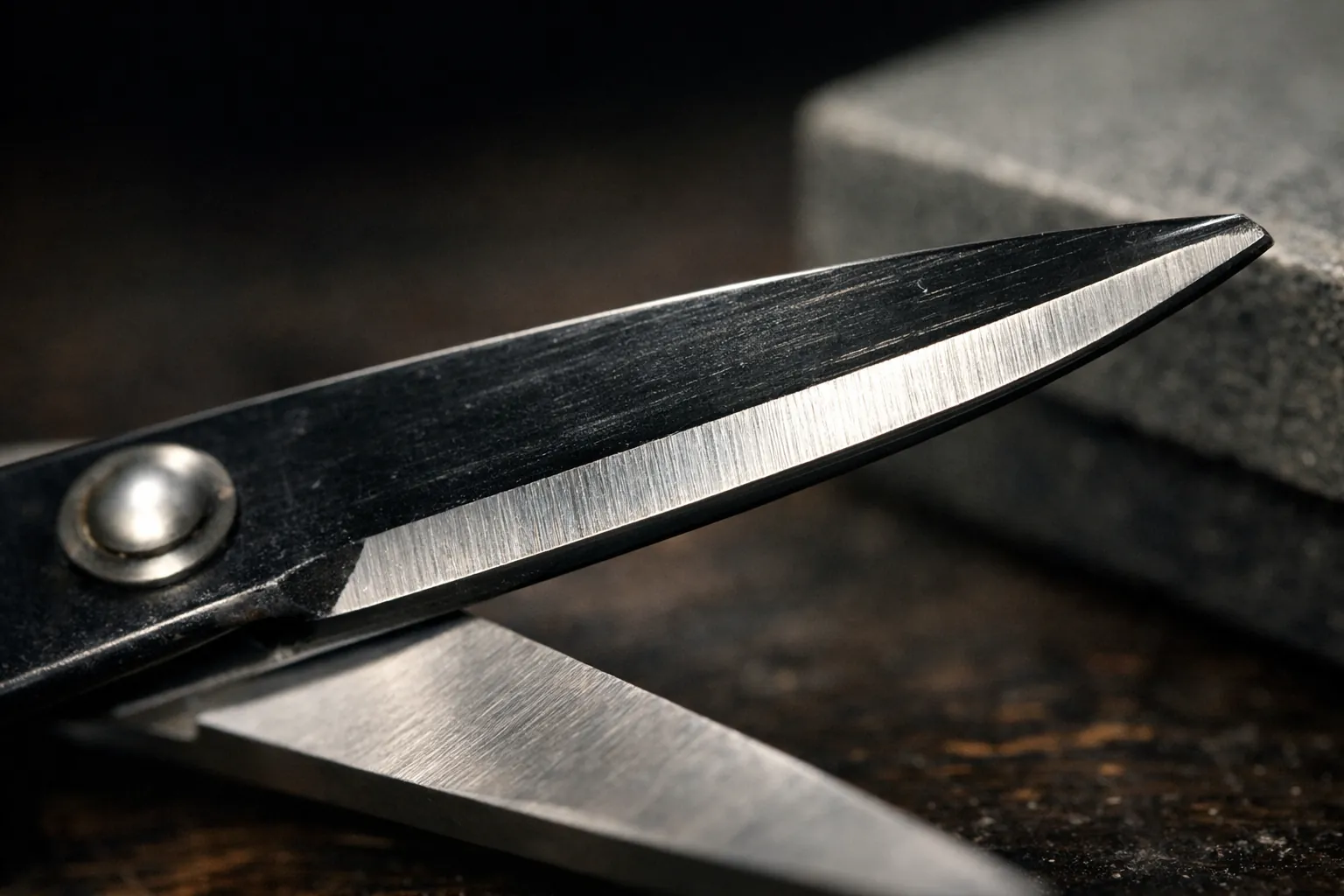
A knife edge is a thin wedge that slices. A scissor edge is a steep corner that pinches material against the other blade's corner as they slide past each other. Each blade has two surfaces that meet at the cutting edge:
- The bevel, a narrow angled strip on the outer side. This is what you sharpen.
- The inner face, which is flat (sometimes with a slight curve along its length that keeps the blades in contact). This is what makes the blades meet. Leave it alone apart from deburring.
Because the edge works by pinching rather than slicing, scissor bevels are far steeper than knife bevels. Thinning them to a knife angle makes the edge weak and doesn't help it cut. Bypass pruners follow the same rule, and our guide to sharpening garden tools shows which face to file.
Finding the angle with a marker
We couldn't find a scissor maker that publishes a bevel angle, and the angle varies a lot between kitchen shears, fabric scissors and craft scissors. So use the same marker method you'd use on a knife:
- Color the bevel of one blade with a permanent marker.
- Open the scissors fully and lay the bevel on the stone at your best guess.
- Take one light stroke and look. Ink gone at the cutting edge only means you're too steep; ink gone at the top of the bevel only means too shallow. Adjust until it comes off evenly.
The sharpie trick guide shows what each ink pattern looks like.
Step by step on a whetstone
- Clean the scissors. Glue and fabric fibers clog a stone fast.
- Soak or wet the stone per its instructions and set it on a non-slip base or towel.
- Open the scissors as far as they go. If they come apart at the screw, separating the blades is easier, but don't force a riveted pivot.
- Hold one blade's bevel on the stone at the matched angle. Stroke from the pivot end to the tip in one smooth pass, as if you were trying to shave a thin layer off the stone. Keep the angle locked.
- Repeat until the bevel is bright from pivot to tip and you can feel a slight burr on the inner face.
- Do the other blade the same way.
- Deburr: lay each inner face perfectly flat on the stone and make one or two very light passes. Flat means flat; don't tilt it.
- Close and open the scissors a few times to knock off any remaining burr, then test.
Start on the 1000 side. Drop to 400 only for visible nicks. You don't need a finishing stone: a slightly toothy edge grips fabric and paper better than a polished one.
Kitchen shears, fabric scissors, hair shears
| Scissors | Sharpen at home? | Notes |
|---|---|---|
| Kitchen shears | Yes | Many come apart for cleaning, which makes sharpening easier. If one blade is serrated, sharpen only the plain blade. |
| Fabric and dressmaking shears | Yes, carefully | Keep the inner faces untouched; test on a scrap of the fabric you cut most. |
| Craft and office scissors | Yes | Cheap enough to practice on first. |
| Pinking shears | No | The zigzag teeth need a specialist. |
| Professional hair shears | No | Tight tolerances and specialized edges; send them to a salon-shear sharpener. |
A pull-through scissor slot, or a stone?
Some knife sharpeners include a slot made for scissors. It's faster, needs no skill, and is fine for kitchen and craft scissors. The trade-off is that the slot sets its own angle, which may not match your scissors, and it removes more steel than a stone.
- The SHARPAL 191H knife and scissors sharpener has a dedicated tungsten carbide scissor slot and a suction base, with more than 51,000 Amazon ratings.
- The Amazon Basics 4-in-1 sharpener has three knife stages plus a dedicated scissor slot, and comes with a cut-resistant glove.
- Spyderco says its Sharpmaker sharpens scissors as well as knives; its instruction book covers how.
Our view: use a slot for everyday kitchen and craft scissors, and a stone for good fabric shears you want to last. For a dedicated tool, see our best scissor sharpener picks, sorted by kitchen, sewing and garden scissors. The best knife sharpeners under $50 guide covers more budget tools.
Stones that list scissors
Any whetstone works, but a few say so on the listing. The KEENBEST 400/1000 set names scissors among the blades it handles, as does the MIDO 400/1000 stone. For which grit you need, see is a 1000 grit whetstone enough; for the stroke itself, how to use a whetstone.
Testing and troubleshooting
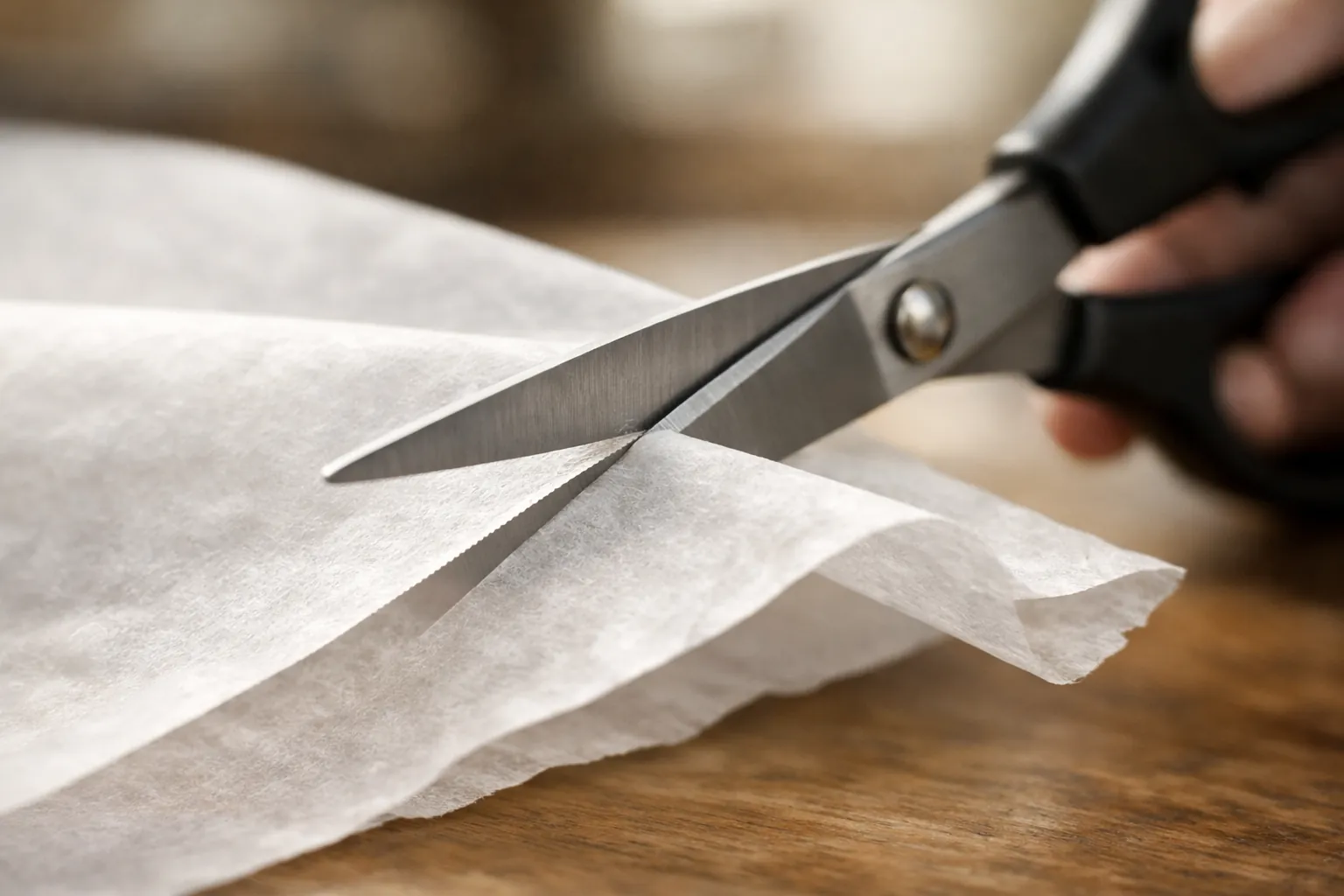
- Cut a strip of thin tissue or a plastic bag along the full blade length. It should cut cleanly from pivot to tip.
- Folds the material instead of cutting at the tip: the blades aren't meeting there. Check that the pivot screw is snug, not that the edge is dull.
- Catches or grinds when closing: a burr is left on the inner face. One more light flat pass.
- Cuts near the pivot only: the bevel wasn't sharpened all the way to the tip. Color it again and check.
Scissors are only one of the "sharpen anything" jobs your knife stones can do; the angle chart covers knives by type.
No scissor maker we checked publishes a bevel angle, so this guide uses the marker method instead of a number. Sharpmaker scissor use from Spyderco's product description. Product details from Amazon listings checked October 3, 2026. How we research · Affiliate disclosure