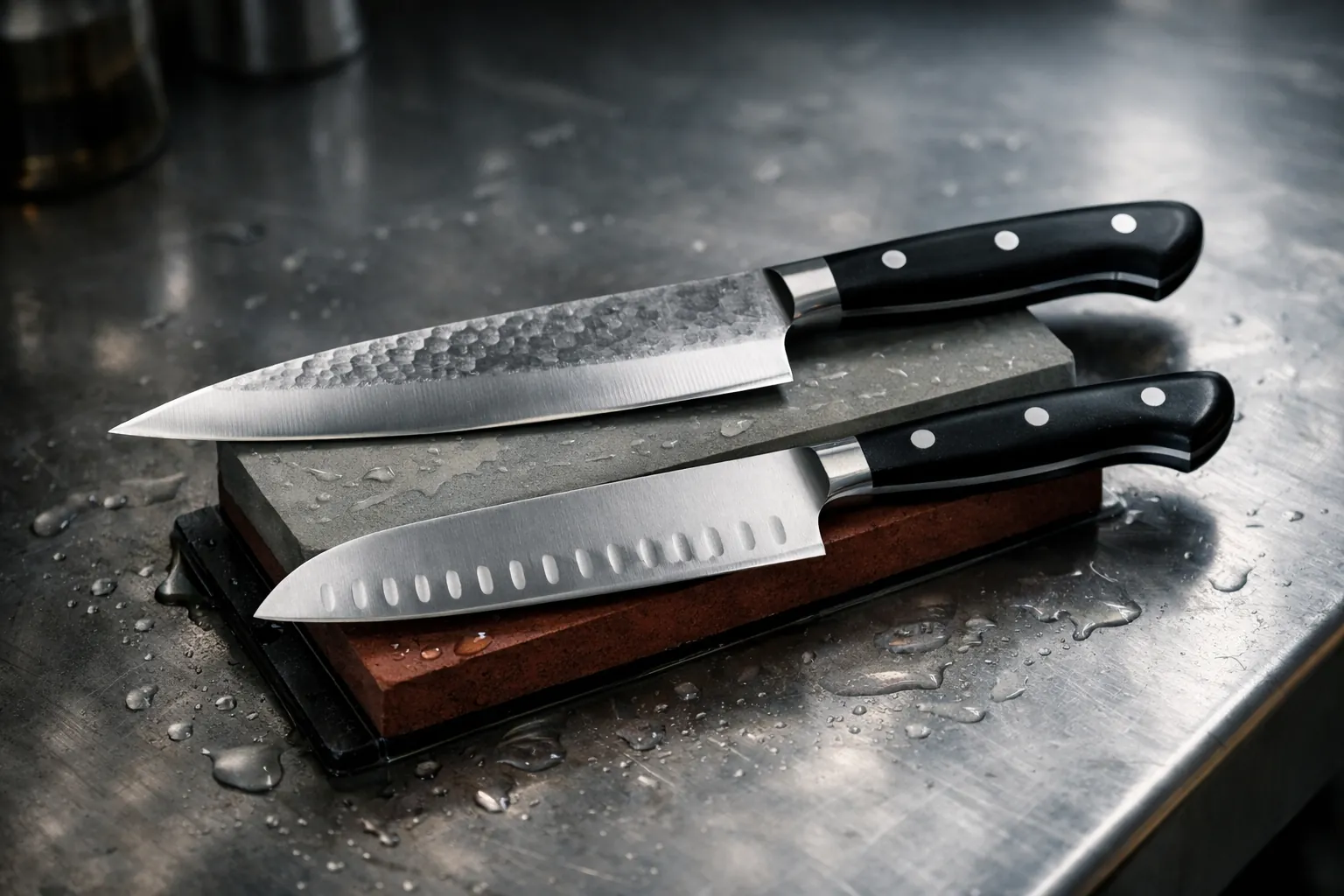
Sharpen Zwilling J.A. Henckels Western-style knives at about 15 degrees per side. Sharpen Zwilling santokus, Kramer by Zwilling and all Miyabi knives at 9 to 12 degrees. That's from Zwilling's own sharpening guide, and Tormek's list of maker recommendations matches it. The catch is that a Zwilling magazine article gives different numbers, which we sort out below. For other brands, see the knife sharpening angle chart.
What Zwilling's sharpening guide says
Zwilling's US "How to sharpen your knives" guide, checked October 3, 2026:
- "The angle between the blade and the steel should be approximately 15° for ZWILLING knives."
- "Santoku knives and all MIYABI and Kramer made by ZWILLING knives should be 9-12°."
- On a whetstone, "place it on the sharpening stone at an angle of 10 – 20°".
The first two lines are written about the honing steel, but they're the only knife-specific angles Zwilling's care guide gives, and they line up with Zwilling's own sharpener. The 10 to 20 degree stone instruction is a general range covering both families.
Where Zwilling disagrees with itself
A Zwilling Canada magazine article on sharpening angles gives a different set of numbers:
| Knife | Zwilling US sharpening guide | Zwilling Canada magazine | Use |
|---|---|---|---|
| European / Zwilling chef's knife | approximately 15° | "around 14 degrees" (chef's), "around 15" (European knives) | 15° |
| Santoku | 9–12° | "usually ... 17.5 degrees" | 9–12° on a Zwilling santoku |
| Japanese knives | Miyabi, Kramer: 9–12° | "often ... 10 degrees"; Japanese chef's knives "15 degrees" | 9–12° on Miyabi |
| Cleaver | not stated | "around 27.5 degrees" | Follow the existing bevel |
| Honing steel | 15° or 9–12°, by knife | "about 15-20 degrees" | Match your sharpening angle |
The magazine article reads like a general explainer about knives of all brands; the US guide is Zwilling's care instruction for its own knives. When they conflict, follow the care instruction. The 17.5 figure for santokus is the outlier: it's thicker than even Zwilling's Western knives, and far from the 9 to 12 its own guide and its own sharpener use.
Zwilling J.A. Henckels by line
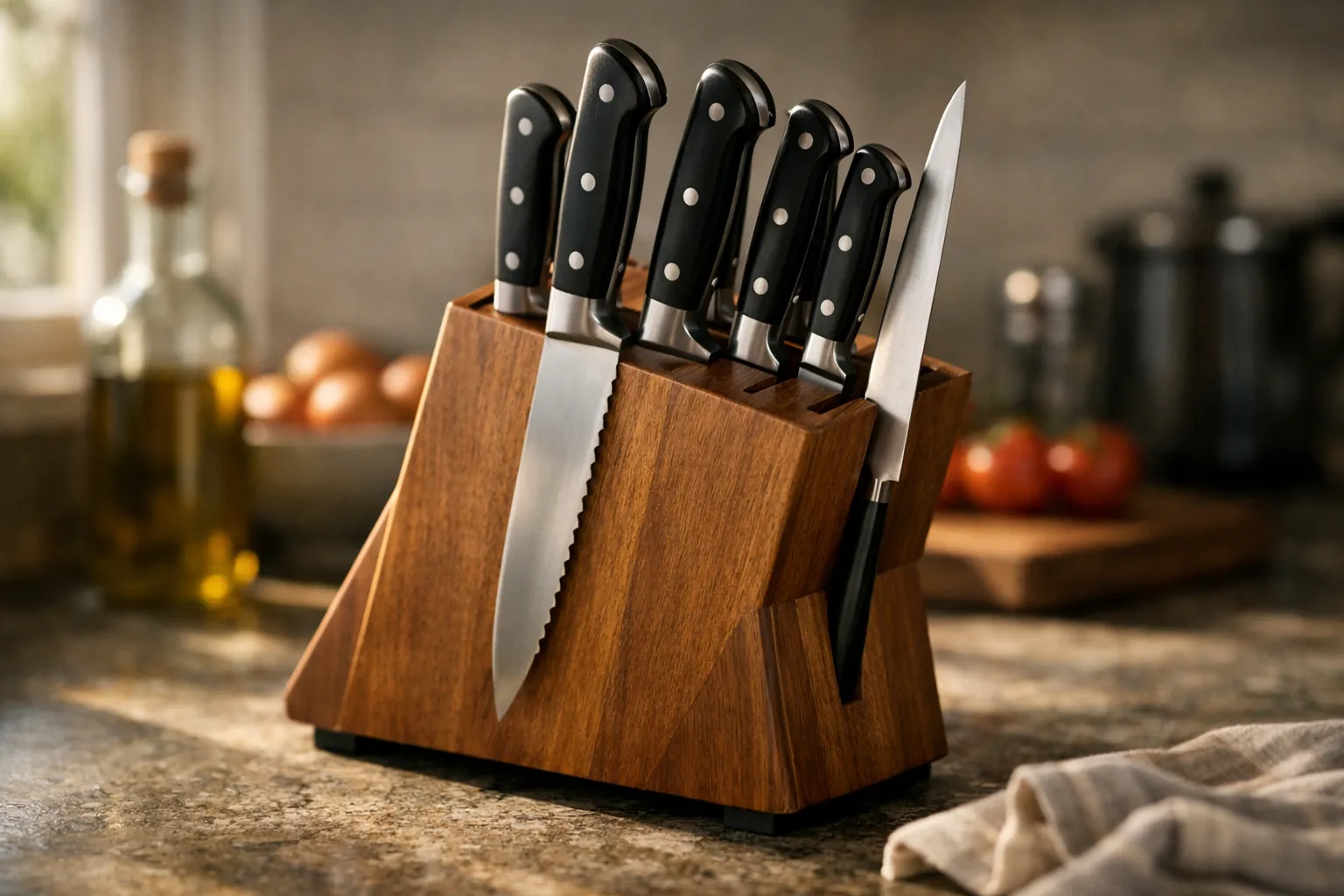
Zwilling doesn't publish an angle for each collection. The split is by blade style: Western knives at about 15, santokus and the Japanese-made lines at 9 to 12.
| Line or knife | Angle per side | Why |
|---|---|---|
| Zwilling Pro, Four Star, Professional S, Twin Signature (chef's, utility, paring, slicer) | about 15° | "ZWILLING knives" in Zwilling's guide |
| Any Zwilling santoku | 9–12° | Named in Zwilling's guide |
| Kramer by Zwilling | 9–12° | Named in Zwilling's guide |
| Miyabi (all lines) | 9–12° (Miyabi's own pages: 9.5–12°) | See our Miyabi sharpening angle page |
| Henckels-branded value lines (Henckels Classic, Statement and similar) | about 15° (starting point) | Zwilling gives no separate figure; Tormek's list files them under Zwilling J.A. Henckels |
Spine heights at Zwilling's angles
| Blade width at heel | 9° | 10.5° | 12° | 15° |
|---|---|---|---|---|
| 25 mm / 1.0 in (paring) | 3.9 mm | 4.6 mm | 5.2 mm | 6.5 mm |
| 40 mm / 1.6 in (utility, small santoku) | 6.3 mm | 7.3 mm | 8.3 mm | 10.4 mm |
| 45 mm / 1.8 in (santoku) | 7.0 mm | 8.2 mm | 9.4 mm | 11.6 mm |
| 50 mm / 2.0 in (8-inch chef's) | 7.8 mm | 9.1 mm | 10.4 mm | 12.9 mm |
Spine centerline height = width × sin(angle). Widths are examples; measure yours at the heel.
The gap between a Zwilling chef's knife and a Zwilling santoku is about 3.5 mm of spine height on similar-width blades. That's easy to get wrong freehand when you sharpen both in one session: do all the 15° knives first, then reset for the santoku. The angle calculator with the Zwilling preset gives the height for your exact blade, and there's a separate preset for santokus and Kramer.
Zwilling's own sharpener maps to the guide
The Zwilling 4-Stage pull-through sharpener is the clearest sign of which numbers Zwilling stands behind. Its product page says one side has "a 15 degree angle for western-style knives, the other a 10 degree angle for Asian-style knives", each with coarse and fine ceramic rods. That's 15 and 10, matching the care guide, not the magazine's 17.5. The Amazon listing (about 2,400 ratings) confirms the coarse and fine stages for both blade styles and says to wipe it clean rather than put it in the dishwasher.
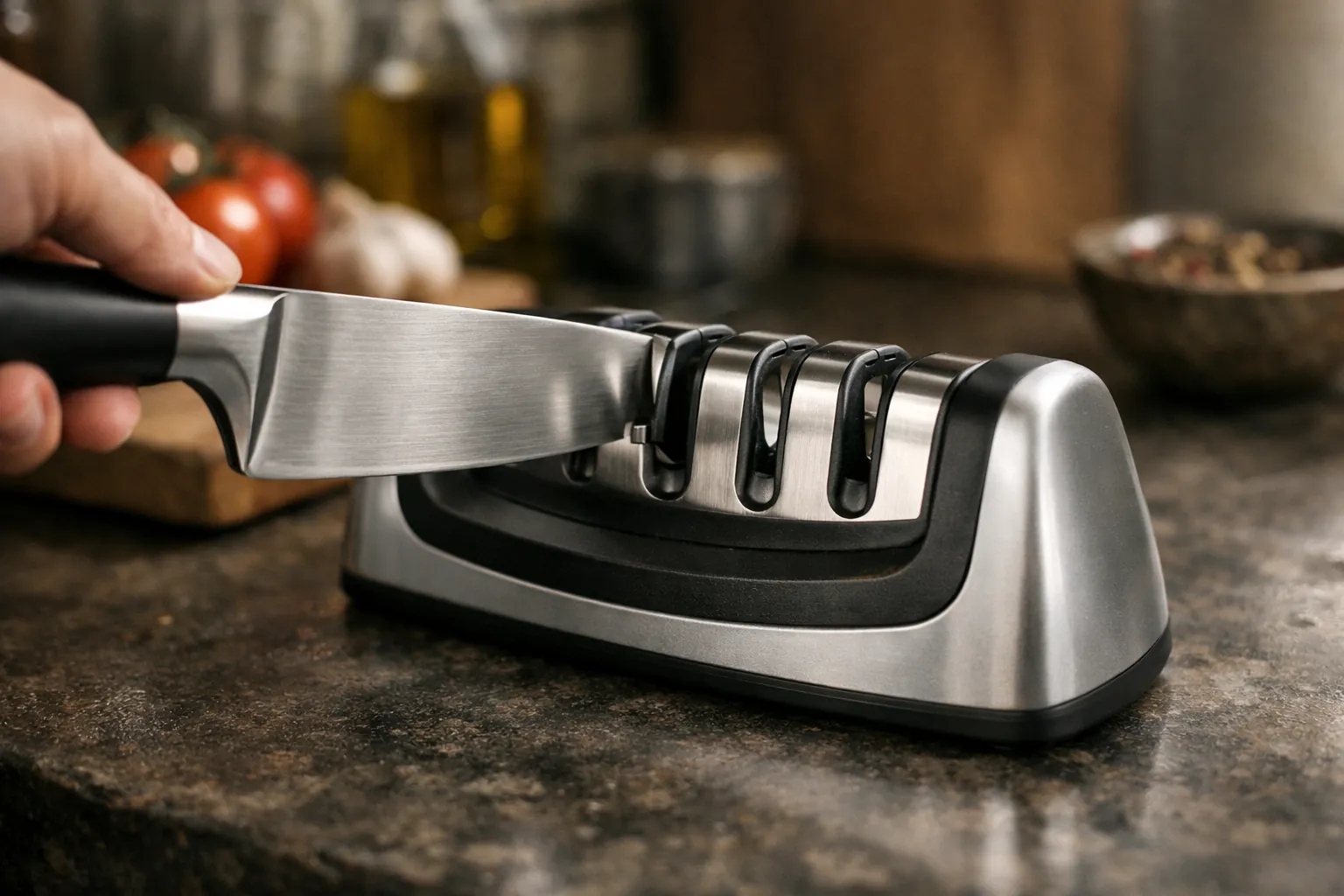
Henckels also sells a Henckels handheld sharpener, a two-stage pull-through with coarse and fine ceramic and about 1,900 ratings on Amazon (as of Oct 21, 2026); its listing doesn't state an angle, so check the box before using it on a santoku.
| Other tools | Angle | Zwilling Western (15°) | Santoku, Kramer, Miyabi (9–12°) |
|---|---|---|---|
| Work Sharp Precision Adjust | 15–30° | Yes | No |
| Chef'sChoice 15XV | 15° | Yes | No |
| Spyderco Sharpmaker | 15° or 20° per side | Yes (30° slots) | No |
| Whetstone | any | Yes | Yes |
The pattern is the same as with every brand that uses a sub-15 angle: guided systems and electrics stop at 15, so the santoku goes to a stone or to the brand's own Asian-side slot. We rank the tools that match in the best knife sharpener for Henckels knives, and our best knife sharpeners for kitchen knives and best electric knife sharpeners guides cover 15° tools in more depth.
Honing at the right angle
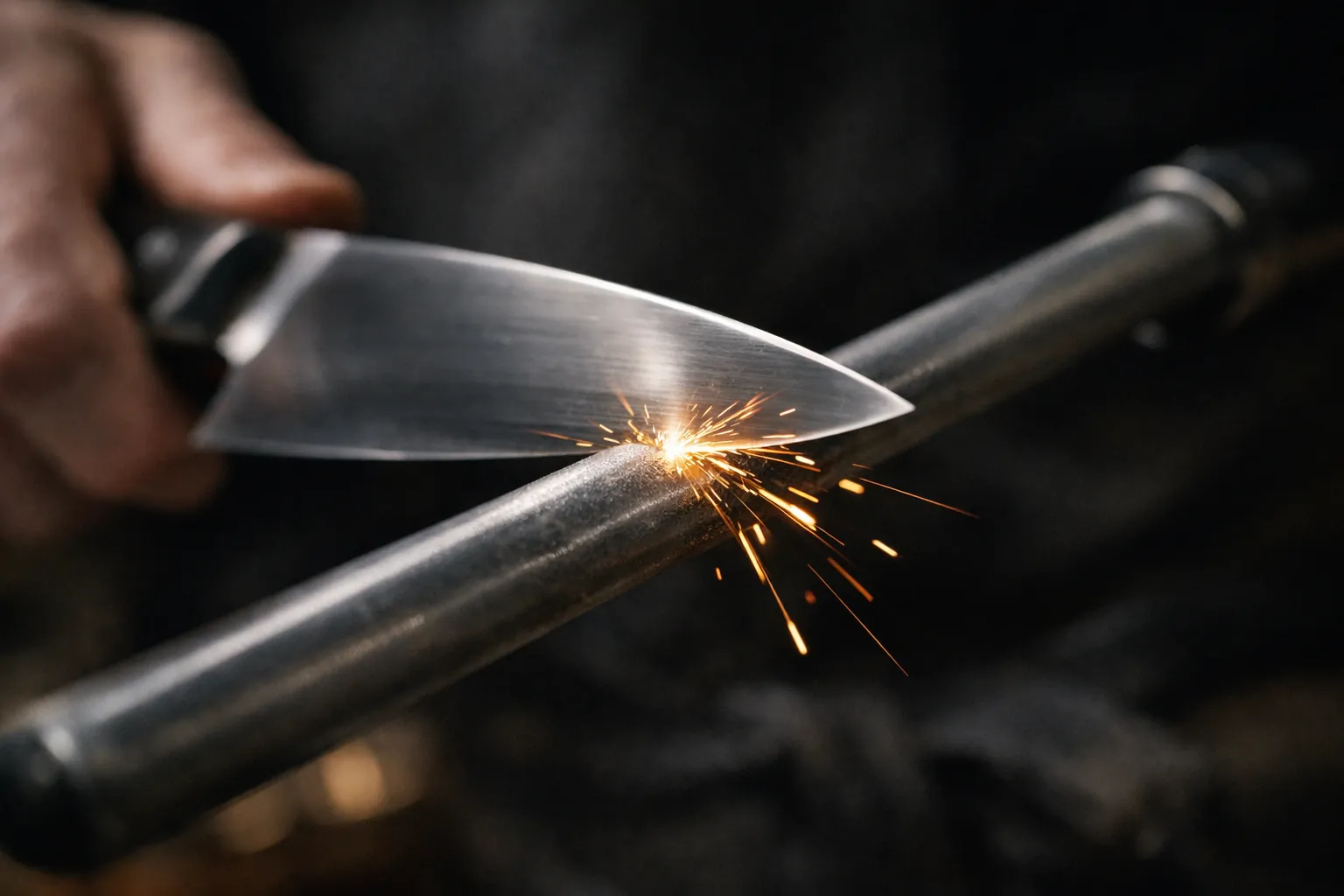
Zwilling's guide gives its angles for the honing steel specifically, and tells you to pull the knife down and across the steel from the heel. Hold 15 for the Western knives. For santokus and Miyabi, go gentler and lower, or use a fine ceramic rod, which removes a little steel instead of only pushing the edge straight. Our best honing rod guide covers both.
Keep both Zwilling numbers in one place with the printable angle chart by brand. Wüsthof's standard blades sit close by at 14°, and our Wüsthof sharpener picks cover the tools that match.
Quotes from zwilling.com (US use and care guide, Canada magazine, four-stage sharpener page), checked October 3, 2026, cross-checked against Tormek's "Knife sharpening angles: Manufacturer's recommendations" (2020). Spine heights calculated. Product details from Amazon listings checked the same day. How we research · Affiliate disclosure