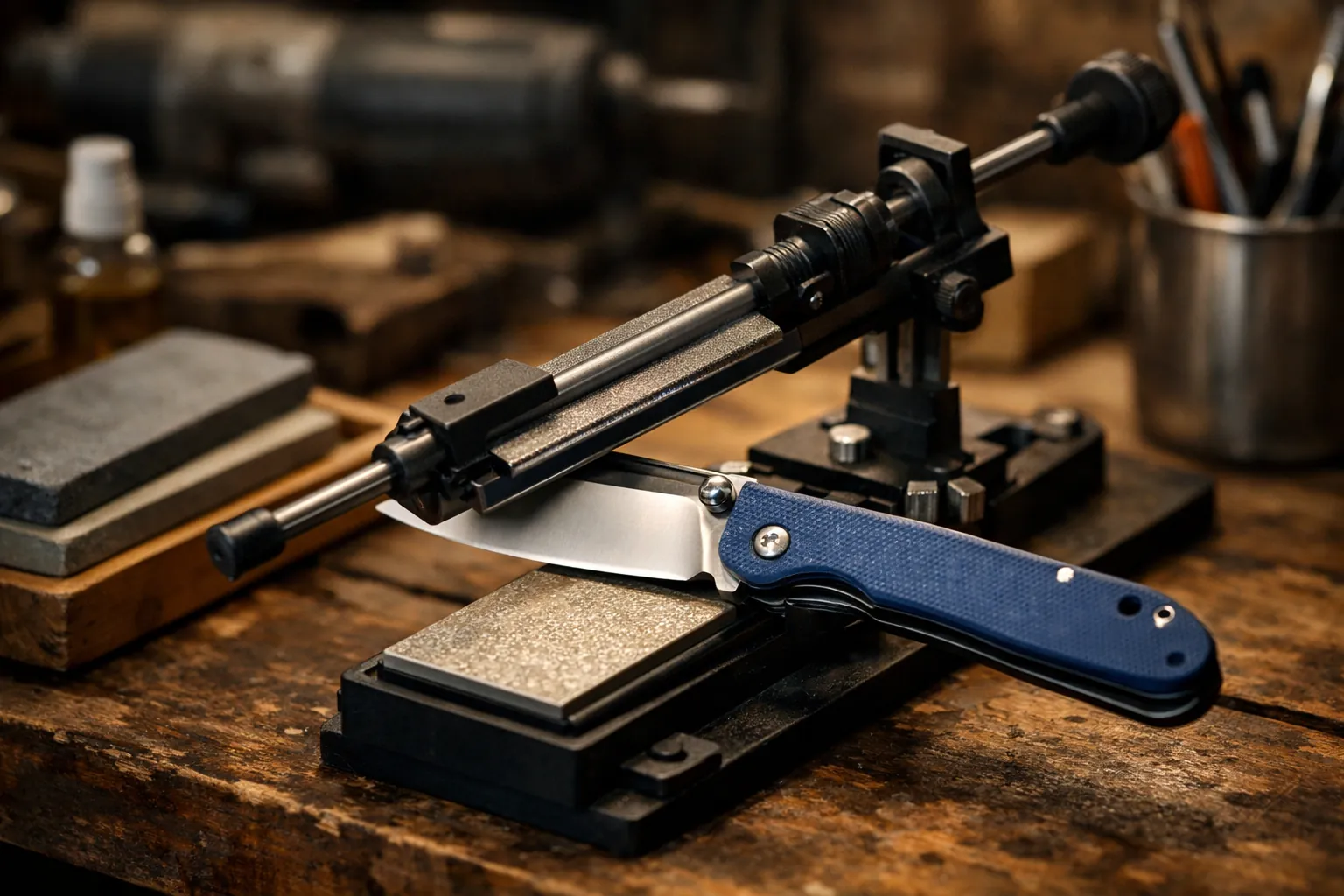
Benchmade says most of its knives leave the factory at 30 to 35 degrees inclusive, which is about 15 to 18 degrees per side. Sharpen a Benchmade folder anywhere in that range and you're matching the factory. Benchmade's kitchen knives are thinner, typically 14 degrees per side, and Benchmade's own pocket sharpening tools are set at 20. Other brands are in the knife sharpening angle chart.
What Benchmade says
From Benchmade's Knife Care 101 guide and its sharpener listings, checked October 3, 2026:
| Topic | Benchmade's words | Per side |
|---|---|---|
| Folders and outdoor knives | "most Benchmade knives are sharpened at 30–35° inclusive (about 15–18° per side)" | 15–18° |
| Kitchen knives | "typically 14° per side for Benchmade cutlery" | 14° |
| Guided Honing Tool (50080) | "a precise 20 degree angle ... a ceramic rod and a leather strop" | 20° |
| Guided Field Sharpener (100604F) | "20° Guided Field Sharpener ... five distinct levels of abrasive" | 20° |
| Grits | coarse 200–400 only if chipped or very dull; medium 600–1000; fine 2000+; finish on a strop |
A note for anyone who's read otherwise: you'll find pages calling the 15 to 18 degree figure a forum estimate. It's on Benchmade's own site. What Benchmade doesn't publish is an angle for individual models.
Why Benchmade's sharpeners say 20
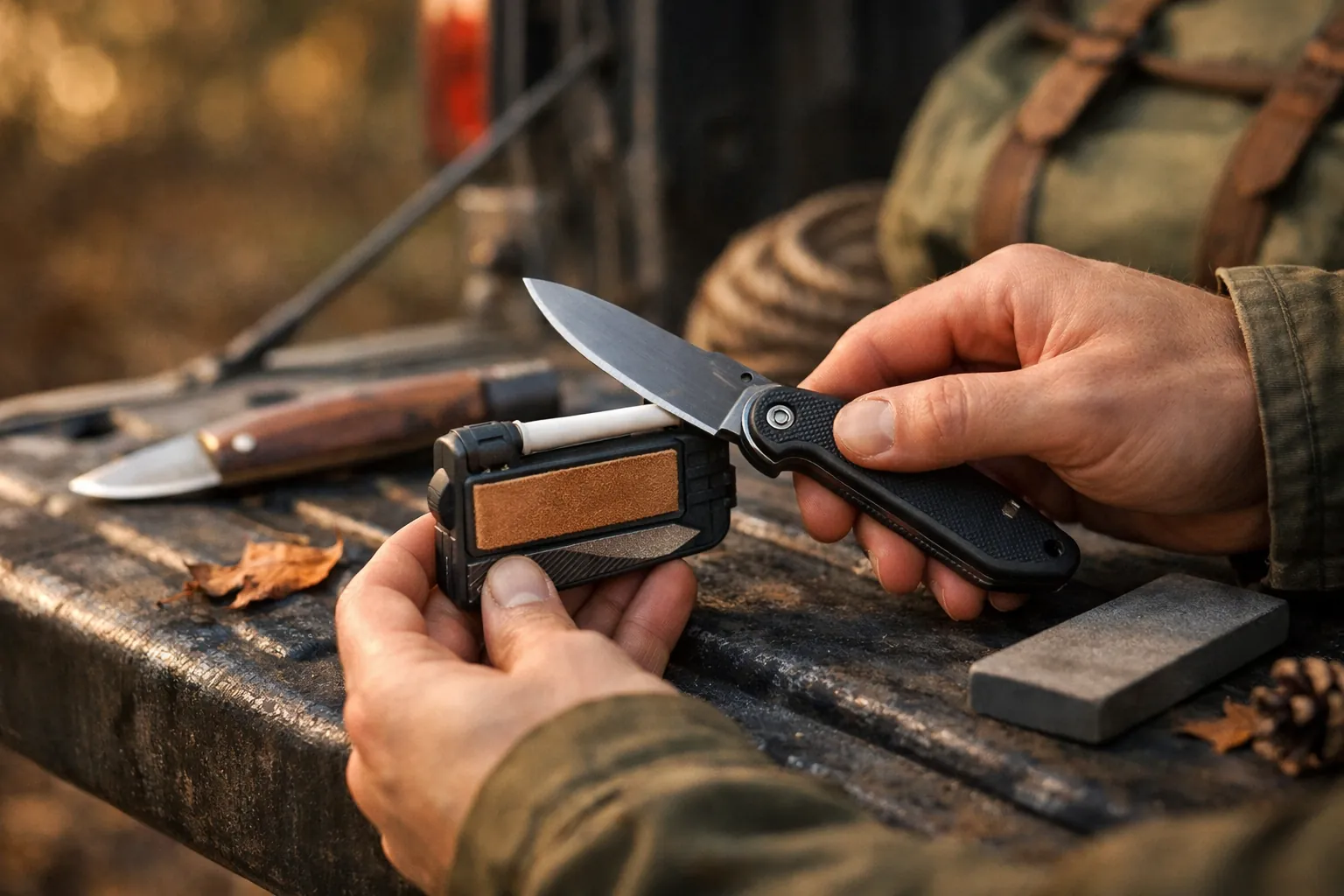
Benchmade's two own-brand pocket sharpeners are fixed at 20 degrees per side, a couple of degrees steeper than the factory edge. Benchmade doesn't explain the gap. The practical effect is predictable: a few strokes at 20° on an 18° edge only touch the apex, adding a narrow, tougher microbevel. That's a sensible field touch-up. Do it for years without ever resetting the main bevel, though, and the edge creeps steeper and thicker. Every so often, sharpen the full bevel back at 15 to 18 on a clamp system or stone.
Settings by model and steel
Benchmade sells its best-known models in several steels, and what's in your pocket depends on the version. These are versions we checked on Benchmade's site:
| Model and version | Steel (Benchmade) | Our pick within 15–18° | Lansky / Precision Adjust |
|---|---|---|---|
| Bugout 535FE-2602 | S90V | 16–17° | 17 hole / 16 or 17 |
| Bugout Vapyr 534BK ("33% thinner" than a standard Bugout) | MagnaCut | 15–16° | 17 hole is a touch steep / 15 or 16 |
| 940 Osborne 940FE-2601 | S90V | 16–17° | 17 hole / 16 or 17 |
| Adamas 275-05 | MagnaCut | 18° (it's built for hard use) | 17 or 20 hole / 18 |
| Benchmade kitchen knives | varies | 14° | Neither reaches 14; use a stone |
Steels from benchmade.com product listings, checked October 3, 2026. "Our pick" is our suggestion inside Benchmade's published range, not a Benchmade figure.
S90V is very wear resistant, and Benchmade calls it a "super steel". It's slow to sharpen on plain ceramic or aluminum-oxide stones. Diamond plates cut it far faster, which is worth knowing before you spend an hour on a Sharpmaker. MagnaCut sharpens more easily and is tough enough to run toward the thin end of the range.
Spine heights for Benchmade blades
| Blade width (edge to spine) | 15° | 16.5° | 18° | 20° (Benchmade tools) |
|---|---|---|---|---|
| 20 mm / 0.79 in | 5.2 mm | 5.7 mm | 6.2 mm | 6.8 mm |
| 25 mm / 0.98 in | 6.5 mm | 7.1 mm | 7.7 mm | 8.6 mm |
| 30 mm / 1.18 in | 7.8 mm | 8.5 mm | 9.3 mm | 10.3 mm |
| 35 mm / 1.38 in | 9.1 mm | 9.9 mm | 10.8 mm | 12.0 mm |
Spine centerline height = width × sin(angle). Widths are examples; measure your blade. Folder spines are thick, so enter the spine thickness in the calculator for a coin-accurate height.
The angle calculator with the Benchmade preset starts at 17° and handles inches, spine thickness and the narrowing toward the tip.
LifeSharp or sharpen it yourself?
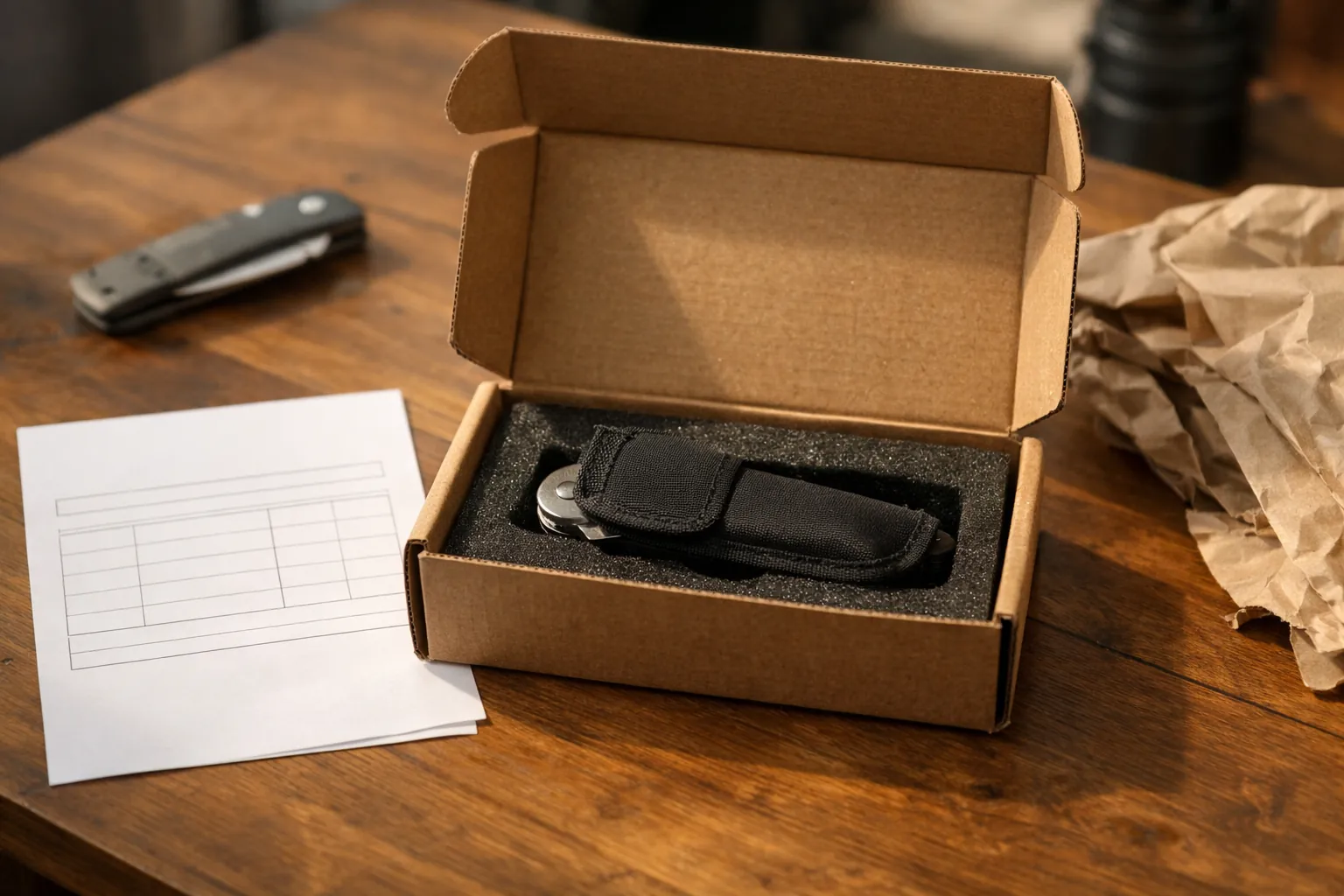
Benchmade's guide describes LifeSharp as free sharpening and maintenance for Benchmade knives. The service is free; Benchmade says a $20 fee covers the mail-in kit, and you can skip it by visiting its Factory Store or a participating dealer. If your knife needs a new blade or handle, Benchmade says it'll handle that free of charge.
| LifeSharp | Sharpen at home | |
|---|---|---|
| Cost | Free service; $20 mail-in kit unless you drop it off | A guided system or stones, once |
| Angle | Factory spec | Whatever you set; 15–18° matches Benchmade |
| Time without the knife | Shipping both ways | Twenty minutes |
| Best for | Chips, broken tips, a full tune-up | Routine dullness, weekly carry |
Our take: send it to LifeSharp for real damage, and keep a guided system at home for everything else.
Tools that hold Benchmade's range
- Work Sharp Precision Adjust: sets any whole degree from 15 to 30, so 15, 16, 17 or 18 exactly. The best fit for Benchmade's published range.
- Lansky Deluxe 5-stone system: its 17° hole sits inside the range. Lansky's own description calls 17° "a severe angle" meant for razor-like edges, which tells you how thin Benchmade's factory edge really is.
- Spyderco Sharpmaker: 15° per side at its 30° setting, the bottom of Benchmade's range.
- Work Sharp Guided Field Sharpener: 20° and 25° guides and five abrasives in a pocket-size tool, for the same apex touch-ups as Benchmade's own 20° tools.
Our best sharpening system guide compares the bench options, and the best pocket knife sharpeners guide covers field tools. Benchmade owners often carry a Spyderco too; the Spyderco sharpening angle page covers that brand. The step-by-step technique for folders is in how to sharpen a pocket knife.
Quotes from benchmade.com (Knife Care 101 guide, Guided Honing Tool 50080 and Guided Field Sharpener 100604F listings, model listings), checked October 3, 2026. Lansky angle descriptions from lansky.com. Spine heights calculated. Product details from Amazon listings checked the same day. How we research · Affiliate disclosure