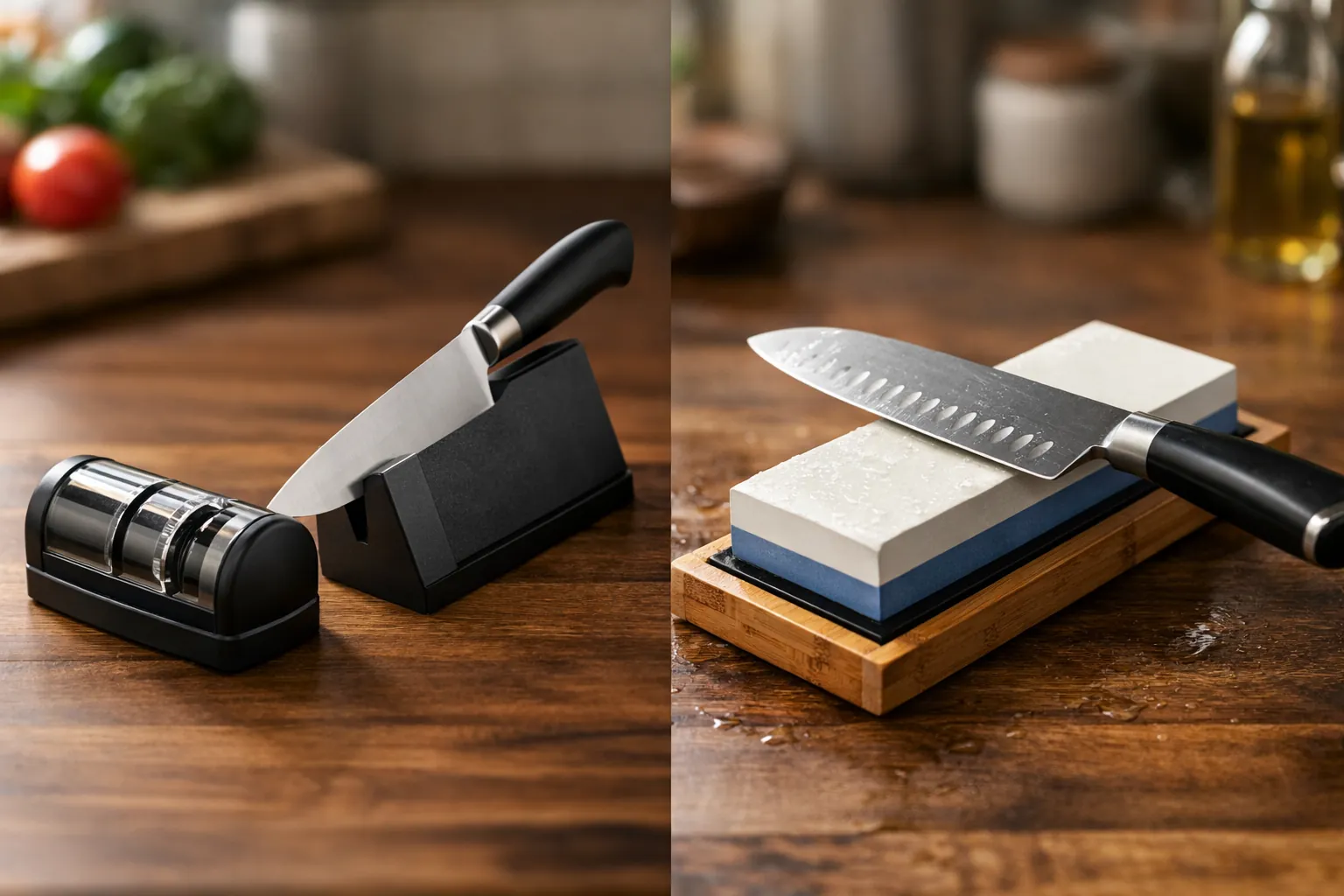
Get a rolling sharpener if your knives sit near 15 or 20 degrees and you want a sharp edge without learning a skill. Get a whetstone if you own knives below 15 degrees, single-bevel Japanese knives, or simply want the finest edge and are willing to practice. That's the whole decision; the rest of this page is the detail behind it. If you're weighing a stone against a pull-through or electric sharpener instead, that's a different trade-off, covered in whetstone vs knife sharpener.
How each one works
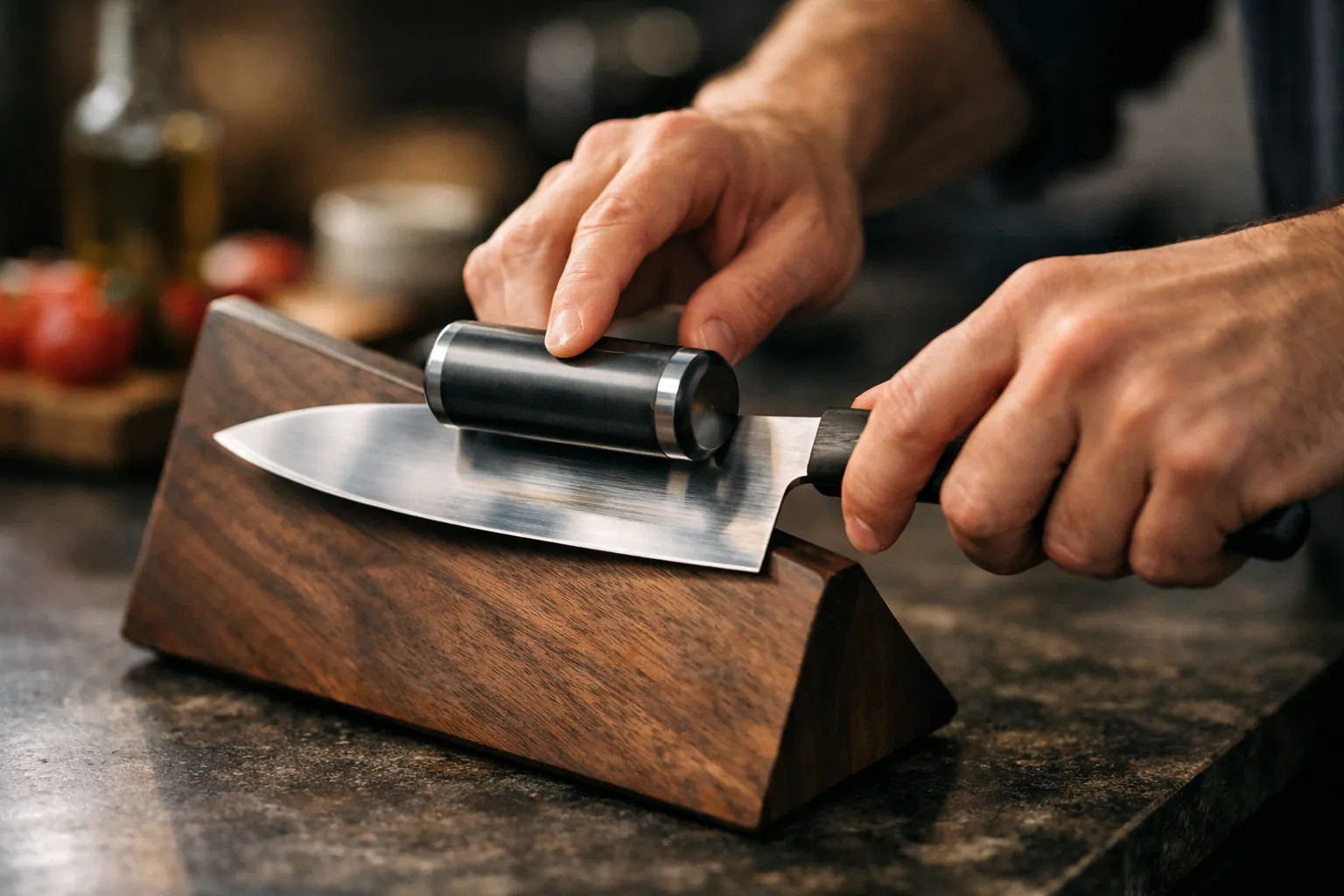
A rolling sharpener has two parts. A magnetic block holds the knife's spine at a fixed tilt, usually with one face at 15° and another at 20°. A cylinder with an abrasive disc on each end rolls along the counter, so the disc meets the edge at that tilt every time. Sharpen with the diamond end, finish with the honing end, flip the knife, repeat.
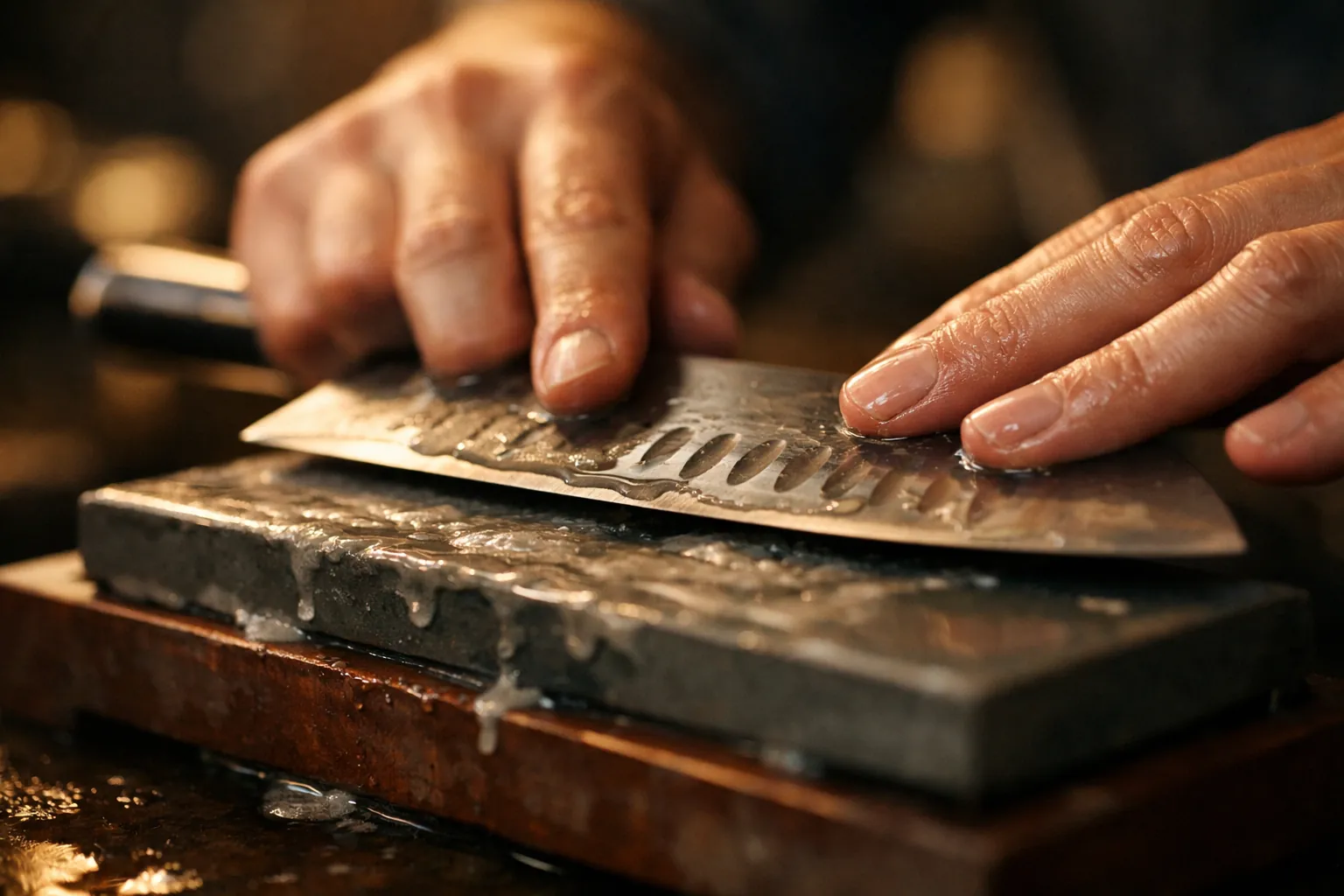
A whetstone is a flat block of abrasive. You hold the knife at the angle yourself and push or pull it across the stone, raising a small burr before moving to a finer stone. The stone does exactly what your hands do, good or bad.
Decision table: which suits your knives
| Your knives | Maker's angle (per side) | Rolling sharpener | Whetstone |
|---|---|---|---|
| Victorinox, most budget Western knives | 15–20° | Ideal: either side | Works, more effort than needed |
| Wüsthof, Zwilling standard blades | 14–15° | Good: 15° side | Exact |
| Shun, Global | 16°; 10–15° | Good: 15° side | Exact, and finer finish |
| Wüsthof santoku, Miyabi, Zwilling Kramer | 9–12° | No: can't go below 15° | Yes |
| Single-bevel (yanagiba, deba) | one side only | No | Yes |
| Chipped or broken tip | any | Slow on a 400 disc; Tumbler sells a #150 disc for its Pro | Yes, with a coarse stone |
| Pocket knives | usually 15–20° | Works if the magnet holds the blade | Works; narrow blades are fiddly freehand |
Brand angles from each maker's own site, checked October 3, 2026: see our Shun, Wüsthof and Miyabi pages.
The angle question is the whole question
Every other difference is secondary. A roller can only make the angles its block offers, and most offer 15 and 20 (a few kits add 18 and 22, like the four-angle ORIVIX magnetic 4-angle rolling kit with 15, 18, 20 and 22). Put a knife on a block that doesn't match its existing bevel and the first session regrinds the bevel to the block's angle. That's fine going from 20 to 15 on a hard Japanese knife; it's wasteful going from 14 to 20 on a Wüsthof. Check the match with the sharpie trick before your first full session.
A whetstone has no such limit. The catch is that the angle is only as steady as your wrist. The angle calculator gives you a spine height to aim for, which closes most of the gap.
Edge finish by grit
| Tool | Grits, per the listing | Finish |
|---|---|---|
| AIERLIAN rolling kit | #400 diamond, #3000 ceramic, leather strop | Fine, with a strop finish |
| BOGONI rolling sharpener, Classic Kit | 400 diamond, 3000 ceramic | Fine |
| Tumbler Pro | 4-layer diamond, ceramic; optional 3000 and 6000 whetstone discs | Fine to very fine with add-ons |
| Sharp Pebble 1000/6000 whetstone | 1000 and 6000 | Very fine |
| KEENBEST 400/1000 whetstones | 400 and 1000 | Toothy, aggressive |
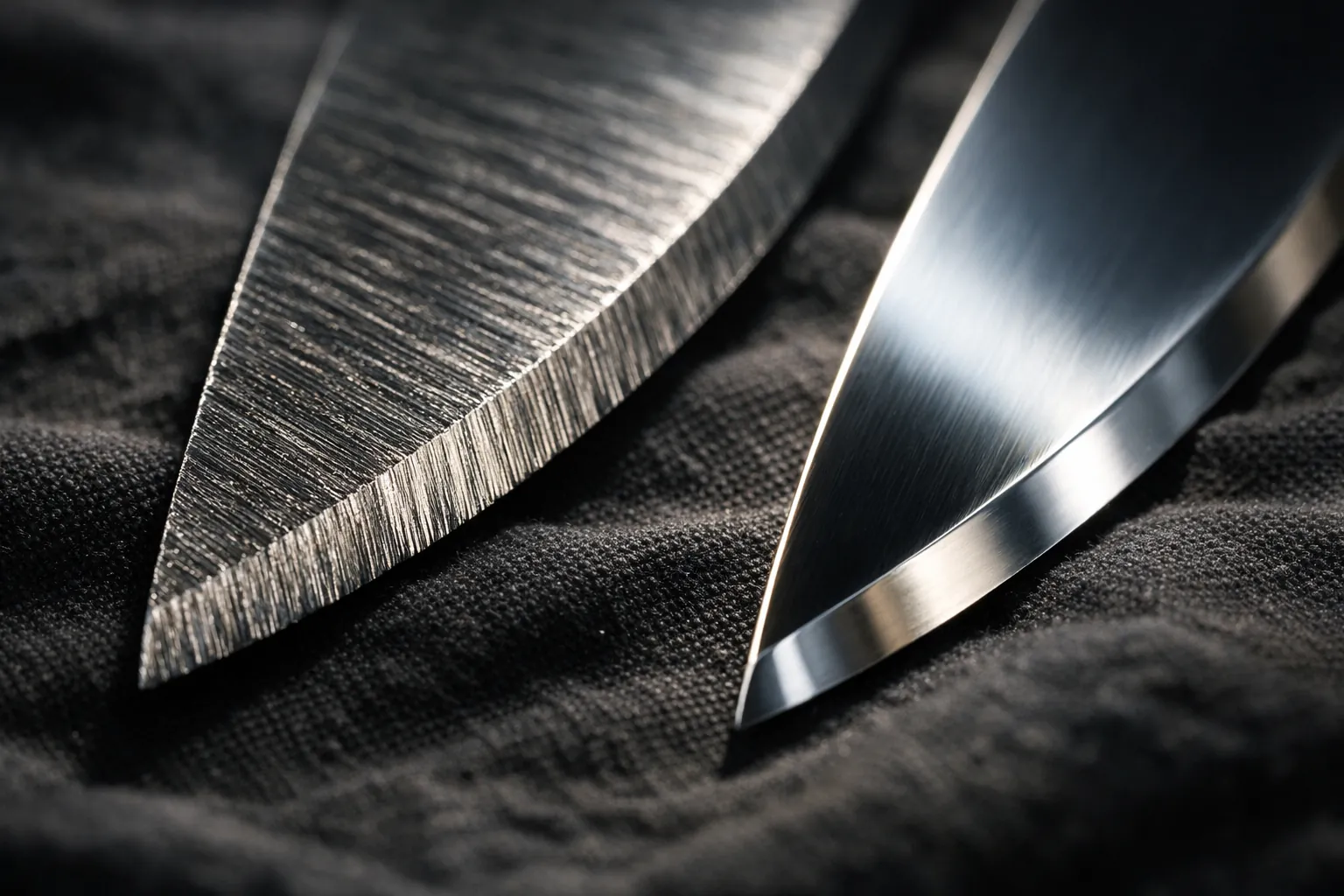
The finest roller finishes overlap with a 1000/6000 stone, so finish alone isn't a reason to pick a stone. The angle is.
Effort, mess and upkeep
| Rolling sharpener | Whetstone | |
|---|---|---|
| Learning curve | Minutes | A few sessions |
| Setup | Stick the knife on the magnet | Soak or splash, base, towel |
| Mess | Dry; a little metal dust | Water and slurry |
| What wears out | The discs; several brands sell replacements | The stone itself, slowly; needs flattening |
| Ongoing chores | Wipe the discs | Flatten and clean (see flattening and cleaning) |
Cost over five years
We'd rather not quote dollar figures that change weekly, so here's the shape of it. A budget roller kit and a combination whetstone sit in a similar price band on Amazon, while brand-name rollers (Tumbler, HORL) cost several times more. Over five years, a stone's main cost is a flattening stone and eventually a replacement; a roller's is replacement discs, which several makers sell separately. If you'd pay for professional sharpening otherwise, either one pays for itself. Check the current price on Amazon with the buttons on this page before you decide on budget grounds.
Who should pick which
| If this sounds like you | Pick | Why |
|---|---|---|
| You cook daily, own a German or Victorinox set, and want sharp knives with no hobby attached | Rolling sharpener | Your knives are at the angles a roller makes, and it takes minutes |
| You bought one good Japanese gyuto and want to look after it properly | Whetstone | Hard steel rewards a fine stone, and you can hold its exact angle |
| You own Miyabi, a Wüsthof santoku or any single-bevel knife | Whetstone | No roller reaches those angles |
| You sharpen for the whole family's mixed drawer | Both | Roller for the bulk, stone for the exceptions |
| You've tried a stone and gave up | Rolling sharpener, or a guided system | Fixed angles fix the part that went wrong |
One more option sits between the two: a clamp-and-rod guided system holds any angle from about 15 to 30 degrees without freehand skill. Our best sharpening system guide covers those.
Why many people end up with both
A common setup is a roller for the everyday German and Western knives, plus one stone for the santoku or the single-bevel knife the roller can't do. If that's your drawer, a budget roller plus a 1000/6000 stone covers everything. For roller picks, see the best rolling knife sharpeners and our Tumbler vs HORL comparison; for stones, see the best whetstone sets for beginners.
Grits and features from each product's Amazon listing; Tumbler disc options from tumblerware.com, all checked October 3, 2026. Brand angles from the knife makers' sites. How we research · Affiliate disclosure