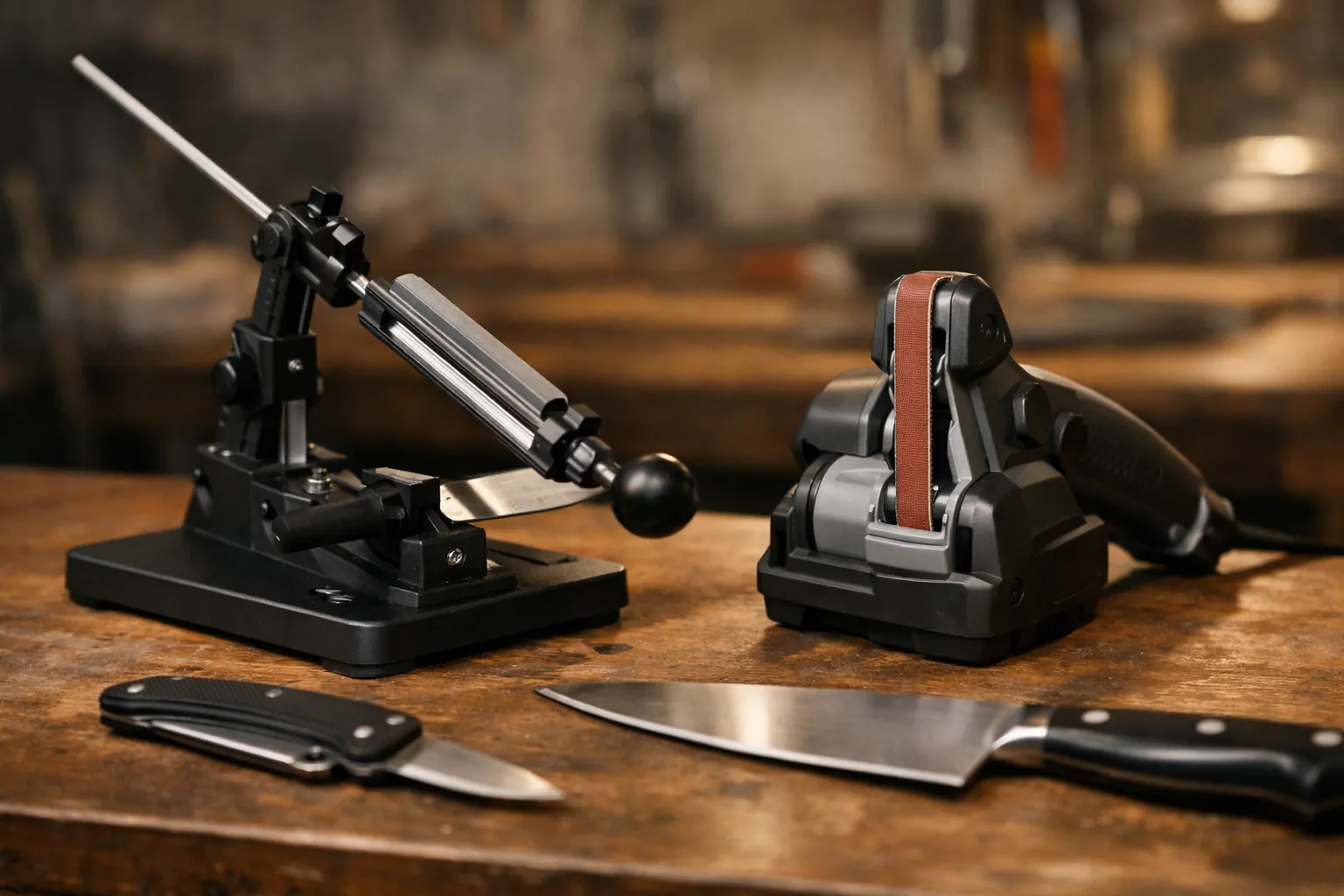
Yes, Work Sharp makes good knife sharpeners, and its manual Precision Adjust is one of the best guided sharpeners for beginners. The brand's products are among the most-reviewed on Amazon, with 4.5- to 4.8-star averages. The only real caveat is with its powered belt sharpeners: they're fast and versatile, but heavy-handed use can overheat thin edges or round a tip. Choose the model that matches your knives.
Quick picks
| Best Work Sharp for most people | Work Sharp Precision Adjust | Amazon |
|---|---|---|
| Best for pocket and hunting knives | Work Sharp Guided Field Sharpener | Amazon |
| Fastest, for knives and tools | Work Sharp MK2 Knife & Tool Sharpener | Amazon |
The evidence
We checked Work Sharp's listings on Amazon US on October 3, 2026:
| Model | Type | Amazon rating | Bought past month |
|---|---|---|---|
| Guided Field Sharpener | Manual, handheld | 4.8 (12,700+ ratings) | 2,000+ |
| Precision Adjust | Manual, guided | 4.5 (11,500+) | 1,000+ |
| Precision Adjust Elite | Manual, guided | 4.6 (6,400+) | 1,000+ |
| MK2 Knife & Tool Sharpener | Powered belt | 4.7 (8,100+) | 700+ |
| Ken Onion Mk2 | Powered belt, adjustable angle | 4.6 (600+) | 600+ |
Ratings as shown in Amazon search results on October 3, 2026.
We research rather than test: these conclusions come from listings, maker specifications, owner feedback and standard sharpening knowledge. How we research.
Three kinds of Work Sharp, three different answers
The Work Sharp models worth buying
Work Sharp Precision Adjust
This is the Work Sharp we'd recommend first. It clamps the knife, holds an angle you dial in from 15° to 30°, and uses diamond and ceramic abrasives that remove little metal. That makes it gentle on good knives and easy for beginners. Independent reviewers have noted the angle can drift a few degrees toward the ends of long blades; on most knives that won't matter.
- Typemanual guided
- Angle15° to 30°
- AbrasivesTri-Brasive 320/600 diamond + fine ceramic
- Powernone
- Warranty3 years
Why it stands out
- Gentle on knives, easy to learn
- Covers Japanese and Western angles
Think twice if
- You need speed for many knives
- You want a very fine polish without buying the Elite
Work Sharp Guided Field Sharpener
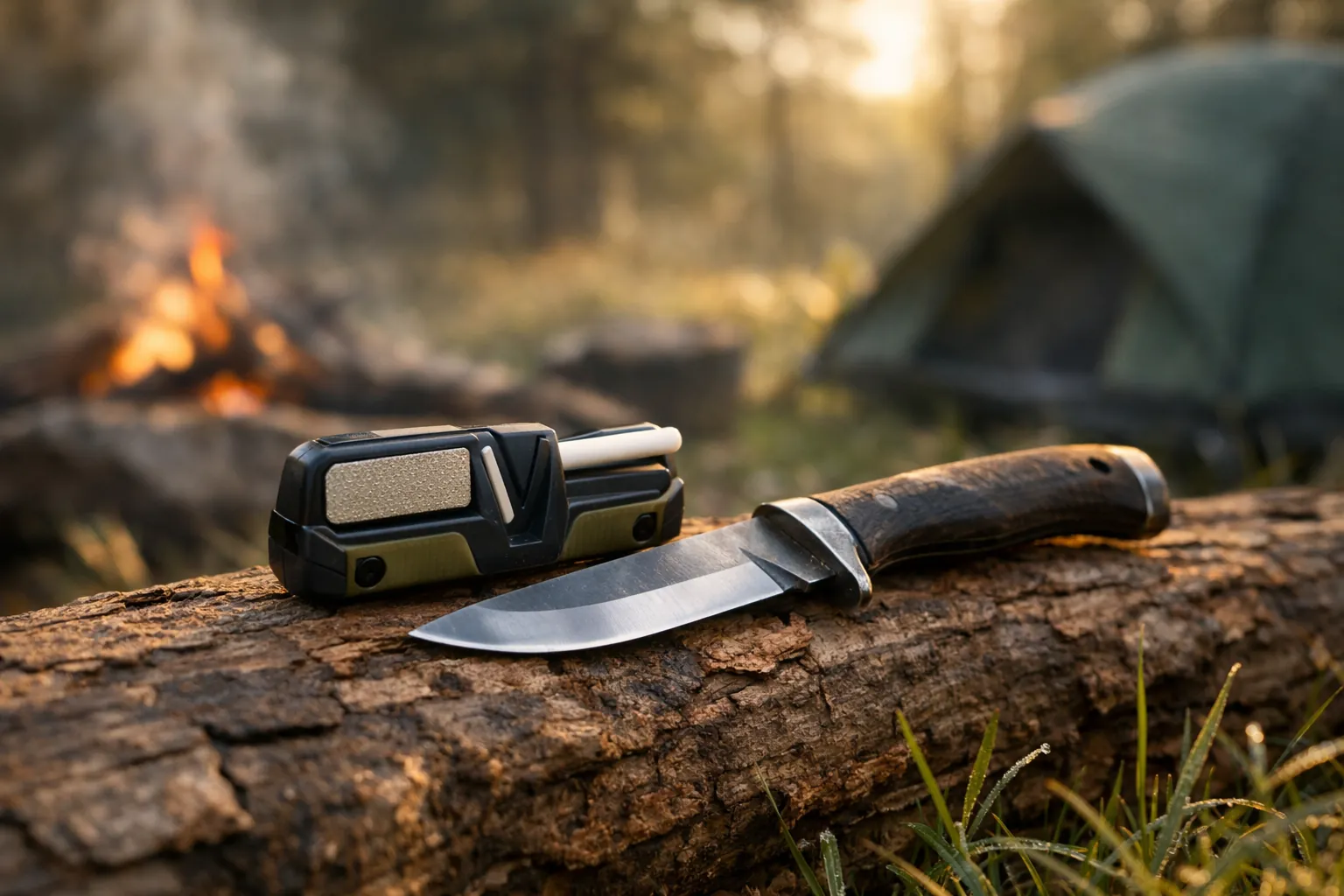
The most-bought Work Sharp on Amazon is also the simplest: five abrasives in a flat, pocketable body with built-in 20° and 25° angle guides. It suits pocket, hunting and camp knives and fish hooks, and the leather strop finishes the edge.
- Typehandheld field sharpener
- Guides20° and 25°
- Abrasivesdiamond plates, ceramic rod (coarse, fine, fish hook), leather strop
- Weight135 g
Why it stands out
- Small, light and complete
- 12,700+ ratings
Think twice if
- You want low angles for Japanese kitchen knives
Work Sharp MK2 Knife & Tool Sharpener
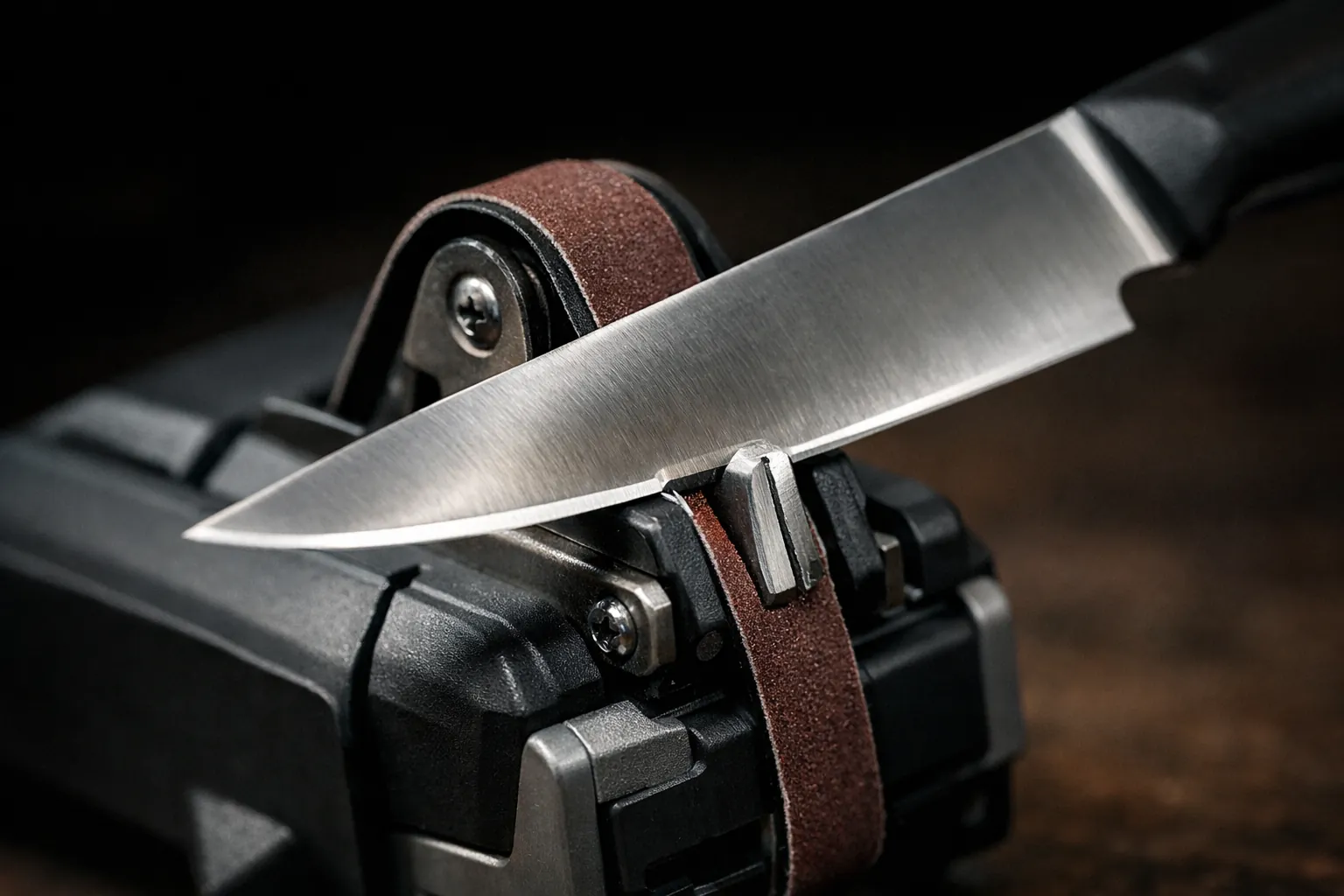
The MK2 is a small powered belt grinder with an edge guide. Work Sharp says the flexible belts conform to the edge of any blade, so it handles kitchen and pocket knives, serrated knives, scissors and garden tools such as lawnmower blades and axes. The two-speed motor lets you slow down for knives and speed up for heavy grinding.
This is where "is Work Sharp bad for knives?" comes from. A belt removes metal quickly; dwell in one spot, press hard or pull the tip off the end of the belt and you can overheat a thin edge or round the tip. Used with light pressure and steady passes, it's a very effective sharpener.
- Typepowered belt sharpener
- Motortwo-speed
- Beltsflexible, conform to the blade
- Usesknives, serrated knives, scissors, mower blades, axes
- Warranty3 years
Why it stands out
- Sharpens almost anything with an edge
- Very fast
- 8,100+ ratings at 4.7 stars
Think twice if
- You own expensive thin Japanese knives
- You want a quiet kitchen tool
So, is Work Sharp bad for knives?
Not inherently. The concern applies to powered belt sharpeners in general, and comes down to three things:
- Heat. Belts run fast. Long dwell times can heat a thin edge enough to soften it. Keep passes moving and let the knife cool.
- Rounded tips. Pulling the tip completely off the belt lets it wrap around the tip. Stop the pass while the tip is still on the belt.
- Over-grinding. Coarse belts remove a lot of steel. Start fine and step coarser only if the knife needs it.
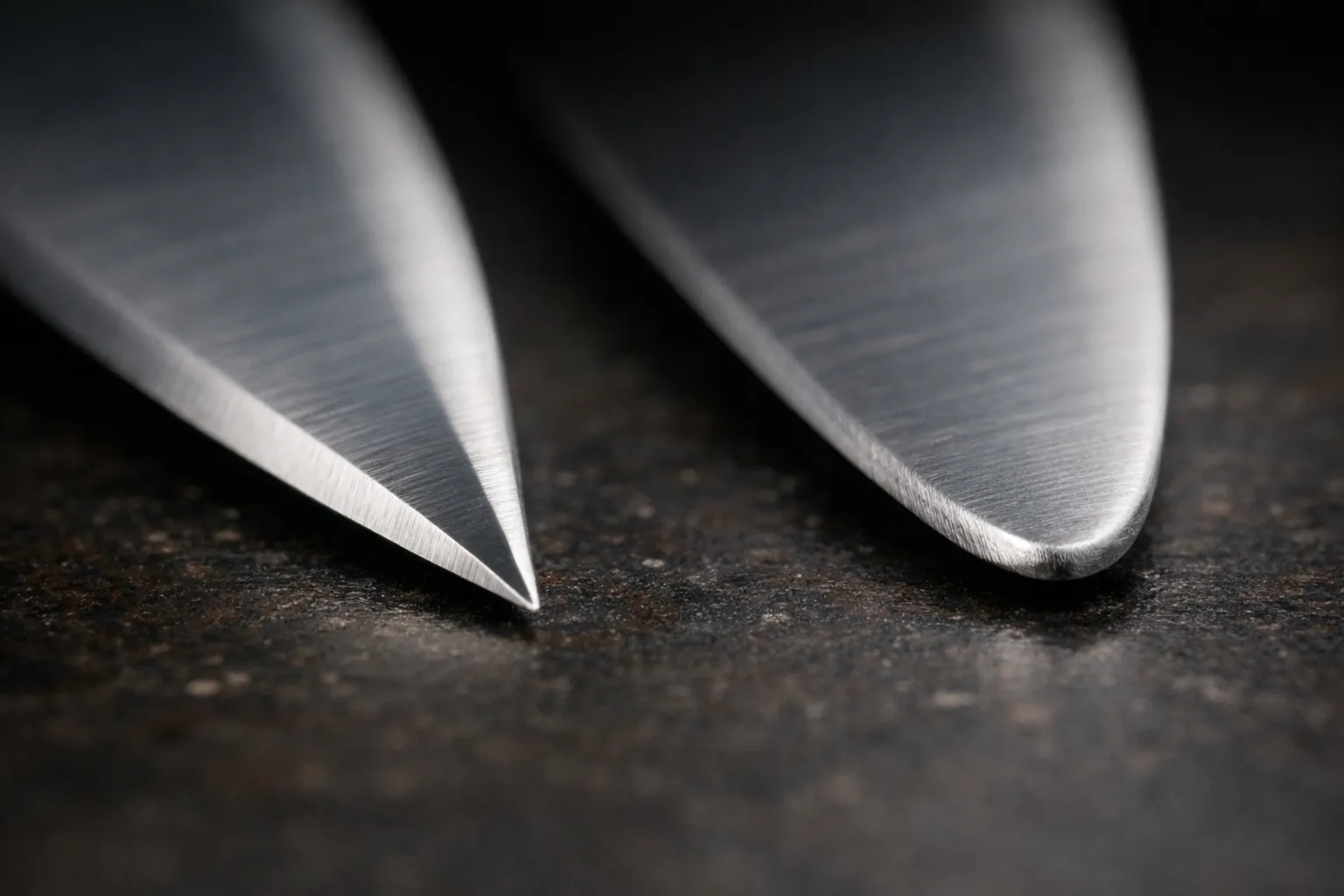
The manual Precision Adjust and Guided Field Sharpener don't carry these risks; they remove metal slowly, like a stone.
How to use a Work Sharp belt sharpener without hurting your knife
- Start with the finest belt that will do the job. If the knife is only dull, skip the coarse belt entirely.
- Use the slower speed for knives. The MK2's two-speed motor exists for this; save the higher speed for mower blades and axes.
- Let the guide set the angle. Keep the blade flat against the guide and don't tilt the handle.
- Pull at a steady pace with light pressure. Don't pause on any one spot. Count passes and match them on both sides.
- Stop before the tip leaves the belt. This is the habit that prevents rounded tips.
- Check for heat. If the edge feels warm, let it cool before continuing.
- Finish on the fine belt with a few alternating passes to remove the burr.
Which Precision Adjust version?
| Version | Abrasives (listing) | Extras | Buy if |
|---|---|---|---|
| Precision Adjust | Tri-Brasive: 320 and 600 diamond, fine ceramic | — | You sharpen plain-edge kitchen and pocket knives |
| Precision Adjust Elite | 320 and 600 diamond plates, ceramic finishing rod, Tri-Brasive | Serrated rod, leather strop | You have serrated knives or want a stropped finish |
| Professional Precision Adjust | 220, 320, 400, 600, 800 diamond, fine ceramic | Leather strop, digital angle indicator, metal construction | You sharpen often and want the finest control |
All three adjust from 15° to 30°. For a head-to-head with the most common alternative, see Work Sharp vs Lansky.
What owners commonly complain about
- Precision Adjust angle drift on long blades. Pivot-arm designs change the effective angle slightly toward the heel and tip of long knives. It matters most on 8-inch and longer chef's knives.
- Plastic parts on the base models. The Professional version uses metal construction.
- Belt wear and noise on the powered models. Belts are consumables, and a belt grinder is louder than any manual sharpener.
- The learning curve on belts. Most damage stories trace back to heavy pressure or pulling the tip off the belt, which the steps above avoid.
None of these is a reason to avoid the brand, but they're good reasons to pick the right model for your knives.
Angles: what Work Sharp sets and what your knife needs
Many Japanese knives are sharpened around 15° per side and many German and Western knives around 20°; pocket and hunting knives often around 20° to 25°. Check your knife maker's recommendation. The Precision Adjust covers 15° to 30°; the Guided Field Sharpener has 20° and 25° guides. Our angle chart lists more knife types.
If Work Sharp isn't the right fit
- For the widest grit range on a budget: the Lansky Deluxe 5-stone. Compare in Work Sharp vs Lansky.
- For easy maintenance and serrated edges: the Spyderco Sharpmaker.
- For zero-effort kitchen knives: the Chef'sChoice 15XV electric.
The bottom line
Work Sharp is a good knife sharpener brand with strong ratings across its range. For most people, the Precision Adjust is the model to buy. For the field, the Guided Field Sharpener. And if you want to sharpen knives and tools fast, the MK2 is excellent as long as you use a light touch.
Specs, ratings and sales figures from Amazon listings checked October 3, 2026. We do not quote prices we have not checked. How we research · Affiliate disclosure